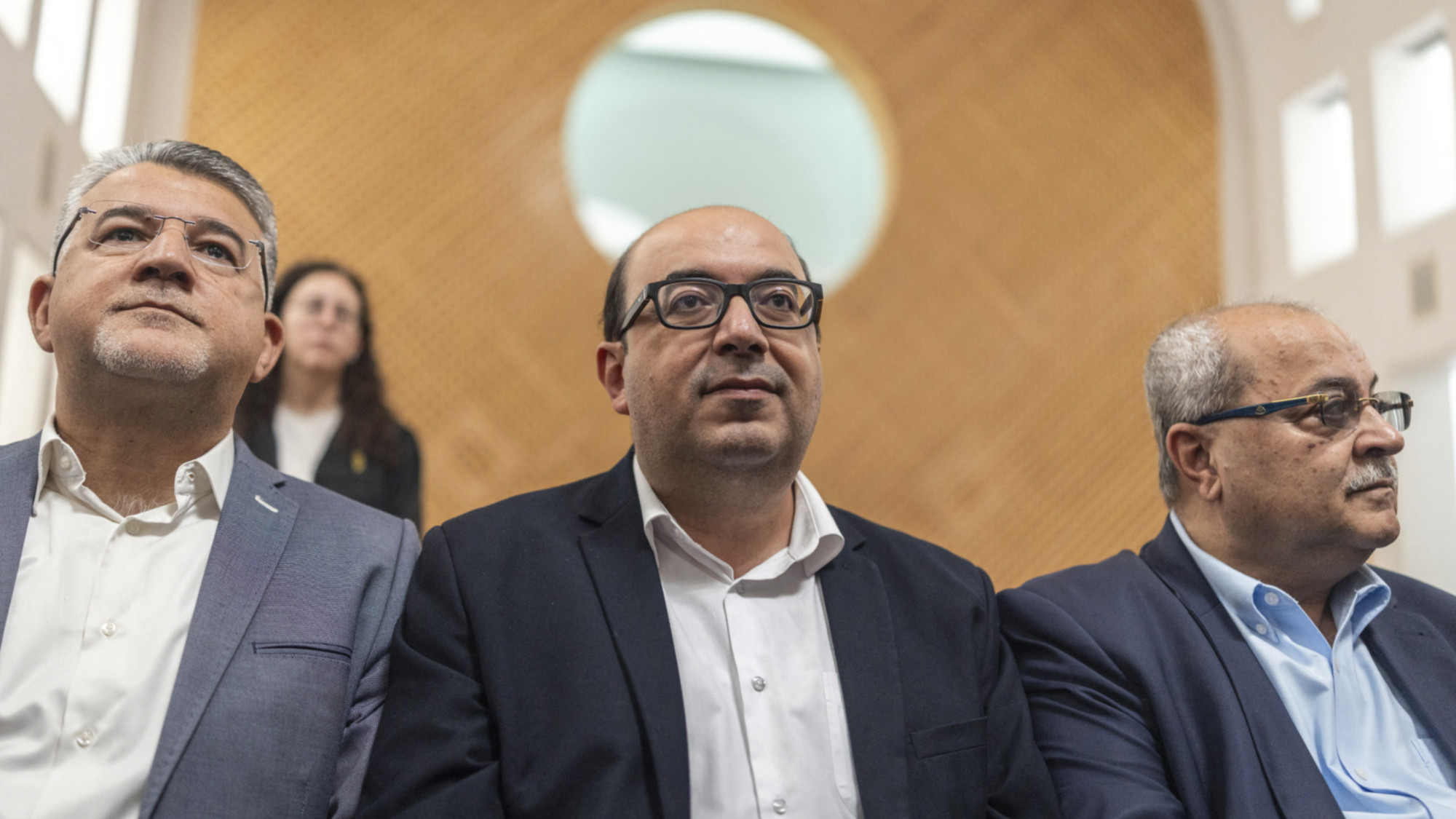
In a high-stakes decision that has escalated tensions over political representation for Palestinian citizens of Israel, Israel’s highest judicial body has cleared the way for the exclusion of Balad party leader Sami Abu Shehadeh from the country’s upcoming parliamentary vote, based on an opinion piece he wrote days after the 7 October 2023 Hamas attack.
The controversy traces back to late last year, when the Central Elections Committee (CEC), a regulatory body dominated by members of Israel’s current governing coalition, voted to bar Abu Shehadeh, a leading figure in the Palestinian-majority Joint List electoral alliance, from running for a seat in the Knesset. The disqualification was rooted entirely in an article titled *The Al-Aqsa Flood: Preliminary Observations*, published 8 October 2023 by Arabic-language outlet Arab48, one day after the cross-border attack that killed roughly 1,200 people in southern Israel, according to Israeli officials.
In his commentary, Abu Shehadeh framed the 7 October attack as a predictable outcome of decades of Israeli occupation, blockade, and systemic mistreatment of Palestinians. He argued that the “unfolding strategic event” should not have caught anyone off guard. “What happened and is happening, up to this moment, is entirely consistent with the law of physics that we all know: excessive pressure leads to an explosion,” he wrote. “Decades of occupation and blockade, the assassination of leaders, the daily killing of people, and violations against the dignity, property, and holy places of the Palestinian people – all of this could only lead to a reaction. The real surprise is the Palestinian people’s capacity for endurance, until they reached the point of explosion.”
Abu Shehadeh also noted that the attack exposed the fallibility of Israeli intelligence, writing that the country’s security services were not invulnerable to organized Palestinian resistance. He added that to advance Palestinian political goals, all factions of the Palestine Liberation Organization must be integrated into any political process opened by the conflict.
Based on this text, election officials accused Abu Shehadeh of endorsing armed struggle against Israel and rejecting the country’s legitimacy as a Jewish and democratic state. The Balad leader forcefully denied both accusations, framing the disqualification as a deliberate effort to silence Palestinian political representation in the Knesset, and appealed the CEC’s ruling to the Supreme Court. His legal representative, Hassan Jabareen, argued that the article contained no explicit call for violence and did not meet the legal threshold for disqualification from running for office.
Last Thursday, Supreme Court President Isaac Amit recommended Abu Shehadeh voluntarily withdraw his candidacy, giving him a 24-hour deadline to make a decision. The court informed the politician that a majority of justices had already agreed to uphold the CEC’s ban, meaning disqualification would be finalized if he refused to step aside. By Friday, Abu Shehadeh announced he would withdraw his candidacy.
In an official statement released after the decision, Balad said Abu Shehadeh stepped down out of political responsibility to the Palestinian community in Israel and the Joint List alliance, to avoid broader harm to Palestinian political and parliamentary organizing. The party added that Abu Shehadeh “fought the legal and political battle all the way to the end against the fascist right and the Zionist consensus.”
Abu Shehadeh’s disqualification is just one of several ongoing disputes over candidate exclusion ahead of next month’s election. The Supreme Court is still scheduled to review appeals against bans on the full Joint List and United Arab List, two electoral alliances representing Palestinian citizens of Israel that are widely expected to hold enough seats to play a kingmaking role in forming a new government after the vote. The court will also hear an appeal against the disqualification of Ofer Cassif, a Jewish Knesset member and prominent critic of the Israeli government’s policies toward Palestinians.
Notably, the CEC, which moved to bar Abu Shehadeh, rejected all requests to disqualify two far-right parties linked to senior members of the current governing coalition: Itamar Ben-Gvir’s Otzma Yehudit and Bezalel Smotrich’s Religious Zionism. Both Ben-Gvir and Smotrich have a long record of extreme public statements targeting Palestinians that rights groups and political critics say violate Israeli electoral law and international human rights standards. Ben-Gvir has previously called for the killing of unarmed Gazans, claiming they were “not worthy of life,” while Smotrich has argued that allowing two million Gazans to die of starvation “might be justified and moral” and has publicly called for the complete destruction of the Palestinian West Bank town of Huwara.