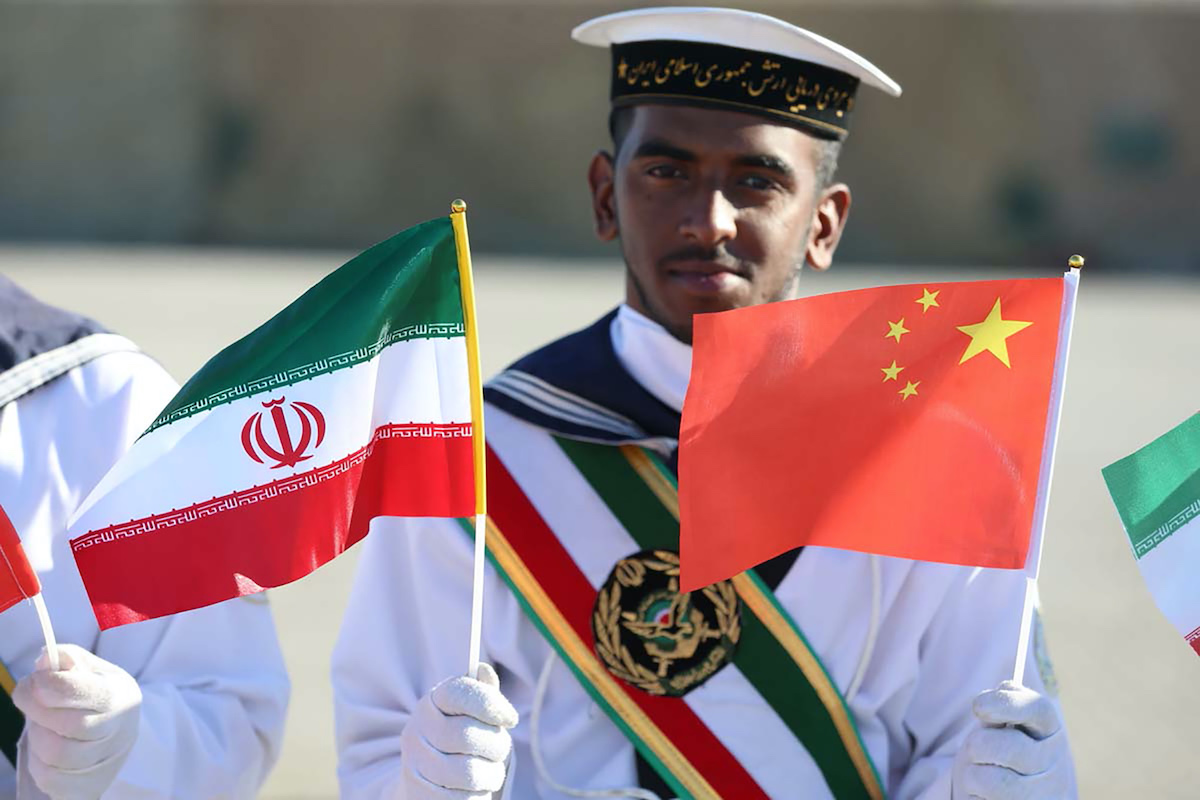
What began as a direct military and diplomatic confrontation between Washington and Tehran has evolved into more than a bilateral conflict: unfolding alongside the Iran war is a quiet, high-stakes indirect contest between the United States and China that is reshaping the strategic dynamics of the entire Middle East.
While Beijing is not engaging in direct military conflict with Washington over Iran, China’s deep-rooted economic, technological, and diplomatic ties to Tehran have significantly complicated Washington’s campaign strategy and eroded its ability to achieve a decisive outcome in the conflict. This shift has sparked urgent debate over a critical, long-term question: is the ongoing Iran war evolving into a new indirect front in the expanding global rivalry between the world’s two largest powers?
Available evidence does not point to an imminent direct military clash between Washington and Beijing. Just weeks before the conflict escalated, the two nations reaffirmed public commitments to constructive bilateral engagement during a high-profile summit between former U.S. President Donald Trump and Chinese President Xi Jinping in Washington. But despite this public posturing, the Iran conflict has already pushed the two powers into direct competition across multiple critical domains: energy markets, international sanctions enforcement, technology trade, maritime security, and most significantly, the future balance of power across the Middle East.
China acts as Iran’s core economic lifeline throughout the conflict
China holds a uniquely critical position in Iran’s war-time economy. Even before the latest outbreak of open conflict, China was Iran’s largest crude oil buyer, accounting for between 13% and 14% of China’s total crude oil imports, and it has retained its status as one of Tehran’s most important economic partners throughout the escalation of U.S. pressure.
These continued oil purchases have provided Iran with a vital stream of revenue at a time when sweeping U.S.-led sanctions have cut off most of the country’s other global commercial ties. Independent Chinese refiners have played an outsized role in sustaining this trade, as they face far less exposure to the Western-dominated global financial system than China’s large state-owned oil enterprises, making it easier for them to evade U.S. enforcement measures.
In response, Washington has expanded its sanctions regime to target a growing list of Chinese companies, commodity traders, and logistics networks linked to Iranian oil trade and sensitive technology transfers. U.S. regulators have also cracked down on China-linked procurement networks accused of assisting Iran in acquiring technology that could be used to advance nuclear research and ballistic missile development programs.
This crackdown has left Washington trapped in an increasingly tight strategic bind. Sanctioning smaller Iranian entities and minor Chinese commercial players carries limited risk, but imposing harsh penalties on major Chinese financial institutions could rapidly escalate the Iran conflict into a full-scale economic confrontation between the U.S. and China.
Recent independent reporting has also documented shipments of dual-use components from Chinese suppliers to Iran, including specialized electronics and other parts that can be repurposed to support advanced military systems and unmanned aerial drone production. U.S. officials are currently investigating allegations that Chinese entities provided targeted satellite intelligence linked to an Iranian strike on a U.S. military facility in Jordan. China has formally denied all such accusations, and former President Trump has publicly downplayed the severity of the allegations to avoid escalating bilateral tensions.
Even so, the line between routine commercial technology trade and indirect military assistance has become increasingly blurry in modern conflict. Contemporary warfare relies heavily on precise navigation systems, high-resolution satellite imagery, secure communications hardware, advanced semiconductors, and precision manufacturing components. A major power does not need to deploy troops or send direct weapons shipments to shape the outcome of a distant conflict: it can sustain an adversary’s military capability and resilience under pressure simply by supplying critical enabling components. For this reason, U.S. national security officials are now closely monitoring all of China’s economic and technological engagement with Iran.
The Strait of Hormuz: A point of overlapping interest and shared vulnerability
China’s economy is deeply dependent on energy exports from the Middle East, so any disruption to commercial shipping through the Strait of Hormuz — the chokepoint through which roughly 20% of global oil supplies pass — poses a direct existential threat to Beijing’s economic stability. Washington also shares a core interest in keeping the strait open to free navigation, though its motivations are rooted in broader global economic and geopolitical strategy. During pre-conflict bilateral talks, Trump and Xi Jinping agreed that the strait must remain open for unimpeded energy trade. Beijing has consistently opposed moves to militarize the waterway and has repeatedly called for all parties to de-escalate tensions in the region.
This alignment of core interests has created an unusual strategic balancing act for Beijing. China does not want to see the current Iranian regime collapse, but it also has no interest in a protracted war that would destabilize the entire Persian Gulf and put its own energy security at risk. As a result, Beijing is pursuing a dual goal: preserving Tehran’s economic survival while working to prevent the conflict from expanding beyond Iran’s borders.
Even so, Beijing’s support for Tehran has clear hard limits. China has not joined the conflict as a formal military ally of Iran, has repeatedly called for all parties to return to the negotiating table, and has positioned itself as a potential neutral diplomatic mediator between Washington and Tehran.
During a recent meeting with his Iranian counterpart, Chinese Foreign Minister Wang Yi reaffirmed that Beijing is committed to safeguarding Iran’s legitimate international rights and interests, while also urging both Tehran and Washington to exercise maximum restraint and resume diplomatic negotiations. China also maintains extensive economic and diplomatic ties with Iran’s regional rivals, including Saudi Arabia and the United Arab Emirates, which makes any open-ended, unqualified commitment to Iran economically and strategically costly for Beijing. While Iran holds significant strategic value for Beijing as a counterweight to U.S. influence in the Middle East, it is far from China’s only source of energy imports or access to regional influence.
The Iran conflict as a new testing ground for broader US-China rivalry
The competition between Washington and Beijing over Iran extends far beyond the borders of the Middle East. For the United States, the Iran conflict is an opportunity to demonstrate that U.S. sanctions, military power, and control over the international financial system still allow it to fully isolate a hostile state that defies U.S. global order. For China, continued engagement with Iran demonstrates that U.S. punitive measures have sharp limits when another major global power maintains open trade and economic ties with the sanctioned target. Every barrel of Iranian crude that reaches Chinese markets blunts the impact of U.S. sanctions, and every shipment of Chinese technology to Tehran weakens the effectiveness of U.S. export controls.
At the same time, disputes over security in the Strait of Hormuz expose the shared dependence and shared vulnerability of both powers to the global Middle Eastern energy system. The Iran war is thus simultaneously testing the limits of U.S. global power projection and the resilience of China’s global economic networks.
It is important to note that framing this dynamic as an undeclared war between the U.S. and China would be a dramatic overstatement. The two powers are not engaged in direct military conflict with one another on Iranian soil. But it would be equally inaccurate and misleading to dismiss China’s role as irrelevant to the outcome of the Iran conflict.
The Iran war has already become yet another arena in which the U.S. and China test one another’s ability to shape and dictate events beyond their own borders. Washington exercises influence through sanctions, military pressure, and financial leverage; Beijing projects power through trade, energy purchases, diplomatic mediation, and its sprawling global commercial supply chains and economic networks.
The central question today is not whether China will openly enter the war on Iran’s side. It is whether this conflict will push the long-running U.S.-China rivalry beyond disputes over trade and technology into a broader global struggle over which power has the ability to shape the emerging new international order. That may end up being the most consequential impact of China’s role in the Iran conflict.