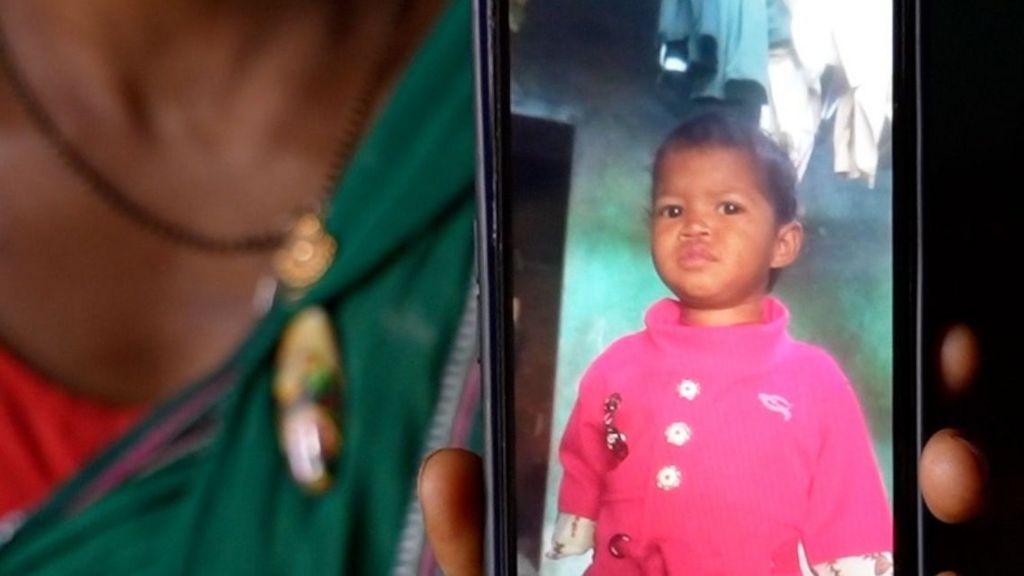
It is an unspeakable tragedy that has unfolded across the remote, forested tribal villages of Balaghat district in India’s Madhya Pradesh state. Since May, at least 32 children have lost their lives to a deadly combination of infectious disease, systemic neglect, and geographic isolation, leaving grieving families to grapple with preventable loss and shattered futures. The tragedy first came to light through the story of three-year-old Bamita Markam, whose short life ended at dawn one rainy May morning after days of agonizing illness.
Bamita first developed a high fever and painful red sores across her body. Her mother Koushila initially brought her to a local doctor, who prescribed an ointment, and the toddler appeared to briefly recover before falling dangerously ill again. Desperate and trapped by impassable, muddy terrain, the family turned to a local faith healer, who administered homemade syrups and tablets that did nothing to slow the disease. By the time the sun rose, Bamita was dead after convulsing through the night and vomiting blood. Her small body was buried in the nearby jungle by midday. “If god took away our children, what can we do?” Koushila says, her grief unspoken but palpable.
Almost all of the victims, who range in age from three-month-old infants to an 18-year-old young adult, belong to the Baiga people, one of India’s 75 classified Particularly Vulnerable Tribal Groups, communities that have long faced systemic exclusion and limited access to basic services. Local officials have attributed the majority of deaths to a combination of measles and malaria, with public health experts noting that pre-existing malnutrition and dangerous delays in accessing medical care drastically worsened outcomes.
Current official data points to roughly 8 to 10 deaths linked to measles, another 10 tied to malaria, with many children suffering from multiple overlapping infections. The full scope of causes for each individual death remains unclear, but even seasoned local leaders say they have never seen a crisis of this scale. “I have never seen an outbreak like this. My father was a two-term lawmaker, and I have served three terms, but neither of us has seen so many children die in such a short time,” says Sanjay Uikey, who has represented the area as an elected official since 2013.
Beyond the spread of infectious disease, the crisis exposes deep, long-running structural flaws in healthcare access for India’s most remote tribal communities. In these heavily forested parts of Balaghat, regions once troubled by Maoist insurgency, just reaching a functional health care facility is an often insurmountable challenge. The monsoon season turns narrow dirt tracks connecting scattered mud homes into slippery, impassable paths, cutting off entire hamlets from the outside world. The nearest 100-bed state hospital in Birsa sits roughly 70 kilometers from many of the affected villages. For families without private transportation, reaching the facility requires trekking for miles across mud, carrying sick children on makeshift bamboo stretchers or the back of motorcycles, and losing an entire day of wages that many already impoverished families cannot afford to forfeit.
Poverty and geographic isolation are compounded by deeply held cultural beliefs that shape how many Baiga families respond to illness. For generations, many community members have viewed common illnesses like rashes and fevers as the arrival of Mata, the disease goddess, who must be appeased through traditional rituals rather than rushed to formal medical treatment. Families often perform seven to nine-day rituals involving bathing, offerings of cool water and neem leaves to the goddess, with a widespread belief that seeking modern medical care before the ritual is complete will bring death. For weeks after the first cases emerged, these beliefs led many families to delay seeking care, allowing otherwise treatable infections to become fatal.
The scale of the crisis only began to emerge in late July, when local village council chief Parshuram Dhurwey learned of three child deaths in one small neighborhood of Bondari village within 24 hours. When he and local officials reached the area, they found a devastating scene: nearly every other child was sick, struggling with fever, rashes, and severe dehydration, most suffering from chronic undernutrition. When government medical officer Nimish Gautam first arrived to assess the outbreak, he encountered a teenage girl with several days of fever and a dangerous low blood sugar level, whose family refused to let medical teams examine her properly, convinced that transporting her to a hospital would kill her. “Police were brought in to persuade them to take her to a health centre. The family still refused. So we kept her under observation, and she recovered,” Gautam recalls. In one village, officials ultimately forcibly removed five seriously ill children to receive hospital care; every single one survived.
By the time local authorities recognized the scope of the outbreak, children had already been dying for weeks. Across four villages in Dhurwey’s council alone, 10 children between 18 months and 14 years old lost their lives. The tragedy has repeated across hamlets: Sagnibai of Bondari lost two children within 24 hours, her 12-year-old daughter Lamnin and one-year-old son Sahil, after local healers attributed their illness to Mata and the family had no money or transport to reach a hospital. Mahasingh Parte of Matla village lost two children, a six-year-old girl and four-year-old boy, within two days of each other after a faith healer ordered the family not to seek hospital care. Parte, a landless farm laborer who earns just 200 rupees ($2) on a good day, with work even scarcer during the monsoon, lives just 5 kilometers from a small primary health center but had never visited it. Poverty and remoteness stacked all odds against his children.
Investigations by the ICMR-National Institute for Tribal Health Research confirmed that six out of 10 tissue samples collected from affected villages in early August tested positive for measles, a highly contagious viral infection that is easily preventable with vaccination but can turn deadly for chronically undernourished children. Measles weakens the immune system, leaving young children vulnerable to life-threatening complications including pneumonia, severe dehydration, and brain swelling, and the risks rise drastically when paired with malaria, which is endemic to Balaghat district. Many sick children were also suffering from secondary infections including scabies, bacterial skin infections, and fungal disease, compounding their weakened health.
Public health experts emphasize that no single factor is to blame for the mass deaths, but rather a deadly collision of multiple vulnerabilities. Chronic malnutrition is endemic across the Baiga community, with the tragic case of one five-year-old who died of measles weighing just 5 kilograms, less than the average weight of a one-year-old child. Gautam attributes widespread child malnutrition to a combination of early marriage and early motherhood, with many Baiga girls giving birth by age 16 or 17 when their own bodies are still developing, leading to closely spaced pregnancies, premature births, and low birth weights. Many young mothers lack the resources and support to properly breastfeed and nourish their children, and most families rely on a monotonous diet of rice and lentil soup with very little protein or dietary variety, leading to widespread nutritional deficiencies. Low uptake of public health and nutrition services further exacerbates these gaps.
While the Baiga community is not entirely cut off from modern India — many families have solar electricity, bank accounts, and access to smartphones where children watch social media reels, and many adults migrate seasonally for work — the gap between government services on paper and delivery on the ground could not be starker. A 2024 audit by India’s Comptroller and Auditor General found “serious irregularities” in Madhya Pradesh’s distribution of government-issued take-home rations designed to supplement the diets of young children, pregnant women, and lactating mothers, with widespread failures in beneficiary identification, production, transport, and distribution that left the most vulnerable without critical support.
Once the outbreak was finally recognized, state health authorities launched an emergency response, with health workers conducting door-to-door screening across affected villages and mobile medical units equipped with oxygen, diagnostic tests, and medications visiting more than 20 remote hamlets. At the peak of the response, medical teams treated more than 50 patients a day, half of them children, conducting more than 10 malaria tests daily. In total, more than 6,200 mostly child patients were treated at home, more than 630 were referred to district hospitals, and roughly 30 remain hospitalized as of late September.
Emergency vaccination efforts also revealed gaps in official vaccination coverage: while official records claimed 90 to 95% coverage for measles, health teams found hundreds of unrecorded children and many families reluctant to accept vaccination. Authorities responded by offering the measles-rubella vaccine to all children under 15 regardless of prior vaccination status, and had vaccinated roughly 27,000 of 40,000 identified children in the Birsa block as of September.
The outbreak has now subsided, with officials reporting no new child deaths for more than two weeks before their late September assessment, and medical camp caseloads have dropped dramatically from 120 children a day at the peak to fewer than 10. But for the grieving families who lost their children, the pain of the tragedy is permanent. Back in Matla village, Koushila Markam visits the rocky grave of her daughter Bamita, who loved to play with her older sister Ankita and was frightened of passing cars. “I had hope she’d study and make something of herself. I never regretted I didn’t have a boy,” Koushila says, looking at her surviving six-year-old daughter, who still cries constantly for her sister. “I want more kids. I feel alone. Ankita is alone. She keeps crying for her sister.”