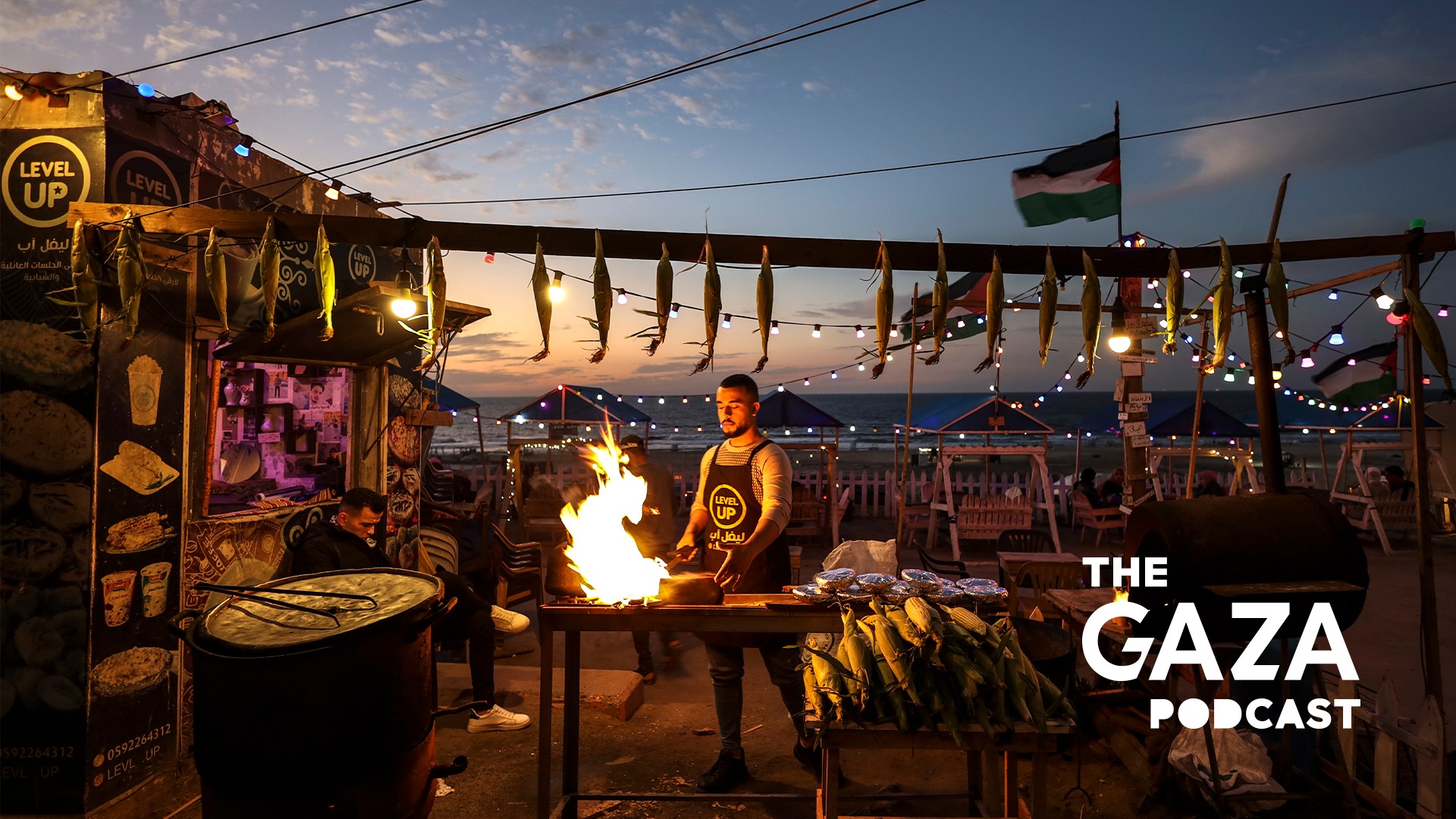
Against a backdrop of unrelenting humanitarian crisis and widespread global scrutiny of Israeli military actions in Gaza, independent news outlet Middle East Eye (MEE) has announced the launch of a groundbreaking new podcast that aims to shift global narrative away from dehumanizing statistics and toward the unfiltered, firsthand experiences of Palestinians living through the conflict.
Titled *The Gaza Podcast* and helmed by Hussam Tannera—a Gaza-based teacher, father, and direct survivor of the ongoing conflict—this new series is intentionally structured to place ordinary Palestinians at the forefront of its reporting, giving listeners an intimate, unmediated look at daily life in the enclave that goes far beyond breaking news headlines.
Every episode of the series will feature in-depth, unscripted conversations with Palestinian residents covering the full spectrum of their lived realities: from mass displacement and the widespread destruction of homes and infrastructure to crippling shortages of life-sustaining resources including food, clean water, and medical care, as well as the quiet, ongoing fight to preserve normal family life amid constant chaos and uncertainty.
The debut episode, now available to audiences globally, features an extended, raw conversation with Mariam Yusuf, a newly graduated medical doctor who has built a life in Gaza. Yusuf shares her harrowing experience of seeking shelter in a Gaza hospital early in the conflict, detailing her forced quarantine after contracting chickenpox, the devastating loss of close family members to starvation, and the impossible struggle of processing profound grief while surrounded by total systemic and physical collapse.
In his remarks ahead of the launch, David Hearst, co-founder and editor-in-chief of MEE, framed the podcast as a critical intervention into a global discourse that has increasingly normalized the suffering of people in Gaza. “The genocide in Gaza has been normalised. What happens there is now openly being used as a model to try elsewhere, in the occupied West Bank and Lebanon,” Hearst explained. He added that mainstream coverage too often reduces Gaza’s civilian population to abstract numbers and casualty counts, and that *The Gaza Podcast* directly addresses that gap by giving Palestinians full agency to share their own stories on their own terms. “Hussam brings a deeply personal perspective to these conversations, making this an important and timely series for anyone who wants to understand what life is really like in the strip,” Hearst said.
The launch of the series comes as Gaza’s 2.3 million residents continue to face catastrophic, long-running hardship. More than 80% of the enclave’s population has been internally displaced, with most families surviving in overcrowded, unsanitary makeshift shelters after Israeli military operations destroyed more than half of Gaza’s residential and public infrastructure.
Since the outbreak of full-scale conflict in October 2023, Israeli actions in Gaza and its ongoing occupation of the West Bank and East Jerusalem have sparked widespread international diplomatic condemnation, and have led to formal legal proceedings against the Israeli state at two of the world’s highest international judicial bodies. At the International Court of Justice (ICJ), the United Nations’ highest court for state-to-state disputes, the court has already confirmed there is a plausible case that Israel’s actions in Gaza amount to genocide, with a second ongoing case examining the legality of Israel’s 58-year occupation of Palestinian territories. Separately, prosecutors at the International Criminal Court (ICC) have issued formal arrest warrants for Israeli Prime Minister Benjamin Netanyahu and former Defense Minister Yoav Gallant, charging both with war crimes and crimes against humanity.
The Israeli government has consistently rejected all allegations of wrongdoing, routinely justifying strikes on civilian infrastructure—including residential towers, schools, hospitals, and United Nations aid facilities—by claiming Palestinian armed groups including Hamas operate from these sites. Human rights organizations and independent investigators have documented that these claims are rarely verified, and have largely gone unchallenged by major Western media outlets and Israel’s key Western allies, including the United States.
As of October 7, 2025, official Palestinian health authorities record that at least 20,179 Palestinian children have been killed by Israeli operations in Gaza, including more than 1,000 infants under one year old and 420 newborns. Even after a fragile ceasefire took effect on October 10, 2025, Israeli military raids and attacks across the occupied Palestinian territories have killed at least 1,257 Palestinians and wounded more than 4,100 more, with victims including journalists, medical workers, first responders, artists, writers, and athletes among the civilian casualties.
It is within this context of ongoing trauma and erasure of civilian experiences that *The Gaza Podcast* was built: to create a space for Palestinians to speak for themselves, beyond the dehumanizing casualty counts that dominate much mainstream coverage of the conflict.
*The Gaza Podcast* is currently available to stream on YouTube for video viewers, and can be accessed via all major audio podcast platforms including Spotify and Apple Podcasts.
Middle East Eye is an independent media outlet focused on original, unconflicted coverage and analysis of the Middle East, North Africa, and surrounding regions. More information about the outlet and its work is available on its official website.