One year after a ceasefire deal was signed to end hostilities between Israeli forces and Palestinian factions, repeated violations of the truce have pushed Gaza back into deadly instability, with at least eight Palestinians killed in fresh Israeli strikes across the blockaded enclave on Wednesday.
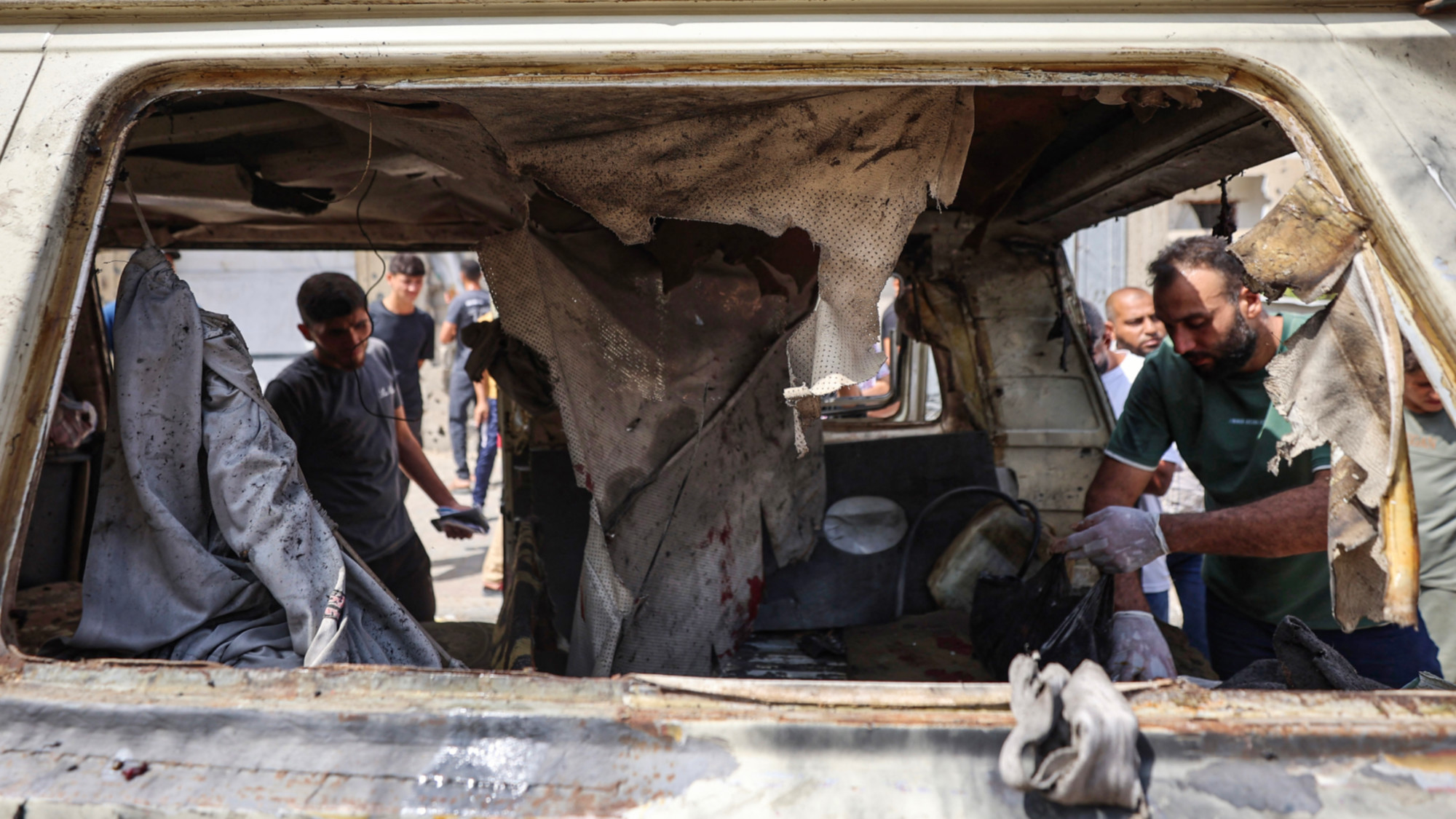
The deadliest attack of the day targeted a makeshift civilian transit vehicle in the Tal al-Hawa neighborhood of western Gaza City. An Israeli air strike hit a small cart attached to a minibus, a common adaptation for public transit amid the enclave’s crippling fuel shortage and skyrocketing transportation costs that leave formal transit options out of reach for most residents. These rigged vehicles, which often carry dozens of travelers moving between Gaza’s neighborhoods, were packed with commuters at the time of the mid-day strike.
The attack left five people dead and 15 more wounded, among them women and children, according to first responders. Motaz Ayoub, a civil defence ambulance officer who arrived at the scene within minutes of the blast, described a horrific scene of carnage across the crowded street. “The Israeli missile struck the civilian transport vehicle at a crowded hour of the day, when the streets were full of displaced people moving around,” Ayoub told Middle East Eye. “When we arrived, many of the killed and wounded were scattered across the street. We did not know who they were or where they had come from. One man’s body was cut in half, and many of the injured were in critical condition.” Ayoub added that a passenger bus passing near the target was also damaged in the strike, leaving additional people injured.
Witnesses nearby recounted the immediate panic that followed the explosion. Ayman Shubair, a 47-year-old mobile shop owner whose business sits 100 meters from the strike site, had just finished speaking with a customer when the bomb hit. “The sound of the explosion was deafening. I thought the building I was in had been bombed,” Shubair said. “The customer fell to the ground from fear and could not move for several minutes.” Shubair said crowds in the street scattered in all directions, with many screaming for help, while he stayed locked inside his shop out of fear of a follow-up strike — a common tactic used by Israeli forces in Gaza.
Shubair, who has already survived a separate attack on a vehicle just 30 meters from his shop last week, said low-flying Israeli drones had been visible over the neighborhood since the day before the strike, a clear warning to residents that violence was imminent. “I still remember that day. I saw the bodies of two people burning inside their car after it was hit,” he said. Like the vast majority of Gaza’s 2.2 million residents, Shubair now lives in constant fear of attack, no matter what routine activity he is carrying out. “There is no safe place in Gaza,” he said. “Where is the ceasefire they keep talking about? Everywhere, all the time, there are bombings and random Israeli gunfire. The Israeli forces claim they do not kill civilians, but that is a lie. If they want to target someone, they kill everyone around them too.”
Three additional Palestinians were killed in separate Israeli strikes in other parts of Gaza City and the southern city of Khan Younis on Wednesday, bringing the total death toll from the day’s attacks to eight. The violence follows a similar strike on Tuesday that left another eight Palestinians dead, marking an escalation of the near-daily ceasefire violations Israel has carried out since the truce was signed one year ago.
Since the ceasefire agreement went into effect, at least 1,430 Palestinians have been killed by Israeli forces — an average of four people per day — including more than 300 children. The truce was originally negotiated to end Israel’s full-scale military campaign and lift crippling restrictions on the entry of humanitarian aid and commercial goods into the blockaded enclave. To date, Israel has failed to uphold either commitment: it continues to carry out daily bombing raids across Gaza while maintaining a near-total blockade that has left the territory on the brink of famine and collapsed most essential services.
Since the start of Israel’s military campaign in October 2023, more than 74,000 Palestinians have been killed and more than 175,000 wounded, according to local health officials. Ayoub, the civil defence officer, said the recent escalation of strikes has left all Gaza residents bracing for violence at any moment. “The Israeli drones are lately flying low over the city. People are so concerned,” he said. “Everyone feels the danger of being bombed or witnessing a strike nearby.”