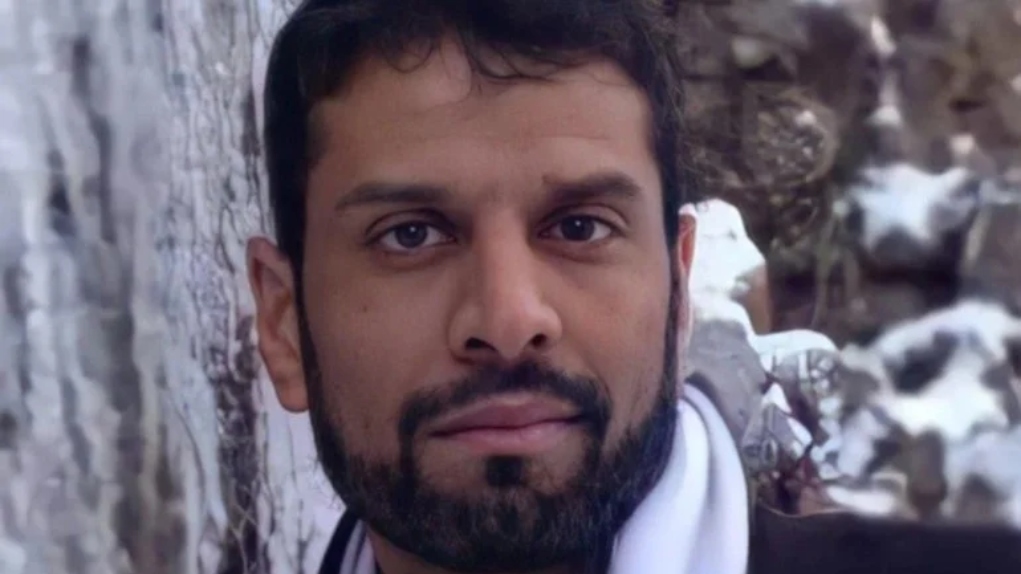
A years-long human rights case centered on the extradition of a Bahraini opposition activist has drawn new international pressure on Serbia, after the Council of Europe demanded the Balkan nation fully implement a landmark European Court of Human Rights (ECHR) ruling that found Serbia violated fundamental human rights protections.
The case traces back to November 2021, when Ahmed Jaafar Mohamed Ali, a Bahraini activist who fled his home country amid a 2011 government crackdown on Arab Spring protests and had been living in exile in Iran, arrived in Serbia to apply for asylum. He was taken into custody shortly after arrival based on an Interpol red notice that his legal team has long argued was issued improperly.
By January 2022, the ECHR had issued an emergency interim order barring Serbian authorities from extraditing Ali. The ruling explicitly cited well-documented risk that Ali could face torture or cruel, inhuman treatment if he was returned to Bahrain, and required Serbia to hold the extradition process pending further review of his asylum claim.
Despite the binding court order, Ali was removed from Serbia just three days later. Human rights campaigners confirm he was transported on a private plane chartered by United Arab Emirates-based Royal Jet Airlines and flown directly back to Bahrain. Since his arrival, Ali has been incarcerated at Bahrain’s notorious Jau Prison, where he is serving two consecutive life sentences.
In first-hand accounts shared via monitored prison calls with outside activists, Ali has detailed a pattern of ongoing abuse that matches widespread reports of mistreatment at Jau Prison. He told fellow activists that guards have arranged for violent inmates incarcerated in the same cell block to beat and harass him on repeated occasions, creating a permanent climate of fear. He reported being beaten badly as recently as July this year, and remains in constant fear of further attacks.
Ali is currently held in the prison’s Building Two, a facility designated for inmates convicted of violent offenses and serious drug crimes, rather than political prisoners. He has documented overcrowding so severe that half the cell’s population is forced to sleep on the floor, with inadequate ventilation creating what he describes as “suffocating” conditions. Sanitation facilities are unsanitary, he added, with overflowing drains and only a garden hose available for inmate bathing. Ali has been repeatedly placed in solitary confinement, been denied requested medical care, and has launched multiple hunger strikes to protest the conditions and demand access to basic rights. He also reported that prison staff have insulted his religious faith as part of the ongoing harassment.
In March 2025, the ECHR issued a final ruling that formally confirmed Serbia had violated Article 3 of the European Convention on Human Rights (ECHR), the core provision that bans torture and cruel, inhuman or degrading treatment. The court found that Serbian judicial authorities failed entirely to review Ali’s well-founded claim that he would face abuse if returned to Bahrain, and violated the convention by proceeding with extradition in direct defiance of the interim court order. The ECHR ordered Serbia to pay Ali 9,800 euros (approximately $11,100) in damages, plus any applicable taxes and late interest if payment was not fulfilled on schedule.
To date, Serbia has deposited the ordered sum in a domestic court account, but the Council of Europe’s Committee of Ministers, the body charged with overseeing compliance with ECHR rulings, has confirmed that Ali’s legal team faces insurmountable barriers to accessing the funds. The unique constraints of Ali’s incarceration in Bahrain make it impossible for him to meet the procedural requirements to release the deposit. In its latest statement, the Council of Europe has called on Serbia to work directly with Ali’s legal representatives and the Council of Europe Secretariat to find an immediate solution that will allow the funds to be released without further delay.
Sayed Ahmed Alwadaei, director of advocacy at the Bahrain Institute for Rights and Democracy (BIRD), who has personal experience being detained in Jau Prison’s Building Two, described the impact of Ali’s first-hand accounts. “It was very hard to hear Ahmed describing to me the degrading conditions he is living in at Jau Prison,” Alwadaei told Middle East Eye. “He is stuck in a severely overcrowded cell, has repeatedly had to resort to hunger strikes just to secure basic rights, and has been in and out of solitary confinement.” Alwadaei added that the ECHR ruling serves as a critical reminder that Serbia cannot take the Bahraini government’s assurances about detainee treatment at face value, and must take all possible action to remedy the harm caused by Ali’s unlawful extradition.
The case comes amid longstanding concerns about systemic human rights abuses in Bahrain. Following the 2011 Arab Spring uprising, thousands of Bahrainis, mostly from the Shia majority population in the Sunni-ruled kingdom, were arrested and imprisoned for their political activity. Last year, Amnesty International reported that an estimated 322 political prisoners remain in arbitrary detention in the country. While the Bahraini government has issued royal pardons for more than 1,500 prisoners since 2024, Amnesty notes that authorities continue to systematically suppress freedom of expression, association and peaceful assembly through widespread arbitrary detention and politically motivated prosecutions. Recent regional tensions stemming from the US-Israeli conflict with Iran have also led to a new crackdown, with authorities stripping citizenship from anyone deemed to have expressed support for Iran, which has carried out targeted attacks inside Bahraini territory.