Tensions between the United States and Iran have escalated sharply in recent days after US President Donald Trump publicly rejected a new Iranian ceasefire proposal that would reopen the strategically critical Strait of Hormuz, leaving the region on the brink of resumed large-scale hostilities just weeks ahead of November’s US midterm elections.
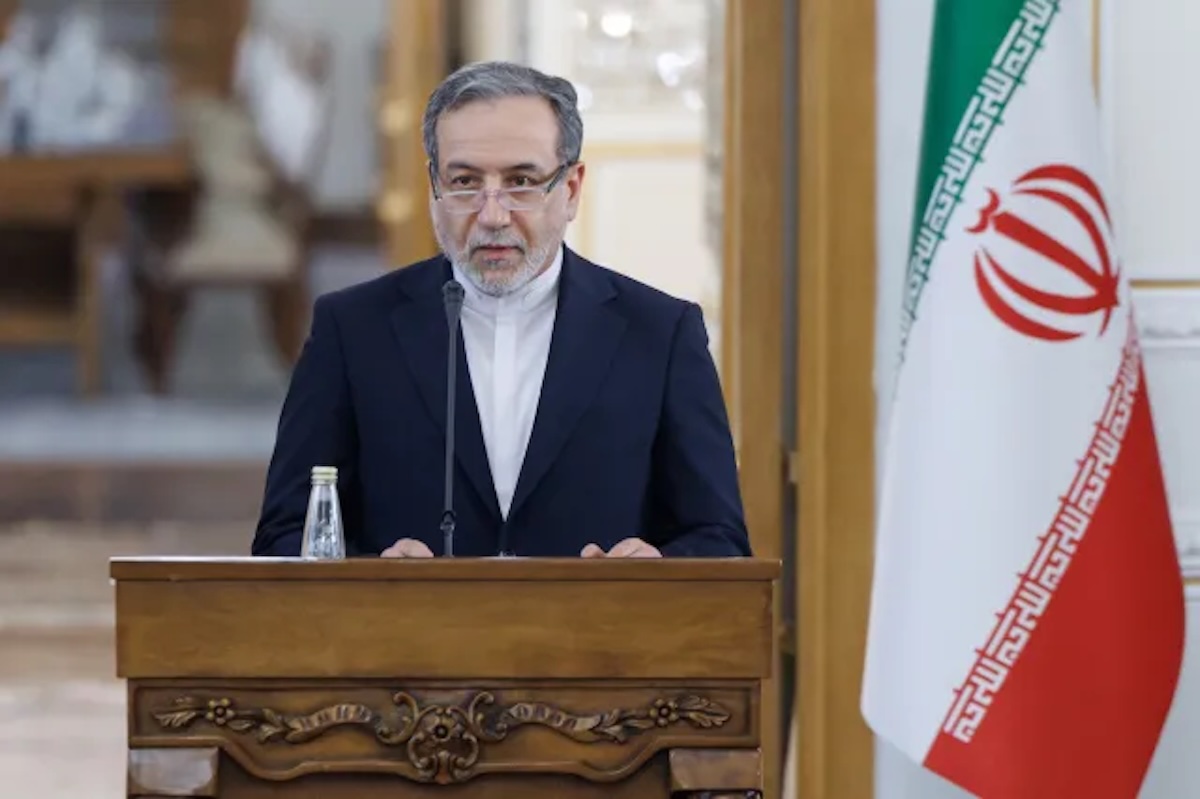
Iran’s top diplomat reaffirmed Tehran’s long-held position over the weekend that no viable path forward exists outside of diplomatic negotiation, even as he acknowledged the US has repeatedly proven to be an untrustworthy negotiating partner. “There’s always hope for diplomacy,” Iranian Foreign Minister Seyed Abbas Araghchi stated during an appearance on NBC’s *Meet the Press* Sunday. “But we are fully prepared for war to resume. We will stand firm against any new act of aggression, even if it escalates to a doomsday conflict. At the same time, we remain open to diplomacy. The choice is entirely President Trump’s to make.”
The proposal, which Iranian leaders advanced during their appearance at the United Nations General Assembly in New York this week, represents a adjusted version of a deal first floated in June, with a key change to the sequence of steps, according to Sina Toossi, senior fellow at the Washington-based Center for International Policy. Toossi explained to CNN that unlike prior frameworks, the new proposal requires the United States to take concrete, verifiable confidence-building steps first before Iran eases its restrictions on shipping through the Strait of Hormuz, a chokepoint through which roughly 20% of global oil supplies pass daily. During his UNGA address, Iranian President Masoud Pezeshkian reiterated that his country has borne the brunt of regional terrorism, and called out the high civilian death toll that has resulted from joint US-Israeli bombing campaigns launched against Iran in late February.
Trump, who launched the current conflict despite conclusions from his own intelligence agencies that Iran abandoned all nuclear weapons development programs years ago, used his own UNGA speech to issue a brutal threat to “annihilate” Iran. Late Friday, the *Wall Street Journal* first reported that Trump had rejected Iran’s proposal for a seven-day temporary ceasefire, and had told senior aides he intends to resume bombing operations against Iran immediately after the November midterm elections. The US president confirmed this decision to reporters Saturday, framing his rejection as a product of US military dominance in the region. “I’m rejecting their deal,” Trump told reporters. “They want a deal where they open the strait immediately because they’re losing so badly. We’re winning tremendously, we have total control of the Strait of Hormuz. I like making deals too, but this deal is unacceptable.”
Despite Trump’s public rejection, unofficial diplomatic channels remain active, according to a Saturday report from Axios. Unnamed US officials claimed that “positive and constructive” indirect talks are still ongoing between the two sides via third-party mediators, including discussions on long-stalled nuclear issues. Qatari mediators facilitated a new round of indirect negotiations on the UNGA sidelines between Araghchi and Trump’s personal envoys Steve Witkoff and Jared Kushner.
In a detailed Persian-language statement posted to the messaging platform Telegram over the weekend, Araghchi noted that no formal response has yet been delivered to Tehran via official diplomatic channels, and pointed to the long pattern of contradictory public statements from the US president. “We have seen President Trump’s public reaction, but nothing has been conveyed to us through mediators yet,” Araghchi wrote. “Unfortunately, we have come to expect many contradictory statements from him. We are waiting for a definitive position to be delivered through official channels, and we will make our decision based on that formal input.”
The foreign minister emphasized that Iran’s core terms for reopening the strait remain non-negotiable. “Our conditions are clear: any progress on opening the Strait of Hormuz depends entirely on the fullfilment of our stated conditions, and we will not back down from them. Only a negotiated solution can break this current deadlock,” he wrote. Any lasting agreement, he added, must be “rooted in honor and justice, that protects the rights of the Iranian people and meets our legitimate national demands.” He went on to highlight that the Iranian public has already proven its resilience across military, diplomatic, and economic domains, and has successfully withstood the impact of harsh international sanctions.
Iran’s top military commander echoed this uncompromising stance, warning that Tehran will not accept a status quo that blocks Iranian trade while allowing foreign powers unfettered access to the region’s strategic waterways. “If Iran cannot trade, if Iran cannot live, no one will be able to trade or live in this region,” Army Commander-in-Chief Amir Hatam told Iranian state media, adding that the conflict is currently at a critical, decisive turning point.
The ongoing war has sparked growing frustration back in the United States, where American consumers are facing soaring energy prices — particularly for diesel and gasoline — tied to Hormuz shipping disruptions. With less than six weeks until the midterm elections, and Trump’s Republican Party fighting to maintain its narrow congressional majorities, the president’s national approval rating has fallen to a record low.
US advocacy groups have stepped up their push to end the conflict in recent days. After Trump’s rejection of the ceasefire proposal, Ryan Costello, policy director for National Iranian American Council (NIAC) Action, called out the president’s inconsistent approach to Iran dating back to his first term. “‘Art of the deal,’” Costello wrote on social media, mocking Trump’s well-known business branding. “Attack Obama for negotiating a successful nuclear deal. Tear up the deal, promise you’ll get a better one. Start an illegal war instead, blow up the US economy. Agree to a ceasefire to end the war, stick to it for two weeks. Then refuse to restart that deal right before the midterms.”
Earlier this week, NIAC Action filed a federal lawsuit arguing that Trump’s war on Iran is unconstitutional because it lacks required congressional authorization. “No president should have the power to drag this country into an indefinite war on his own,” NIAC Action President Jamal Abdi said in a statement. “Congress never authorized this war. Yet Iranian families are being bombed, American service members have been killed, and communities on both sides are forced to bear the devastating consequences. This lawsuit asks a fundamental question: Can one single person unilaterally decide to keep an entire nation at war?”