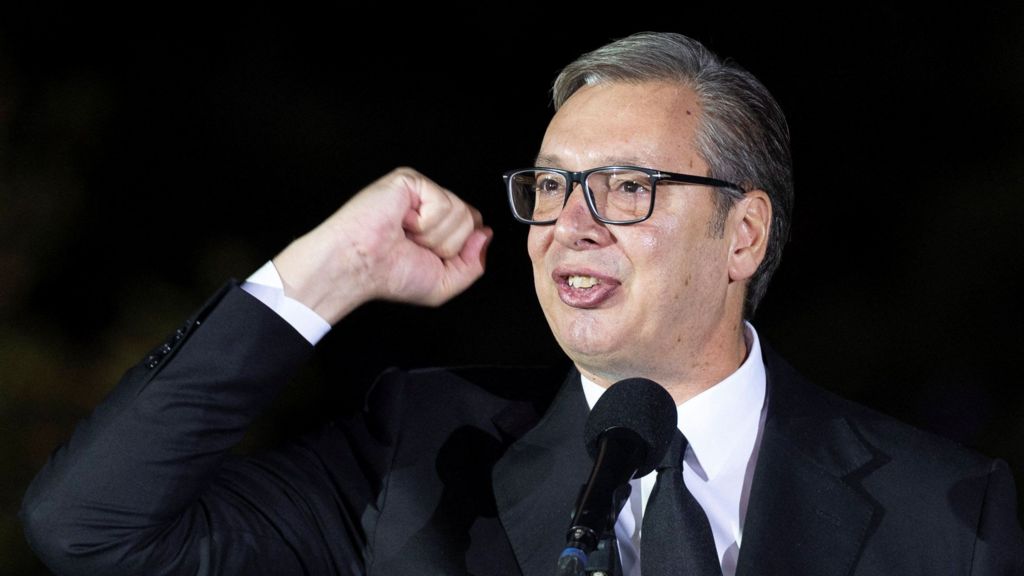
After 15 months of widespread public unrest fueled by allegations of systemic government corruption, Serbia’s long-sitting president Aleksandar Vučić has formally stepped down from his post, closing a nine-year chapter of his presidency and triggering a snap presidential vote that will coincide with an already scheduled parliamentary election before the end of 2026.
Addressing a crowd of loyal supporters gathered outside Belgrade’s presidential headquarters on Sunday, Vučić emphasized that his administration had maintained critical peace and territorial stability for Serbia throughout his tenure, a period that has reshaped the Balkan nation’s domestic and global standing. His departure was not entirely unexpected: the populist leader first announced his resignation plan back in June, and Serbia’s constitution bars presidents from seeking a third consecutive term, which would have expired in 2027 anyway.
The wave of discontent that ultimately pushed Vučić to step down began in 2024, after the fatal roof collapse of Novi Sad’s newly renovated railway station killed 16 people. Protesters across demographic groups – from university students and secondary school teachers to industrial workers and rural farmers – argued the disaster was a direct consequence of more than a decade of cutting corners and graft under Vučić’s Serbian Progressive Party (SNS). The station renovation had been framed by the administration as a flagship showcase of Serbia’s economic progress, making the collapse a powerful symbol of failed governance for critics.
Multiple lower-level resignations from SNS officials failed to quell public anger, and demonstrations continued through the 2026 summer, escalating into civil unrest after demonstrators accused police of excessive force against peaceful protesters. As protests grew, demonstrators added early elections to their list of core demands, a call the administration ultimately conceded to by calling a snap parliamentary vote for late October.
Under Serbia’s constitution, a new presidential election must be held within three months of a sitting president’s resignation. Vučić confirmed that the presidential vote will be held roughly one month after the October parliamentary election, meaning Serbian voters will head to the polls twice before the end of the year. Far from exiting Serbian politics entirely, Vučić is already positioned as the SNS’s candidate for prime minister in the upcoming parliamentary vote, leaving open a clear path for him to remain the country’s top political leader even after leaving the presidency.
In the final days of his presidency, Vučić used his executive powers to issue pardons for 49 people, including 23 student protesters and SNS loyalists facing charges linked to the 18 months of unrest, according to Serbia’s public broadcaster RTS.
Parliamentary Speaker Ana Brnabić, a long-time SNS member and close ally of Vučić, will serve as interim president until a new head of state is elected. The upcoming parliamentary election will see Vučić’s SNS face two major challengers: a grassroots, student-led anti-corruption bloc named Students Win, and a coalition of pro-Western opposition parties grouped under the banner European Serbia.
Vučić has been a dominant figure in Serbian politics for more than 12 years, first taking office as prime minister in 2014 before winning his first presidential term in 2017. A pro-Russian populist, he has pursued a delicate balancing act on the global stage: he has repeatedly stated Serbia’s official goal of joining the European Union, while at the same time maintaining deep political and economic ties with Russia and courting large-scale infrastructure investment from China.