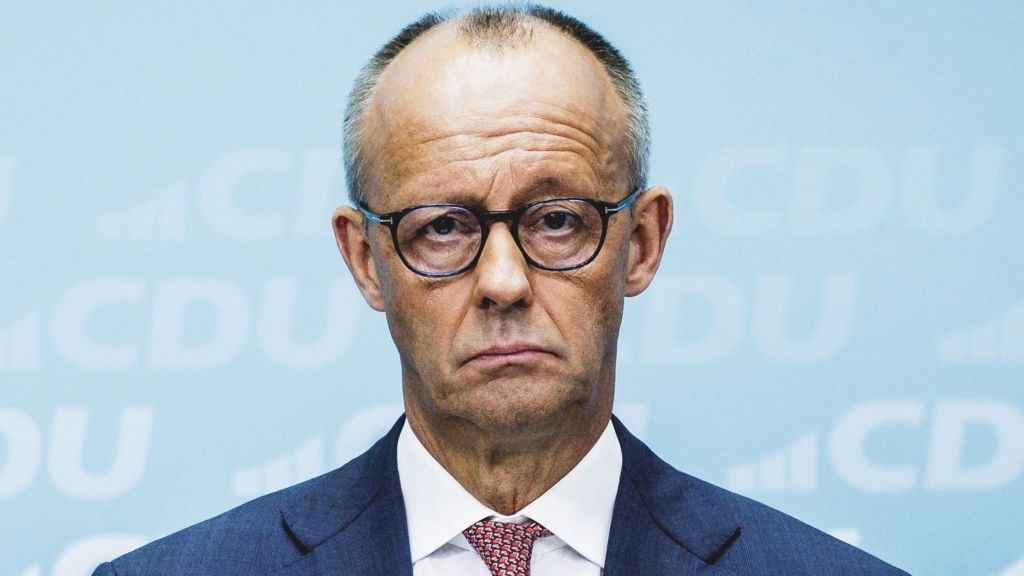
Two years after Friedrich Merz took the chancellorship of Germany, a wave of bruising regional election results has upended the country’s political order, pushing his fragile coalition government into open crisis and exposing deep-seated national anxieties that have been simmering for more than a decade.
Long-held global stereotypes of Germany— a nation defined by consensus-driven, predictable politics, a globally dominant industrial economy leading automotive innovation, and a global benchmark for logistical efficiency— have been completely upended by the current state of play. Countless Germans now report that their country has drifted far from the core attributes that once defined its national identity, with no clear consensus on what path forward will restore that sense of stability. That pervasive uncertainty is now embodied by Merz himself, whose center-right Christian Democratic Union (CDU) has suffered a string of devastating defeats over the past two weeks.
The scale of the CDU’s losses is staggering: the party was pushed out of first place in Berlin, trounced in statewide polls in Saxony-Anhalt, and ousted from the regional parliament entirely in Mecklenburg-Western Pomerania. While persistent whispers of a “Kanzlertausch”— or a last-minute chancellor swap— have circulated within CDU ranks, no lawmaker has yet launched an open challenge to Merz’s leadership. That small lifeline, however, does not erase the fact that the chancellor is treading on extremely thin ice: his approval ratings have hit record lows, with voters frequently criticizing him as arrogant and disconnected from everyday household concerns. Government insiders have framed this more politely as a critical “communication gap” between the leadership and the electorate.
Supporters of Merz argue that replacing the chancellor would do nothing to address the structural challenges facing Germany, and that the government instead needs to double down on long-delayed domestic reforms in partnership with its center-left coalition partner, the Social Democratic Party (SPD), while refining its outreach to voters. “Anyone who took over would face the exact same set of challenges,” Jürgen Hardt, foreign policy spokesperson for the CDU/CSU parliamentary bloc, told reporters shortly after Merz addressed party lawmakers in a closed-door Bundestag meeting. Hardt noted that the CDU performed far better in earlier regional contests this year, adding: “Friedrich Merz is aware of his shortcomings. He is working to address them, and we as a party are working to get our message right. We hope we can convince voters in the coming months that we are on the right track.”
Merz was elected to office in 2025 on two core promises: a hardline crackdown on unauthorized immigration and a comprehensive revitalization of Germany’s flagging economy. He positioned himself as a dynamic alternative to the chaotic three-way coalition led by his center-left predecessor Olaf Scholz, whose government collapsed amid infighting and unmet policy goals. Merz’s allies point to early policy wins to back their defense of his leadership: this week, leading independent economic institutes upgraded Germany’s 2026 and 2027 growth forecasts to above 1%, and unauthorized border crossings into Germany and the broader European Union are down year-over-year.
Even so, these modest gains have done little to ease widespread public anxiety across both policy areas. German households and businesses continue to grapple with persistently high energy costs, a lingering aftershock of the end of cheap Russian gas imports that once powered the country’s export-led economic boom. Fears are also growing that China’s expanding automotive industry is eroding the global market share of Germany’s iconic auto sector, the historic backbone of its economic strength. On the immigration front, public debate has shifted away from controlling new arrivals to deep-seated concerns over public safety, strains on social welfare systems, and slow, uneven integration of immigrant communities.
Voters are abandoning Germany’s two traditional governing parties, the CDU and SPD, in droves, clearing a path for the dramatic rise of the far-right Alternative for Germany (AfD), a party whose Russia-leaning policy positions have alarmed German security officials, and whose regional branches are officially classified as right-wing extremist by domestic intelligence services. The AfD rejects these labels as unfair smears, and claimed its third ever state-level election victory in Mecklenburg-Western Pomerania just last Sunday. “Friedrich Merz’s time in office is numbered,” AfD co-leader Alice Weidel stated in an interview this week.
Despite repeated scandals over the past half-decade, the AfD has climbed to the top of national opinion polls, polling around 28% support nationwide, and has shaped the terms of national political debate. The party has successfully leveraged widespread nostalgia for Germany’s past era of economic stability and current voter anxiety to consolidate its power bases in the former East German states, running on a simple promise to restore the lost sense of order and national purpose. A campaign placard spotted by reporters in Berlin summed up this message: “Berlin braucht Ordnung”— Berlin needs order.
The collapse of centrist support did not only benefit the far right: in Berlin, it was the far-left Die Linke party that topped the regional polls, delivering another major blow to Germany’s traditional big-tent centrist parties. Die Linke’s victory has placed the party under fresh scrutiny over ongoing allegations of antisemitism within its ranks, allegations that party leadership has rejected, reaffirming its commitment to protecting Jewish life in Germany.
This round of regional elections has laid bare Germany’s deepest political fault lines in post-war history: the rapid erosion of support for centrist establishment parties and a deeply polarizing national debate over the growing influence of the far right. Rarely has a series of local ballots generated such profound political upheaval at the national level, or attracted such intense international attention, as Germany grapples with an uncertain future that bears little resemblance to the stable, prosperous order the country has long been known for.