Eighty years after the end of World War II, German law enforcement continues to pursue accountability for Nazi-era atrocities, with a new investigation targeting a 105-year-old man accused of serving as an accessory to mass murder at one of the Third Reich’s largest prisoner of war camps.
The suspect is alleged to have worked as a guard at Stalag 326 VI K, located in Senne in northwestern Germany, Dortmund chief public prosecutor Sonja Frodermann confirmed in an official statement. Frodermann added that a parallel investigation into a second former guard at the same camp has been closed, after the 99-year-old suspect died several months ago. No identifying details about either suspect have been released to the public, a common practice in ongoing German investigations into historical Nazi crimes.
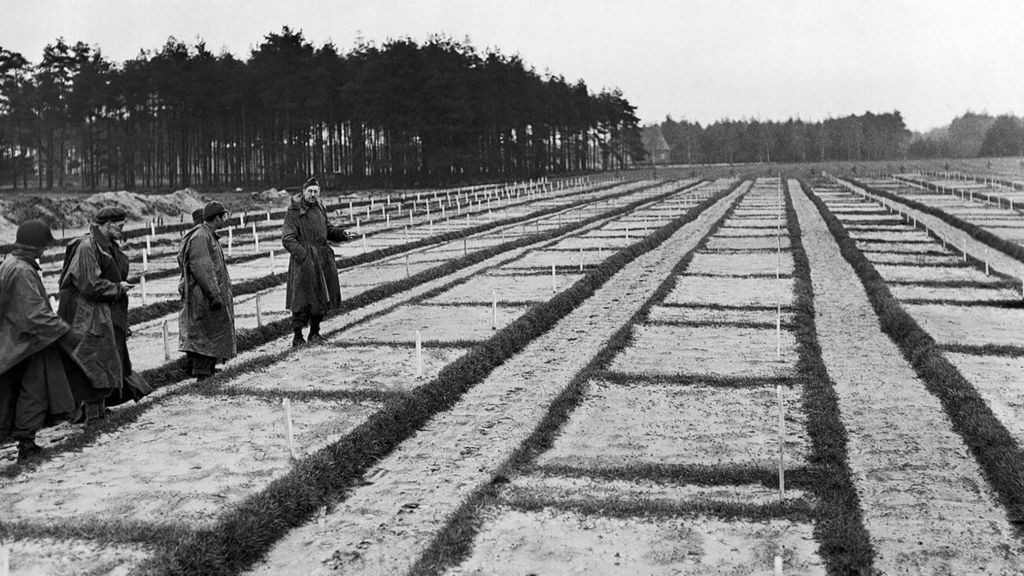
Stalag 326 stands as one of the most brutal and high-capacity POW camps operated by Nazi Germany. Between 1941 and 1945, roughly one in every three Soviet Red Army soldiers captured by German forces passed through the Senne camp complex, according to records from the site’s official memorial. Most prisoners were forced into hard labor for local German industries, while facing catastrophic living conditions characterized by systematic neglect, violent abuse, and widespread starvation. In total, the camp held between 180,000 and 200,000 Soviet POWs, and tens of thousands of those captives died from mistreatment. Today, 30,000 Russian POWs remain buried in mass graves at the camp site. Along with Soviet prisoners, the camp also held captured service members from France, Poland, Serbia and Belgium. When Allied forces liberated the camp in 1945, just over 9,000 Russian prisoners were still alive.
This latest investigation underscores the growing logistical and demographic challenges facing German prosecutors as they pursue remaining Nazi war crime suspects nearly eight decades after the end of the war. The vast majority of people who participated in Nazi atrocities are already deceased, and the few remaining suspects are extremely elderly.
Germany has eliminated any statute of limitations for murder and accessory to murder stemming from Nazi crimes since 1979, allowing investigations to proceed regardless of how much time has passed. This new probe of the 105-year-old Senne guard is not the only active case: another centenarian former guard at the nearby Hemer Stalag VI A camp is also currently under investigation.
Recent high-profile efforts to bring Nazi war criminals to justice have illustrated the hurdles of these late-stage investigations. In 2021, a 101-year-old former guard at the Sachsenhausen concentration camp, Josef Schütz, was convicted of complicity in mass murder and sentenced to five years in prison. Schütz, the oldest person ever convicted of Nazi war crimes, died in 2023 while appealing his conviction, before he could begin serving his sentence. In 2022, a 97-year-old former secretary for a Nazi concentration camp commander was convicted of abetting murder and given a suspended sentence; she also died in 2023 at the age of 99 before the case could be finalized.
In Germany, investigations into Nazi war crimes follow a structured process: all potential cases are first reviewed and prepared by the Central Office for the Investigation of National Socialist Crimes, based in the southwestern city of Ludwigsburg, before being handed over to local public prosecutors for formal prosecution, in this case Dortmund’s office. As surviving perpetrators age and pass away, these ongoing investigations reflect Germany’s sustained commitment to confronting its historical atrocities, even as the window to secure convictions closes.