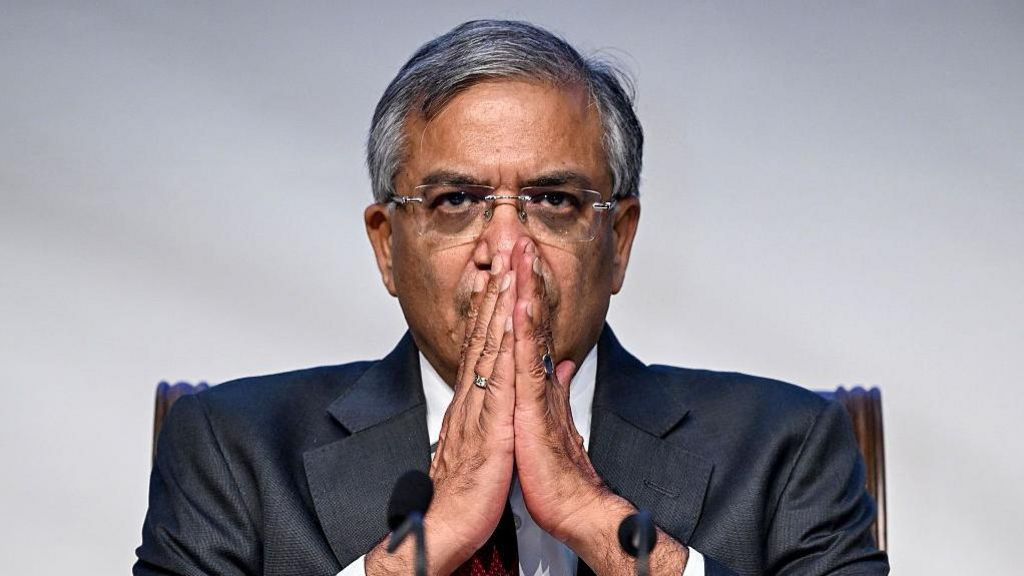
India’s top electoral oversight body, the Election Commission of India (ECI), is grappling with its most severe credibility crisis in recent years, after an explosive newspaper report exposed deep internal rifts over the management of a nationwide voter roll overhaul, prompting opposition parties to demand the immediate resignation of Chief Election Commissioner Gyanesh Kumar.
As the institutional anchor of the world’s largest democracy, the three-member ECI is led by Kumar, with senior commissioners Sukhbir Singh Sandhu and Vivek Joshi rounding out the panel. The current controversy erupted following an investigation published by *The Indian Express*, which documented that over the past 10 months, Sandhu and Joshi have repeatedly challenged Kumar over critical decisions related to voter database integrity, new voter enrollment protocols, and the overall security of national electoral rolls. According to the report, the two senior commissioners were sidelined from at least 14 key decisions, with changes made to electoral procedures without their knowledge or formal approval. On one occasion, the pair even submitted a formal complaint letter to the Government of India’s chief secretary, the country’s top civil service post, the report added.
The internal revelations have sent shockwaves through India’s political landscape, particularly as the controversy overlaps with the ECI’s ongoing Special Intensive Revision (SIR), a highly contentious nationwide update of the national voter database. ECI officials frame the SIR as a long-overdue clean-up: the last comprehensive national revision of voter rolls was completed nearly 25 years ago, and the project aims to remove ineligible entries linked to deceased voters, residents who have relocated abroad, and individuals duplicated across multiple regional rolls. To date, the revision has removed roughly 130 million names from national rolls, but the process has been mired in controversy from its launch. Opposition parties have long accused Kumar and the ECI of manipulating the SIR to intentionally remove voters aligned with opposition parties and favor Prime Minister Narendra Modi’s ruling Bharatiya Janata Party (BJP) in upcoming and recent elections. Both the BJP and ECI have repeatedly denied these allegations.
What makes the latest revelations uniquely damaging, political analysts note, is that the criticisms of Kumar’s leadership come not from opposition parties, but from within the ECI itself. Millions of eligible voters across the country have already filed official complaints reporting that their names were incorrectly removed from voter rolls during the SIR process, with many arguing that the new documentation requirements for re-enrollment are unnecessarily burdensome for low-income and marginalized communities who lack formal identity paperwork.
Former Chief Election Commissioner SY Quraishi, a vocal public critic of the SIR since its launch, told press agency PTI that he had long questioned why Sandhu and Joshi had not publicly pushed back on the controversial project. “Now I realised that very silently and quietly they were protesting, they were writing notes. That is a good thing, they have gone up in my esteem,” Quraishi said.
Opposition leaders have seized on the internal leaks to ramp up pressure on Kumar and the ECI, with senior figures going far beyond calls for resignation to demand criminal action over the alleged voter list manipulation. Senior Congress Party leader and Member of Parliament Rahul Gandhi, who has repeatedly accused the ECI of systematically “stealing votes” from opposition blocs, labeled the alleged manipulation an act of treason against India’s constitution in a post on X Wednesday. “Vote chori [theft] is a crime against the Indian people and a direct attack on our constitution. The BJP, RSS [Rashtriya Swayamsevak Sangh] and EC who organised it have committed an act of treason. Justice will be served,” Gandhi wrote, alongside a 15-second video warning ECI officials that “your time will come. You cannot get away.”
Mamata Banerjee, chief of the regional Trinamool Congress party and former Chief Minister of West Bengal, went a step further, calling for Kumar’s arrest and demanding that fresh elections be held in the state using the pre-SIR voter roll. Banerjee’s party lost control of West Bengal to the BJP in recent state elections, during which more than 2.7 million voters were removed from the state’s rolls during the SIR process. Banerjee and her supporters argue the removals directly cost the party dozens of assembly seats and the overall election.
Within hours of the *Indian Express* report’s publication, the ECI released an official statement pushing back against the criticism and defending its internal decision-making processes. “Differing views and observations are a normal part of deliberation in any institution. They are a part of the decision-making process before a final decision is taken,” the statement read. “Not only the three Commissioners, but every officer of the Commission is fully authorised to give his suggestions to the Commission for improving the electoral system.”
The ECI also argued that the newspaper report presented a distorted, partial picture of its internal processes, noting that highlighting isolated internal notes from a 10-month period while ignoring the large body of unanimous collective decisions on electoral reforms gives an inaccurate view of the commission’s work. “In recent months, the commission has introduced around 40 new initiatives and undertaken many electoral reforms including the conduct of electoral roll revision (including SIR) across the country. All these decisions are an outcome of the unanimous decisions of the full commission in the past one year,” the statement added.
The BJP has also defended Kumar, dismissing the opposition’s criticism as a coordinated “smear campaign” rooted in political frustration. Party spokesperson Sambit Patra told reporters that ever since the Modi government took office in 2014, opposition parties have steadily lost electoral ground, and are now attacking independent national institutions to compensate for their inability to win free and fair contests. Patra also framed internal dissent within the ECI as a sign of a healthy, vibrant democracy, rather than a systemic failure.
Despite these defenses, political tensions are expected to escalate in the coming weeks. Banerjee has already confirmed that opposition parties will hold continuous public protests until Kumar steps down from his post. The Gen Z-led Cockroach Janta Party, a grassroots activist group that recently forced the resignation of India’s federal education minister over controversial policies, has also announced it will join the protests against what it calls the “hijacking of India’s democracy.”
Political analysts note that the ECI’s official response is unlikely to resolve growing concerns over the commission’s impartiality, pointing out that the statement fails to address many of the specific allegations raised in the *Indian Express* investigation. “CEC Kumar needs to clear the air if we are to view the Commission as an impartial body,” many analysts have argued, marking the beginning of a prolonged fight over the credibility of India’s electoral system ahead of future national and state polls.