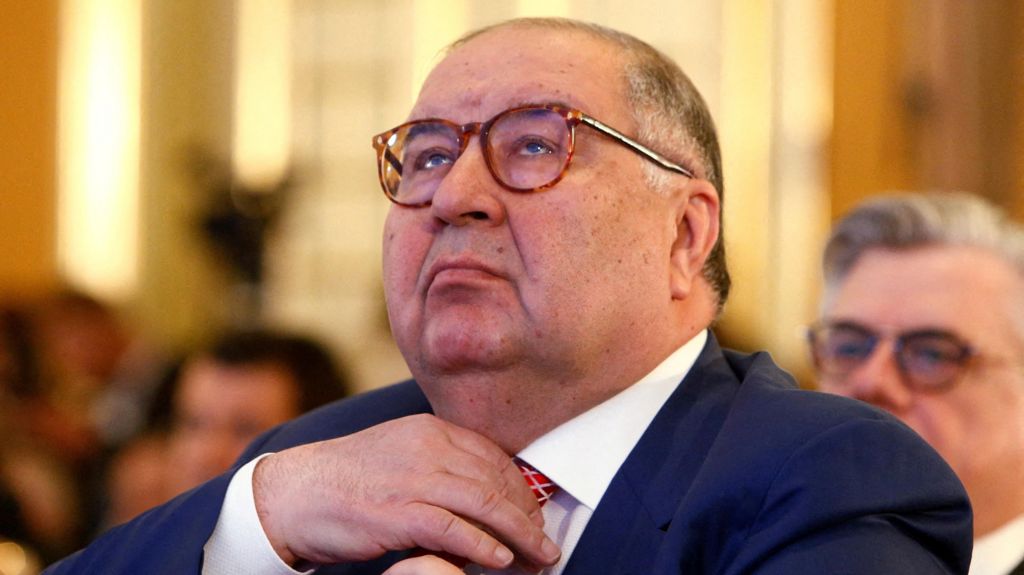
Years after the European Union imposed sweeping restrictive measures on dozens of Russian elites following Moscow’s full-scale invasion of Ukraine in 2022, a looming policy shift has plunged the bloc into internal tension and drawn sharp condemnation from Kyiv. Multiple credible reports confirm the EU is set to remove economic and travel sanctions from two high-profile Russian billionaires: Alisher Usmanov, a Russian-Uzbek tycoon, and Mikhail Fridman, a Russian-Israeli business magnate.
The push for delisting has come from individual member states with distinct national priorities. France has spearheaded the campaign to clear Usmanov’s name, publicly justifying the move on the basis of unspecified national security concerns. Independent media have also hinted at a potential link between Paris’s initiative and a pending prisoner exchange agreement involving Azerbaijan, though no official confirmation of this connection has been released. For his part, Usmanov, who built a business empire spanning metals mining, telecommunications through his firm Megafon, and even past ties to top English Premier League football clubs Arsenal and Everton, has long denied any wrongdoing and called the 2022 sanctions unfair. The EU originally placed him on the sanctions list for his documented close ties to Russian President Vladimir Putin, labeling him a key pro-Kremlin oligarch with influence over Moscow’s policy direction.
Luxembourg, meanwhile, has advocated for Fridman’s delisting, after the billionaire launched legal action against the bloc to secure the release of his billions in frozen assets. Born in Ukraine, Fridman built the Alfa Group investment conglomerate, which holds major stakes in Russian energy and banking sectors. The EU classifies him as one of Russia’s most powerful financiers and a core enabler of Putin’s inner circle. While he has publicly called for an early end to the ongoing conflict, he has never issued a full, outright condemnation of Putin or the 2022 invasion, a stance that has drawn widespread criticism in Europe and Ukraine.
The delisting compromise almost collapsed over opposition from Latvia, a Baltic member state that has taken some of the hardest-line positions against Russian aggression since 2022. Latvia initially vetoed the proposal during a vote of EU ambassadors, a position shaped in part by the country’s recent stripping of a top civilian honor from Fridman’s business partner Pyotr Aven, a Russian-Latvian entrepreneur who also refused to condemn the invasion. In a last-minute reversal, however, Latvia agreed to abstain from the final vote, clearing the path for the delisting to move forward as part of a broader package of sanctions adjustments.
As part of the brokered compromise, the EU has agreed to extend existing sanctions on nearly 3,000 other Russian individuals and entities for an unprecedented three years, a major shift from the previous policy of mandatory six-month renewals. In a separate side agreement, Latvian Prime Minister Andris Kulbergs confirmed that France has pledged to launch negotiations on Latvia’s participation in a French nuclear deterrence initiative and will boost France’s military presence in the Baltic country.
Even with the compromise in place, the decision has triggered fierce backlash from Ukrainian officials, who warn the move sends a dangerous message of weakness to the Kremlin. Ukrainian Foreign Ministry spokesperson Andriy Sybiha wrote on social media platform X that the delisting is “unacceptable” and plays directly into Moscow’s strategic goals. “Moscow is celebrating because it got what it wanted: a sense of impunity, the humiliation of the EU, and division among Europeans,” Sybiha said, calling on every EU member state to implement independent national-level sanctions on the two oligarchs to counteract the bloc’s decision. Latvia has already confirmed it will follow through on this call, maintaining national restrictions on Usmanov and Fridman regardless of the EU’s policy shift.
The Kremlin has already welcomed the planned delisting, with spokesperson Dmitry Peskov repeating Moscow’s longstanding claim that all EU sanctions on Russian nationals are illegal and demanding that all blacklisted Russians be removed from the restrictive measures list.