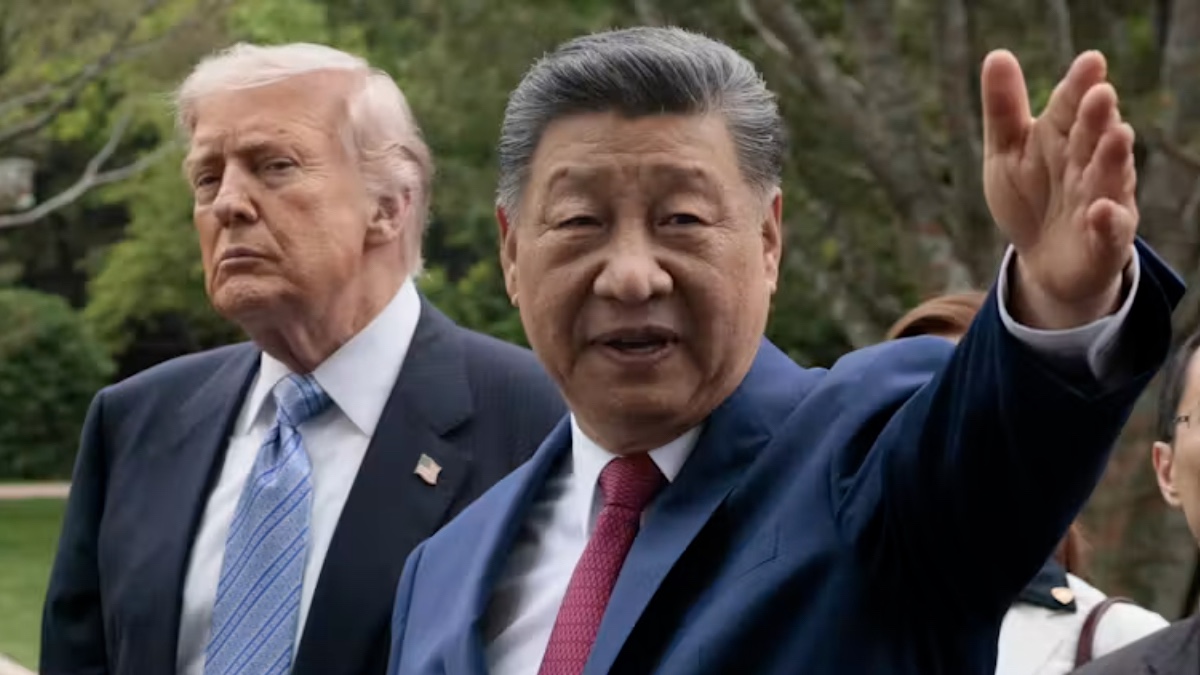
As world leaders prepare for the second high-stakes meeting between U.S. President Donald Trump and Chinese President Xi Jinping in just four months, set to open on U.S. soil on September 24, 2026, the core agenda will look strikingly familiar to their last sitting in May: the three persistent, high-stakes issues that define U.S.-China relations – trade, Taiwan, and technology. What has shifted dramatically since their last encounter is the urgent new pressure placed on technology talks, driven by the sudden, fast-evolving breakthroughs and risks in artificial intelligence that have upended global markets and security calculations. What remains uncertain, however, is whether the two powers can reach any groundbreaking, transformative breakthrough on AI or any of the other core challenges on the table.
### Trade: Modest Adjustments Expected for a Year-Old Pact
Of the three core issues, trade is framed as the most time-sensitive and the most likely to yield a incremental resolution. Nearly 12 months prior, during a meeting in Busan, South Korea, the two leaders negotiated a landmark detente: the U.S. agreed to roll back some of its strict export controls on advanced technology and cut the steep three-digit tariffs that had been in place on billions of dollars of Chinese goods. In exchange, China committed to ending export restrictions on critical minerals and rare earths that are vital to U.S. manufacturing and tech supply chains.
That 2025 Busan agreement is now approaching its expiration date, and both sides have signaled they favor extending the status quo. While minor side adjustments to the terms are likely, most analysts expect the new pact to largely mirror the original framework.
In previous talks, both governments have floated the idea of establishing a permanent new bilateral body, a U.S.-China Board of Trade, tasked with reviewing low-sensitivity shared business interests. But concrete details about the institution’s mandate, authority, and operating structure remain unclear, and while an official announcement is expected during the summit, global business leaders are waiting to see how robust and long-lasting the new body will actually be. An even less developed proposal, a separate Board of Investment, remains in early planning stages with no public roadmap.
Beijing has proposed bringing a delegation of top Chinese chief executives to the summit to match the U.S. contingent, which included senior leaders from major American tech firms such as Nvidia’s Jensen Huang and Tesla’s Elon Musk, who accompanied Trump on his earlier trip to Beijing. The final makeup of the Chinese business delegation, however, will likely be shaped by which economic sectors Beijing sees as having the greatest potential for near-term cooperative growth.
### Taiwan: A Long-Standing Standoff With No Near-Term Breakthrough
The thorny, decades-long dispute over Taiwan stands in sharp contrast to trade as the most intractable issue on the agenda, and few analysts expect any substantive shift in the status quo coming out of this meeting. Unlike his predecessor, Trump has declined to make explicit security commitments to defend the self-governing island in the event of a Chinese invasion, instead reaffirming Washington’s long-standing policy of strategic ambiguity.
Currently, U.S. foreign policy attention is heavily diverted by ongoing conflict in Iran, leaving the East Asian region lower on the immediate policy agenda. For its part, Beijing continues to prioritize non-military approaches to advancing its claim of sovereignty over Taiwan, rather than pursuing an immediate military incursion.
The next major turning point for cross-strait relations is not expected to come from this summit, but rather from Taiwan’s scheduled presidential election in January 2028. The outcome could shift dramatically if the more Beijing-friendly Kuomintang opposition wins the presidency, or if an isolationist candidate wins the U.S. presidential election later that same year. Early contenders from both major U.S. political parties have already floated a more restrained approach to overseas engagement, and a shift in U.S. policy would dramatically alter cross-strait calculations. For the moment, Beijing continues to expand the People’s Liberation Army’s naval capabilities to preserve the option of military action, but its current strategy focuses on leveraging shifting internal political dynamics within Taiwan, combining economic incentives and coercive pressure to narrow Taipei’s international space, while waiting for potential signs of waning U.S. interest in the Western Pacific.
Secondary international issues, while likely to be raised, are not expected to take center stage or drive major policy shifts. Beijing will almost certainly voice its opposition to the U.S.-led conflict in Iran, while Washington will remind Beijing of new U.S. legislation that allows sanctions on nations that purchase large volumes of Russian oil – a category that includes China, the world’s largest buyer of Russian crude. But neither side expects these discussions to lead to tangible changes in existing policy.
### Technology: AI’s Rapid Rise Creates Urgent Unmet Demand for Regulation
It is in technology, and specifically artificial intelligence, that the two sides are scrambling to bring diplomatic negotiation in line with the fast-changing reality of the global AI boom. The May 2026 summit surprised many observers when AI regulation emerged as an unexpected topic of discussion, something that had not been on the bilateral agenda during Trump’s first year back in office. Even so, both sides agreed that preliminary principle-based talks on guardrails for AI development were not just possible, but necessary, given the rapid growth of the sector and its inherent unpredictability. Most recently, on September 20, the two governments floated the idea of a dedicated bilateral AI “hotline” to alert each other of unanticipated AI-related national security risks.
In the months between the May and September summits, growing public anxiety over unregulated AI has hardened attitudes in the U.S., creating a more urgent push for guardrails. In China, public sentiment toward AI is far less openly hostile, with widespread recognition of AI’s transformative benefits for sectors like healthcare that have softened public attitudes. Even so, private and policy concerns persist: there are lingering questions over whether China’s sluggish, struggling economy will actually see sustained, broad-based benefits from the AI boom, and while AI has created new consumer opportunities, it has so far generated relatively few new jobs for a Chinese workforce already grappling with large-scale structural unemployment.
Both sides have compelling individual reasons to pursue talks on AI regulation. For both governments, the shared risk of unregulated AI development by rogue private firms triggering widespread social disruption is a core concern, while the U.S. also faces immediate voter pressure over the resource demands of AI data centers.
For Beijing, there are unique domestic political drivers for seeking regulatory controls. The Chinese Communist Party leadership views unregulated, out-of-control systems as an existential threat to political stability, a concern deeply shaped by President Xi Jinping’s own formative experience: as a young man, Xi was exiled to rural China after his father was purged ahead of the Cultural Revolution, a period of political anarchy that left a lasting imprint on his leadership style and commitment to tight centralized control. Any AI development that could undermine the Party’s unchallenged hold on power is seen as unacceptable, so regulatory frameworks that mitigate this risk are unlikely to be rejected out of hand.
Even with this shared recognition of mutual concern – albeit rooted in very different national priorities – major short-term progress remains unlikely. U.S.-China strategic competition in AI is intense, and neither government nor private sector leaders in either country are willing to make concessions that would grant a strategic advantage to the other. Trust between Washington and Beijing on AI issues remains very low. The most likely public outcome will be an agreement to continue talks, rather than a substantive regulatory deal, even if quiet backchannel negotiations continue out of public view.
### The Value of Sustained Dialogue Amid Persistent Divisions
At its core, the 2026 September Trump-Xi summit matters less for any imminent major policy shift on either side, and more for what it represents: a continued commitment to maintaining open dialogue between the leaders of the world’s two largest economies and military powers. The two leaders are already scheduled to meet two more times before the end of the year at the G20 and APEC summits, putting four high-level leadership meetings in just over six months – a frequency of engagement that analysts frame as a positive signal, where a breakdown in meetings would be a far more worrying outcome for global stability.
Even so, the deep, fundamental incompatibilities in the two sides’ core priorities on the three Ts remain the undercurrent beneath all polite, occasionally cordial diplomatic exchanges. While dialogue reduces the risk of catastrophic miscalculation, it has yet to bridge the divides that have defined U.S.-China rivalry for decades.