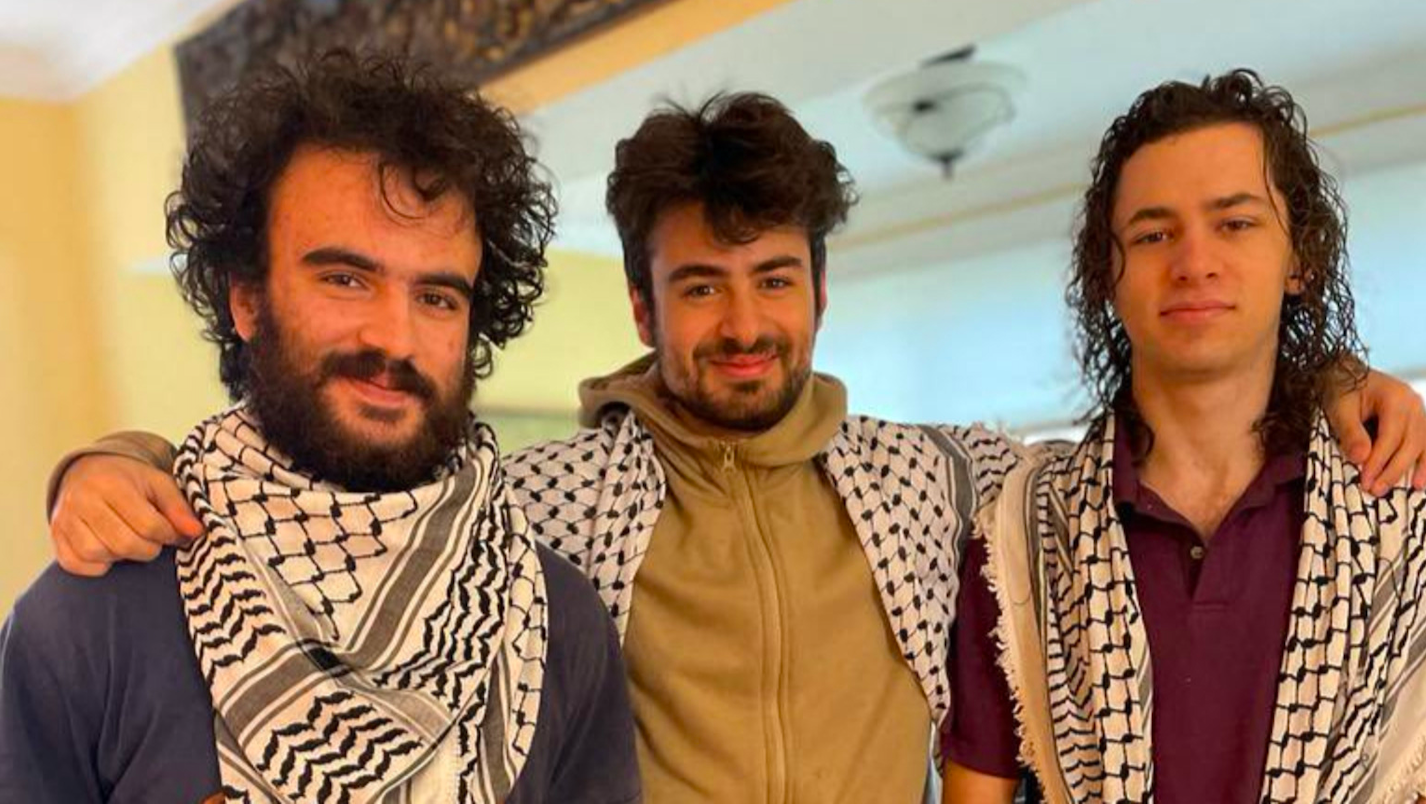
In a closely watched verdict delivered Monday, a Vermont jury found 51-year-old Jason Eaton guilty of three counts of attempted second-degree murder for the 2023 shooting of three Palestinian college students that left one paralyzed and sparked nationwide conversation about anti-Palestinian hate in the United States.
The shooting unfolded last year as the three victims — Hisham Awartani, a then-student at Brown University, Kinnan Abdel Hamid, and Tahseen Ahmed — were walking to a planned family dinner. At the time of the attack, the men were speaking Arabic among themselves, and two were wearing traditional keffiyeh scarves, visible markers of their Palestinian identity. The attack left Awartani permanently paralyzed from the chest down, while the other two sustained non-life-altering injuries.
During Eaton’s trial, his defense team argued that he was acting under severe delusions at the time of the shooting, claiming that he believed voices he claimed were from CIA agents ordered him to carry out the attack to protect a local Jewish family that lived in his neighborhood. The jury rejected this defense, holding Eaton criminally responsible for his actions.
In remarks delivered to reporters following the verdict, Elizabeth Price, Awartani’s mother, acknowledged that the conviction could not reverse the harm done. “The verdict cannot undo what happened or erase the trauma our families still carry, but it affirms something fundamental: Jason Eaton is responsible for what he did,” she said.
Despite the guilty verdict on the attempted murder charges, the families of the three victims have publicly criticized prosecutors’ decision not to pursue additional hate crime charges against Eaton. Under current Vermont law, hate crime charges are only filed in cases where the defendant explicitly uses a biased slur during the commission of the offense — a requirement that was not met in this case, according to prosecuting officials.
“This was a hate crime. We have said so from the beginning. The law never made him answer for it. But we know what he did,” the families shared in an official statement released after the verdict.
The trial has already drawn controversy over courtroom protocol: according to reporting from The New York Times, the three victims were permitted to wear their keffiyehs in the courtroom, but the judge ordered all other observers to remove the garment, citing “concern about how that would impact the jury.”
The case remains a flashpoint for discussions about gaps in state hate crime legislation and rising anti-Arab sentiment in the U.S. in the wake of rising geopolitical tensions over the Israel-Hamas conflict, with advocates calling for updates to Vermont’s hate crime laws to account for identity-based bias even when explicit slurs are not used.