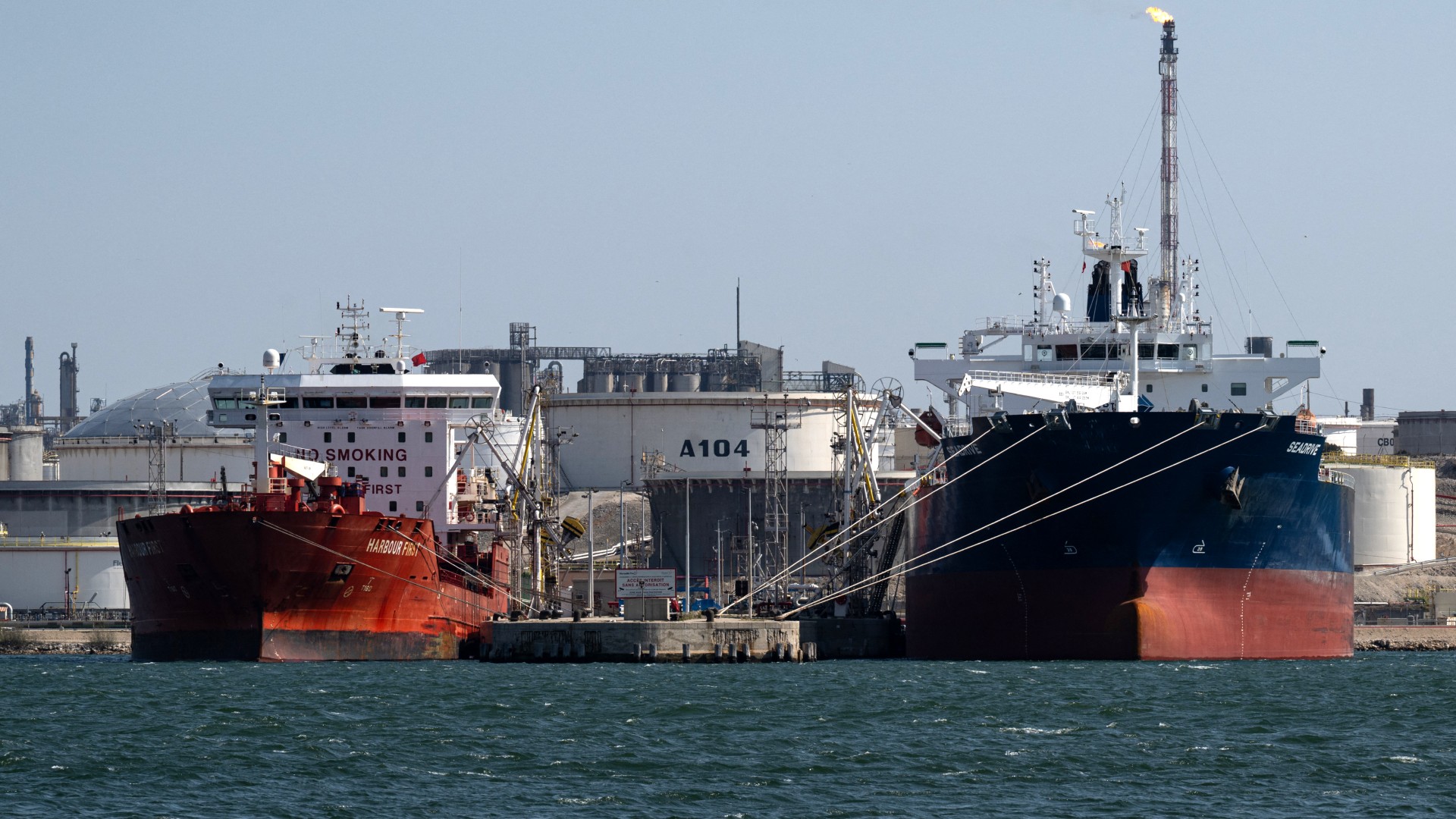
Across two of the world’s most critical energy chokepoints and Eurasian transit routes, overlapping geopolitical conflicts have converged to create an unprecedented strain on Europe’s oil and gas supplies, leaving the continent reliant on a mix of proactive policy and sheer good fortune to avoid a full-scale economic breakdown.
What makes this energy predicament particularly acute is that disruptions are not limited to a single supply corridor. Conflicts spanning the Eastern Mediterranean, Red Sea, Bab el-Mandeb Strait, Black Sea and Caspian Sea have laid bare a harsh reality: Europe has failed to build resilient, secure supply chains for its most critical energy imports, even as tensions in these regions have simmered for years.
Compounding this vulnerability are Europe’s own structural weaknesses: shallow strategic oil and gas reserves, an overreliance on volatile spot markets, and growing uncertainty around winter weather patterns that could swing heating demand dramatically. Against this backdrop, even small disruptions have the potential to trigger cascading price shocks across the continent.
The most immediate disruption is unfolding along the Red Sea, where Houthi forces have made rapid territorial gains in recent weeks. After seizing Yemen’s Port of Mokha on September 10, the group captured Mayun and Perim Islands in the Bab el-Mandeb Strait just one day later, followed by the Greater and Lesser Hanish Islands four days afterward. These landmasses lie directly atop the world’s busiest shipping lanes for crude tankers and liquefied natural gas (LNG) carriers, giving the Houthis outsized strategic leverage even without physically closing the strait.
“The Houthis do not need to physically close Bab el-Mandeb to extract strategic value from their position,” explained Abdi Guled, editor of Horn Briefs and a former correspondent for the Associated Press and Reuters, in an interview with Middle East Eye. Even the presence of a capable, hostile force in the area is enough to upend commercial shipping: war-risk insurance premiums for Red Sea transits have already surged to levels that make many routine voyages financially unviable.
Early data already shows a sharp drop in vessel transits through the strait. Major global insurance providers have pulled war-risk coverage for the Bab el-Mandeb, forcing many shipping lines to divert their fleets on the much longer route around the Cape of Good Hope. This detour adds 10 to 14 days of travel time per voyage, driving up costs across every link of global supply chains that Europe depends on.
This Red Sea disruption comes as global energy markets are still reeling from a months-long closure of the Strait of Hormuz earlier this year. That closure, which lasted from February through early September, removed an estimated 17 to 19 million barrels of crude per day from global markets, forcing Europe to turn to alternative suppliers in the Atlantic Basin and Caspian region to meet demand.
For months, Saudi Arabia helped mitigate the global supply shock by diverting crude through its East-West Pipeline to the Yanbu export terminal on the Red Sea. The kingdom ramped up flows from roughly 2 million barrels per day at the start of the year to around 6 million barrels per day, near the practical limit imposed by Yanbu’s loading infrastructure (the pipeline itself can technically carry up to 7 million barrels daily). That relief came to an abrupt halt on September 11, when a drone attack on one of the pipeline’s pumping stations forced an immediate shutdown. As of this writing, there is no timeline for when the line will reopen.
Most recently, Saudi Arabia notified European refineries that they should not expect any crude oil deliveries from the kingdom next month, removing another key source of supply just as the crisis deepens.
The combined effect of these overlapping disruptions is already showing up in Europe’s economic data. Reduced energy supplies, higher shipping costs, and widespread refinery outages have directly pushed up prices for diesel, electricity, and basic food goods. “The current energy crisis is morphing into a global financial crisis with symptoms in Europe now evident as eurozone inflation is accelerating at 3.3 percent and energy inflation jumping at 14.3 percent,” said Costantinos Stambolis, Chairman of the Institute of Energy for South-East Europe, in comments to MEE.
Europe’s core quandary is that conflict is squeezing supplies from both of its traditional major sources: Russia and the Gulf. European sanctions already limit alternative inflows of Russian energy, and recent Ukrainian strikes on Russian refineries and Black Sea export terminals have created new industrial bottlenecks that cut output even further. This week, former U.S. President Donald Trump claimed that Kyiv and Moscow had agreed not to target energy infrastructure, but Ukrainian officials stated any agreement is conditional, and no public confirmation of the deal has been issued by the Kremlin.
Europe pinned much of its hope for supply diversification on Kazakhstan, which has emerged in recent years as one of the few major producers with spare capacity to help ease Europe’s tightening oil balance. But more than 80 percent of Kazakhstan’s crude exports move through the Caspian Pipeline Consortium (CPC), which terminates at Russia’s Novorossiysk export terminal on the Black Sea. If Ukraine chooses to target the terminal, Kazakhstan loses its primary export outlet, and alternative routes are far too limited to make up the difference.
“There’s a difference between shortages and total crisis, but Europe is now exposed because several supply routes are under strain at once,” noted John Roberts, a former editor at *Financial Times Energy* and non-resident fellow at the Atlantic Council. “Ukraine seems capable and indeed willing to attack Novorossiysk,” he added.
The most viable alternative for Kazakh exports is a southern route through the Caspian Sea, via Azerbaijan and Turkey to Mediterranean export terminals. Current infrastructure along this route, including the Baku-Supsa pipeline, can only handle around 150,000 barrels of crude per day – a tiny fraction of Kazakhstan’s typical export volumes. Adding extra capacity through the Baku–Tbilisi–Ceyhan pipeline makes Azerbaijan’s infrastructure a critical pillar of Europe’s energy security, but the entire Caspian route is not immune to conflict risk.
In July, a Ukrainian drone strike targeting an Iranian vessel in the Caspian Sea proved that long-range attacks on energy shipping in the basin are possible. While a temporary understanding between Kyiv and Tehran has eased immediate fears, the risk of further disruption remains. If Kazakhstan cannot ship its crude west to Europe, it will have no choice but to sell most of its output to China, leaving even less supply available for European markets. “They don’t want to be dependent on a monopsonist customer,” Roberts explained of Central Asian producer nations.
With supply options dwindling, many analysts are pinning their only hope for easing inflation and supply strain on “demand destruction” – a dynamic where lower-income nations cut back on energy consumption because they can no longer afford sky-high prices, freeing up extra volumes to flow to Europe.
Weather will also play a decisive role in how severe the crisis becomes. A mild winter would give Europe much-needed breathing space by reducing heating demand, but forecast models point to major uncertainty driven by the 2026-2027 El Niño weather pattern. In a July 2026 assessment, analysts from Rystad Energy and ICIS warned that while El Niño could bring a mild start to the 2026-2027 winter, a sudden atmospheric shift could trigger severe cold snaps in February 2027, leading to a late-season spike in natural gas and electricity demand.
Historical data from energy market analyst ICIS adds another layer of risk: strong El Niño events typically reduce European wind power generation by as much as 9.8 percent during winter months, forcing fossil fuel power plants to burn extra natural gas to make up for the shortfall.
Even if European leaders wanted to ramp up imports in the short term to build reserves, existing EU regulations are limiting their room to maneuver. New EU methane regulations set to take effect in 2027 require all gas and LNG importers to prove that overseas producers meet strict EU-level monitoring and verification standards. Ben Cahill, a senior energy analyst at the Center for Strategic and International Studies (CSIS), notes that this will split the global market into compliant and non-compliant exporters overnight. Most Central Asian producers, which Europe is counting on for extra supply, currently lack the monitoring equipment and data infrastructure to meet the EU’s standards, meaning compliant supplies will become even more expensive.
Proposals to expand Caspian transit capacity to bring more Central Asian oil and gas to Europe face major financial and political barriers. One widely discussed plan would build a short interconnector between Turkmenistan’s offshore Caspian platforms and Azerbaijan’s existing infrastructure, with a capacity of around 5 billion cubic meters of gas per year. Proponents estimate the project would cost around $500 million, or as much as $1 billion for an expanded 10-12 billion cubic meter capacity. Because the pipeline would only pass through the territorial waters of two countries, the 2018 Convention on the Legal Status of the Caspian Sea limits Russia and Iran’s ability to block the project outright. Even so, both nations can leverage environmental impact assessment processes to delay and derail the project indefinitely. Financially, the EU cannot provide investment capital or long-term contracting for new fossil fuel projects due to its own climate and environmental regulations, leaving the project without a clear source of funding.
In the end, Europe’s unfolding energy crisis has become an industrial and inflationary challenge that cannot be resolved with incremental policy or regulatory fixes alone. While the long-term transition to renewable energy may insulate Europe from similar shocks in the future, there is little that policymakers can do in the short term to ease immediate pressure. For the coming months, luck will matter far more than policy to see the continent through the crisis.