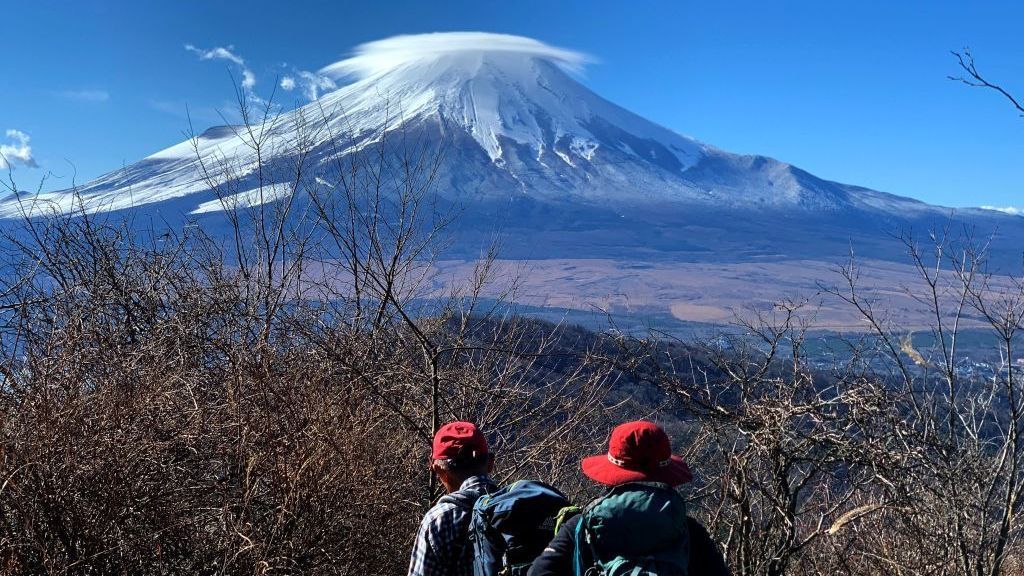
Japan’s iconic Mount Fuji has long drawn thousands of hiking enthusiasts from across the globe each year, but a growing trend of dangerous off-season ascents is pushing local authorities to roll out strict new regulations to protect unprepared climbers and cut down on risky rescue operations.
Starting next year, officials managing the northern flank of Mount Fuji have announced that any climber attempting an off-season ascent who requires emergency helicopter rescue will be forced to pay full cost for the service. This new charge is one of several policy changes Yamanashi Prefecture is implementing to deter ill-prepared and reckless hikers from putting themselves and rescue teams in danger.
Regional officials are using an existing rescue fee model from nearby Saitama Prefecture as a reference for their new pricing structure. Saitama already charges 8,000 Japanese yen, equal to roughly $51 or £38, for every five minutes of helicopter rescue service in the prefecture’s mountainous regions. Yamanashi has not yet released its final exact fee schedule, but confirmed the structure will align closely with Saitama’s established framework.
Beyond the new rescue fee, Yamanashi is also adding a mandatory requirement for all off-season climbers: anyone hoping to scale Mount Fuji between early September and July of the following year, the recognized off-peak window, must submit a detailed, step-by-step climbing plan for approval before setting out. The prefecture’s governor, Kotaro Nagasaki, framed the new rules as a urgent public safety measure in comments made Monday.
“We ask the general public to refrain from climbing during the off-season,” Nagasaki said. “We hope that these measures will cause people to rethink what climbing Mount Fuji during the winter is like.”
The push for tighter regulation comes as both Yamanashi and neighboring Shizuoka Prefecture, which manages the southern portion of the mountain, have recorded a steady increase in unplanned and off-season climbs in recent years. A growing number of these ascents have ended in emergency situations, with climbers becoming stranded in harsh conditions requiring large-scale rescue responses.
Shizuoka has also announced its own set of stricter rules to address the trend: the prefecture will impose formal penalties on off-season climbers who fail to register their planned ascent, and will increase patrols and enforcement to keep hikers out of off-limits areas that pose extreme safety risks. Unlike Yamanashi, however, Shizuoka has not yet announced plans to introduce a fee for helicopter rescues.
Mount Fuji’s official climbing season runs only from July to early September, a window when weather conditions are most stable and visitor infrastructure is fully operational. Roughly 200,000 hikers attempt to reach the summit during this official window each year. Climbing outside the official season is strongly discouraged by authorities, though it remains legally permitted up to the fifth of the mountain’s ten ascending stations.
Despite the legal allowance, off-season climbing carries significant avoidable risks. Most mountain huts and public toilet facilities along climbing routes are closed during the off-peak months, leaving no place for climbers to rest, refuel, or access basic amenities. Weather conditions on the mountain also turn far more severe outside the official season, with sudden blizzards, high winds, and icy trail conditions that create major hazards even for experienced mountaineers.