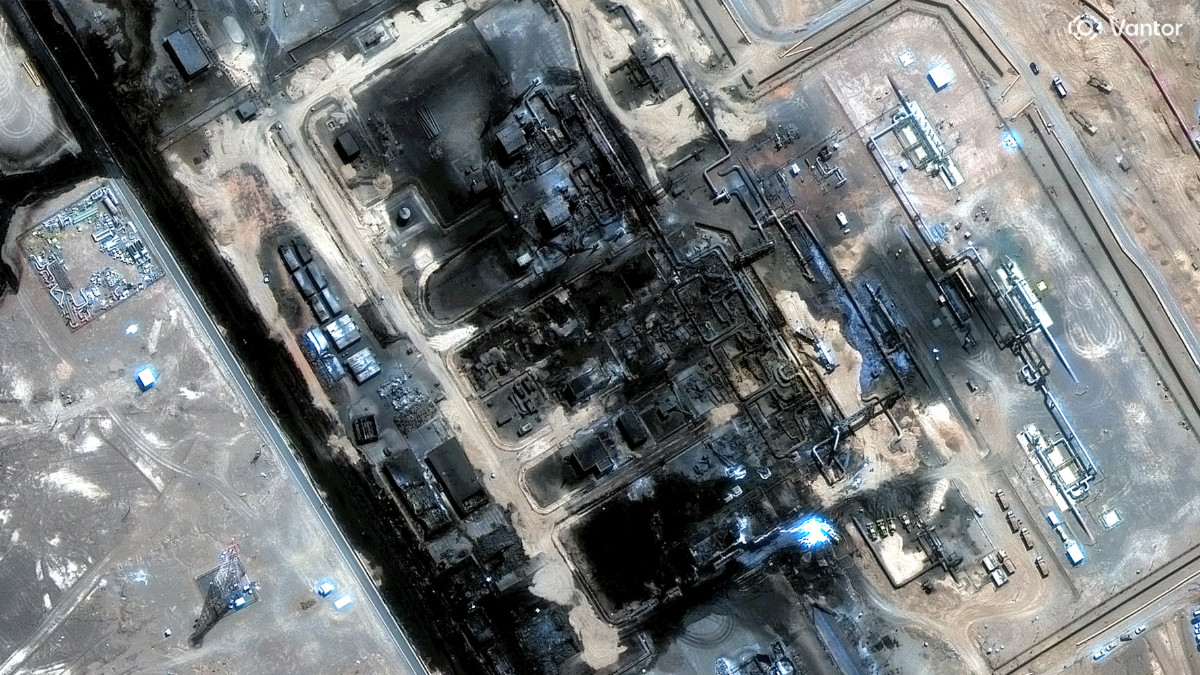
A recent drone strike targeting Saudi Arabia’s critical East-West Pipeline has triggered major disruptions to global oil markets, with industry assessments indicating repairs could take five to six weeks to complete, according to senior industry sources cited by Reuters. The outage removes approximately 4 million barrels per day of Saudi crude – equal to 4% of total global oil supply – from international markets, sending energy prices soaring across the board at the start of the trading week.
On Monday, Brent crude, the global benchmark for oil pricing, climbed 3% to trade near the $108 per barrel mark. This upward momentum follows a sharp rally last week, driven by a rapid Houthi offensive that secured the group full control of Yemen’s side of the Bab el-Mandeb, a strategically vital Red Sea chokepoint through which millions of barrels of Saudi oil are shipped daily.
Market analysts warn that publicly quoted benchmark prices do not fully capture the extreme cost increases being passed on to commercial buyers, particularly for refined petroleum products such as diesel. Gregory Brew, a leading energy analyst at risk consultancy Eurasia Group, noted on social platform X that physical cargoes of Omani crude are currently selling for as high as $121 per barrel, while Murban crude loaded at the United Arab Emirates’ Fujairah port is trading at $131 per barrel – far above benchmark levels.
The sudden price spike comes at a particularly fragile moment for the global economy, which is already struggling to rein in persistent high inflation and adapt to sharply higher borrowing costs across major developed and emerging markets.
In comments made on Monday, former U.S. President Donald Trump pushed back against claims that rising diesel prices stem from the ongoing U.S.-Israeli military campaign against Iran, instead blaming attacks on energy infrastructure carried out by Russia and Ukraine. He added that the two nations have reached an agreement to temporarily halt such targeting operations.
New satellite imagery published by analytics firm Vantor on Sunday confirms extensive damage to a key pumping station along the East-West Pipeline at al-Mesabaah, located southeast of the Saudi city of Medina. Last week, Saudi officials stated the drone attack was launched from Iraqi territory, where a network of Shia-majority militias aligned with Iran operate. Both the Yemeni Houthi movement and Iraq’s Popular Mobilisation Forces (PMF) are part of Iran’s so-called “Axis of Resistance” alliance, though the Houthis exercise a greater degree of operational independence from Tehran than other member groups.
For both Iran and the Houthis, the disruption of the pipeline represents a significant strategic gain, as it lays bare critical security vulnerabilities in Saudi Arabia’s energy export infrastructure. The Houthis are seeking to leverage their recent battlefield gains to expand the territory under their control in Yemen, while Iran aims to strengthen its strategic dominance over the Strait of Hormuz, another chokepoint through which roughly 20% of global oil trade passes.
The East-West Pipeline has served as a critical bypass for Saudi oil exports for decades. Constructed in the 1980s during the Iran-Iraq War specifically to offer an alternative route around the Strait of Hormuz, the pipeline runs from Saudi Arabia’s giant Gulf coast oil fields to the Red Sea export terminal at Yanbu. In recent years, it has allowed Saudi Arabia to maintain roughly two-thirds of its pre-conflict export volumes despite a de facto blockade imposed by Iran on Gulf shipping through Hormuz, carrying 4 million bpd for international markets before the attack.
Beyond the immediate pressure on Saudi Arabia, the pipeline shutdown is also prompting warnings for other Gulf Cooperation Council states that have invested in alternative export routes to avoid dependence on the Strait of Hormuz. The United Arab Emirates currently operates a smaller pipeline that terminates at Fujairah on the Gulf of Oman to bypass Hormuz, but that infrastructure sits far closer to Iranian territory than Saudi Arabia’s East-West Pipeline, raising questions about its own vulnerability to similar attacks.