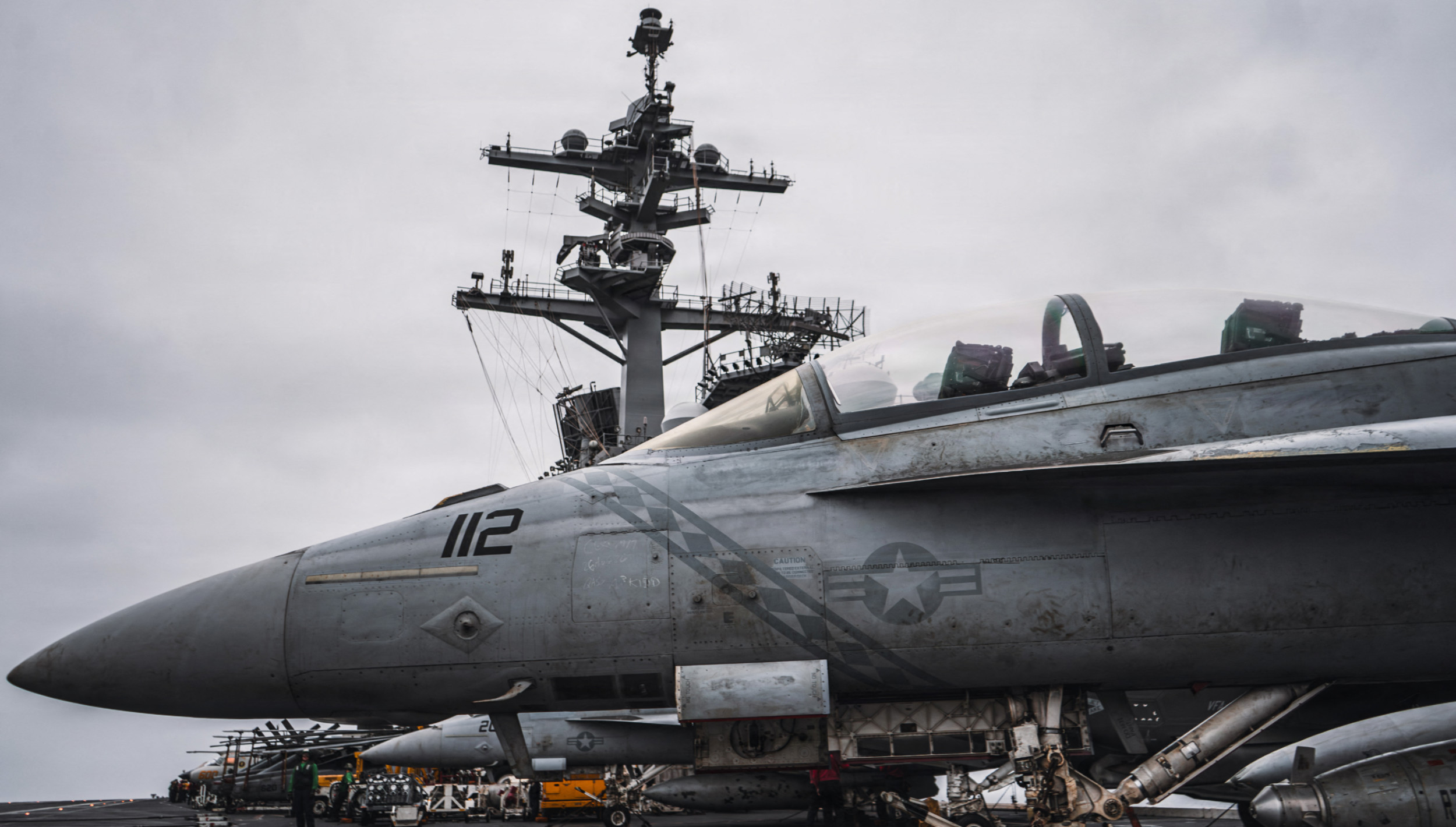
Tensions between Iran and the United States have slid into a new, limited but deeply dangerous phase of confrontation, with mounting military and economic pressure leaving Tehran caught between two high-stakes options: ramp up hostilities, or pursue a rapidly narrowing path to a negotiated resolution.
The latest cycle of escalation was sparked by a U.S. strike on Iran’s Islamic Revolutionary Guard Corps in southern Iran, per Iranian accounts. In the aftermath of the attack, U.S. officials claimed they had intelligence indicating Iranian forces planned to deploy mine-laden rockets in the Strait of Hormuz, the world’s most critical global energy chokepoint through which nearly a fifth of global oil supplies pass daily. Iran retaliated quickly, launching missile strikes against U.S. military bases hosted by the United Arab Emirates, Jordan, Kuwait, and Bahrain.
This military uptick comes on top of weeks of a de facto U.S. naval and economic siege on Iran’s ports, adding crippling new pressure to an Iranian economy that was already teetering long before the latest crisis erupted. The Iranian rial has plummeted in value, now trading at roughly 2.2 million rials to the U.S. dollar, down from around 1.8 million before the siege began. So far, the government has managed to avoid the widespread shortages of essential goods that could spark a full-blown domestic crisis, but one growing vulnerability has become impossible to ignore: gasoline.
Iran is struggling to secure consistent, adequate gasoline supplies as domestic consumption rises and foreign supply chains grow increasingly unreliable. The government has publicly called on citizens to cut back on fuel use, and reports indicate it is weighing a steep increase in domestic gasoline prices to curb demand. Compounding this challenge is disruption tied to the war in Ukraine: Russia has long been a key potential supplier of refined petroleum products to Iran, but repeated Ukrainian drone attacks on Russian refineries have drastically reduced Moscow’s capacity to export gasoline to Tehran.
The combination of cross-border military tensions, crippling U.S. sanctions, disrupted trade routes, and rising domestic consumption has created an intractable policy dilemma for Iran’s leadership. While Tehran has so far kept basic economic functions running, maintaining that level of stability is becoming exponentially more costly. This strain has intensified a fierce internal debate over how to respond to the ongoing confrontation with the U.S.
Among Iran’s conservative factions, a growing consensus argues that absorbing endless pressure from Washington cannot resolve the standoff. Instead, these voices argue the U.S. strike gives Iran justification to impose far steeper costs on Washington and its regional allies in the Gulf. “To break the deadlock, Iran is in a good position since the US attack has given Iran a right to answer disproportionately,” an anonymous conservative political activist told Middle East Eye. “By raising the costs, such as an attack on US allies’ oil and water infrastructure, we can break the siege.” The activist added that regional states helping Washington enforce the pressure campaign, including the UAE, should also face consequences for their cooperation, reflecting a core belief among conservative circles that effective deterrence requires demonstrating that any attempt to weaken Iran will carry severe, unavoidable costs.
A professor of international relations aligned with the conservative camp went even further, arguing Iran should adopt what he called an “offensive preemptive doctrine.” “In my view, our experience has shown that power can deter power,” he explained. “We carried out a preemptive operation in Jordan, inflicted casualties, and the Americans did not continue. We therefore have no choice but to adopt an offensive preemptive doctrine, both militarily and through intelligence capabilities, to prevent future shocks and interventions like the 12-day and 40-day wars.” The professor added that recent conflicts have shifted Iran’s strategic calculations, with years of military and diplomatic experience leaving Tehran’s foreign policy more sophisticated than ever. He called for actions beyond conventional deterrence, even suggesting Iran should consider conducting its first nuclear test, arguing a demonstrated nuclear capability would give Tehran far stronger deterrence against future U.S. or Israeli intervention. He also framed economic pressure as a legitimate extension of military conflict, saying Iran must impose tangible economic costs on the U.S. to level the playing field.
These arguments lay bare the central dilemma now facing Tehran. If Iran responds with excessive caution, conservatives warn Washington and its allies will conclude they can impose ongoing military and economic pressure without facing meaningful consequences. But if Tehran escalates too aggressively, it risks turning a limited standoff into a full-scale regional war that would cause catastrophic further damage to Iran’s already fragile economy. A conservative source close to Iran’s core leadership circles described the current moment as a potential “war between wars,” a transitional period where both sides are analyzing past confrontations and preparing for potential future open conflict. He noted the U.S. is pursuing multiple overlapping goals: ratcheting up economic pressure, eroding Iran’s regional influence, conducting periodic targeted strikes, shifting the regional strategic balance, and rebuilding its regional military and intelligence capabilities. “The key question is who benefits from time,” the source observed. From this perspective, Washington is not seeking a single decisive military victory; instead, it aims to hold the strategic initiative, keep Tehran trapped in constant strategic uncertainty, and prevent Iran from rebuilding its military capabilities or initiating escalation on its own terms. Even so, the source acknowledged that no simple solution exists for the standoff: neither negotiations alone nor military action alone can resolve the core disputes between the two sides, requiring Iran to adopt a completely new regional strategy adapted to a Middle East that has been fundamentally transformed in recent years.
Inside Iran, reformists and government-aligned moderate figures argue the latest escalation should not be used as a pretext for more conflict, but rather as an opening to return to diplomatic negotiations. A reformist analyst who contributes to Iranian media framed the conflict as having entered a cycle of mutual attrition, with the Strait of Hormuz increasingly weaponized as an instrument of economic pressure. He explained that Iran can leverage its geographic control of the strait to impose costs on its adversaries, while Washington uses military pressure to neutralize that geographic advantage – a dynamic that carries severe risks for both parties. “Any prolonged disruption in the Strait could push energy prices higher, increase inflationary pressure and accelerate the economic damage already being inflicted on Iran,” he warned. “The greatest danger is miscalculation: a single incident in the Gulf could push both countries beyond the point where diplomacy remains capable of controlling events.” The analyst noted neither side is capable of securing a decisive outright victory, and without a political off-ramp, both Washington and Tehran risk being trapped in an endless cycle of unresolvable escalation. “If the current trajectory continues, the window for negotiations will soon close, giving way to a decisive confrontation,” he said. “The ultimate winner will not necessarily be the side capable of delivering the most destructive military blow, but the side that can extract a strategic concession while there is still time to prevent the diplomatic window from closing.”
This view of grinding attrition is shared by other reformist sources close to the Iranian government. In recent days, U.S. drones, missiles, and bombs have struck again in southern Iran, killing civilians and turning a wedding celebration in the town of Kuhestak into a mass funeral, while Iran has retaliated with missile strikes on U.S. bases across the Middle East. One reformist source told MEE the core question for Iran is no longer who can win the next exchange of fire, but how long the confrontation can be sustained and what political outcome can ultimately end the crisis. He noted Washington has sent contradictory signals: simultaneously ramping up pressure to weaken Tehran while claiming military pressure is intended to force Iran back to the negotiating table. The current Iranian government continues to emphasize the possibility of reviving a preliminary understanding reached with Washington in June, demanding the U.S. honor its earlier commitments, while ultra-conservative factions advocate for prolonging conflict and even launching preemptive offensive operations. The result is an increasingly ambiguous standoff, where neither side has the capacity to sustain the current level of confrontation indefinitely. “A dramatic event is therefore likely to change the course of the war,” the source said. “But by its very nature, such an event cannot be predicted; any forecast would be little more than a shot in the dark.” For now, he added, Iran is navigating this constant uncertainty with no clear path forward.
A university professor of geopolitics aligned with the reformist camp laid out the clearest case against further escalation. He framed the latest round of Iran-U.S. conflict as a clash that ended without a decisive result, forcing both sides to shift their tactics. Washington moved to prioritize economic pressure, a de facto naval blockade, and periodic targeted strikes, while Iran leaned more heavily on its geographic advantage around the Strait of Hormuz to project leverage. But that advantage comes with major costs: “Keeping the Strait closed also hurts Iran’s economy and its main oil partner, China,” he noted. For Tehran, the strategic goal is not to close the strait indefinitely, but to demonstrate that U.S. military superiority does not give Washington unlimited freedom to act in the region. The professor argued the conflict is too deeply entrenched to ever be resolved through military means. “The only viable path is a return to the 14-point memorandum, or a modified version, with simultaneous, verifiable steps and credible external guarantees,” he said. A framework overseen and backed by the United Nations Security Council, he argued, would make it far costlier for either side to unilaterally abandon any eventual agreement.
Tehran now stands at a crossroads: it can respond to the U.S. siege by escalating, imposing greater costs on the U.S. and its regional allies, and formalizing an openly offensive military doctrine. Or it can use its remaining leverage to pursue a negotiated settlement while the diplomatic window remains open. The harsh reality is that both paths carry substantial, inherent risks. As the geopolitics professor noted, escalation could strengthen Iran’s deterrence posture but would also deepen Tehran’s economic isolation and drastically increase the risk of a full-scale regional war. Negotiations, by contrast, would ease crippling economic pressure but leave the government open to fierce criticism from conservative factions who argue past diplomatic efforts failed to deliver meaningful security guarantees for Iran.
For Iran, the core question now is whether leadership can turn the current pressure into usable political leverage before economic and military costs become unsustainable, and whether Washington is willing to offer an exit that Iranian leaders can accept without appearing to surrender to U.S. demands. For now, neither side has found that balanced off-ramp, leaving the region in a state of precarious, unpredictable tension.