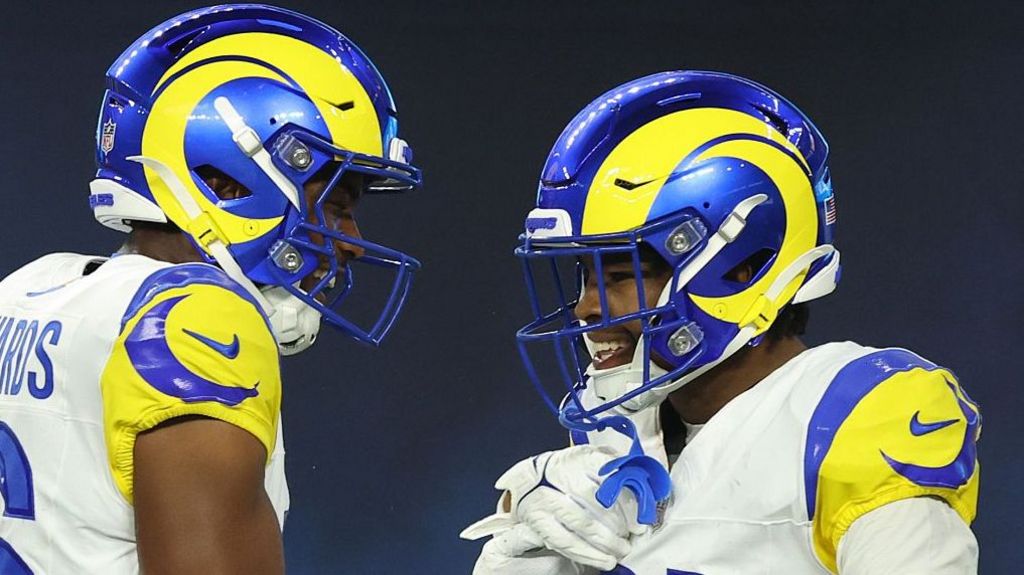
For Melbourne, Australia, the month of September is traditionally synonymous with the peak business end of the Australian Football League (AFL) finals. But this September, an entirely different type of oval-ball sport is dominating the city’s sporting landscape. On Friday, 100,000 fans will file into the iconic Melbourne Cricket Ground (MCG) to witness a groundbreaking event for Australian sports: the first non-exhibition, regular season National Football League (NFL) game ever held in the country, featuring the Los Angeles Rams against the San Francisco 49ers.
The historic fixture sold out months in advance, with more than half of ticket holders traveling from outside the state of Victoria to attend. Even restricted-view seats are reselling for upwards of A$650 (US$470) on official platforms, a clear sign of the unprecedented demand for American football Down Under. Thomas McMillan, host of Australian NFL podcast *Any Given Sunday Australia*, notes that the hype has completely overshadowed the usual AFL finals buzz. “Walking down the street, it’s AFL finals week and you wouldn’t even know,” McMillan says. “It’s all NFL everywhere. There are bars that are nothing but 49ers bars or Rams bars. We have a Ram Tram getting around the district. When you’re in Melbourne and AFL isn’t visible, it shows how big this is at the moment.”
The 10:35 a.m. local kickoff time, while unusual for Australian sports fans, is scheduled to accommodate prime-time television slots for US audiences and their advertisers, a core consideration for the league’s global expansion strategy. The NFL first launched international regular season games in 2007, and over the past two decades, these overseas fixtures have become a central long-term strategy to grow the league’s global fanbase and revenue. The 2026 season will feature nine games outside the United States, including three in London, but Melbourne marks the furthest destination the league has ever brought its regular season action.
For the two California-based teams, the long journey to Australia has brought very different approaches to combating the 17-hour time difference and jet lag. The 49ers arrived in Melbourne a full week before kickoff, giving players ample time to recover from the 16-hour flight, adjust to the local time zone, acclimate to conditions, and hold open practice sessions for local fans. Their star tight end George Kittle and other players have already been greeted by throngs of fans across the city, with appearances at public fan rallies, AFL matches, and even a classic Australian community sausage sizzle hosted by local hardware chain Bunnings, where former 49ers legends Joe Nedney and Jesse Sapolu drew crowds of adoring supporters. 49ers cheerleaders also performed for fans at Melbourne’s Federation Square this week, building massive hype around the club.
The Rams, by contrast, have taken a far more controversial, last-minute approach: the team plans to arrive on a chartered Qantas A380 on Thursday morning local time, play the game on Friday, and return to the US West Coast immediately after the final whistle. The strategy is designed to minimize disruption to players’ body clocks ahead of their next regular season fixture, but it has drawn criticism for cutting off almost all opportunities for fan engagement. “Definitely it’s a gamble,” McMillan says of the approach. “If they don’t quite get things right after the 16-hour flight, you still might have that jet lag, even though you’re trying to avoid it. And not everyone can sleep on planes, whether you’re in first class, business class, whatever it is, you’re still on a plane. Most NFL players are six foot six, so it’s going to be even tighter seats.”
Though the Rams are technically the designated home team for the game after securing NFL global marketing rights in Australia through the league’s Global Markets programme, the 49ers’ early arrival and extensive community outreach has left them as the more visible presence across Melbourne this week. American sports journalist Dontay Atkinson has openly criticized the Rams’ fly-in, fly-out strategy, arguing it will alienate local fans. “Fly in, fly out, no contact,” Atkinson wrote on social media platform X. “I’m sure the Aussies feel great about that snub.” McMillan says he understands the Rams’ position, as the club is viewed as a legitimate contender for the 2027 Super Bowl and prioritizes winning the fixture over long-term fan outreach. Even so, he notes the approach has left a gap the 49ers have been quick to capitalize on. “We do feel a bit snubbed, and feel the 49ers are doing the right thing,” McMillan says. “I just worry that they have missed the boat of ingraining themselves as the Australian team. It leaves it open for others, and the 49ers have really jumped on that.”
Rams officials reject claims of a snub, pointing to years of ongoing outreach work in Australia beyond this week’s game. Stephanie Cheng, the Rams’ Head of International, told reporters the Melbourne fixture is the culmination of more than four years of work, not just a one-off event. “It’s not just about game week. We have long term rights,” Cheng says. She notes the Rams are the only NFL team with an official local membership programme for Australian fans, have sent coaches into local schools and communities to promote flag football — the non-contact version of the sport that will debut at the 2028 Los Angeles Olympics — and have hosted multiple previous visits by star players, including running back Kyren Williams in March 2026. In the lead-up to this week’s game, Rams cheerleaders visited US military bases across Australia before arriving in Melbourne, and the franchise has built a 22-yard floating fan zone football on the Yarra River in central Melbourne. The club also hosted a public community day for local American football fans earlier this week.
Interest in the NFL has grown steadily in Australia for years, with many pointing to the success of Australian-born offensive lineman Jordan Mailata as a major turning point for the sport’s popularity. Mailata, who plays for the Philadelphia Eagles, became the first Australian to play in and win a Super Bowl in 2025, a milestone that shifted local perception of the sport. “Seeing an Australian in what we’d called a skilled position and then winning a Super Bowl. It doesn’t get better than that,” says Danny Webb, McMillan’s co-host on *Any Given Sunday Australia*. While no Australian players will take the field in Friday’s game, dozens of Australians currently play college football in the US, and a handful have made it to the NFL, most working as kicking specialists after honing their skills playing AFL or rugby league.
Friday’s game is the first of three NFL regular season games scheduled to take place in Melbourne over the next four years, as part of a multi-year contract between the league and the state government of Victoria. NFL International managing director Gerrit Meier says the league’s long-term goal is to establish annual regular season games in Australia, replicating the gradual growth the league has achieved in the United Kingdom over the past two decades. “We’re working off the hypothesis that we need to make a commitment to a market,” Meier told Reuters.
Even as some US-based fans remain critical of international regular season games, the massive hype and sell-out crowd in Melbourne suggests the league’s Australian expansion is off to a strong start, and the games look set to become a permanent fixture on the Australian sporting calendar. Webb says the shift in local attitudes has been dramatic in just a few short years. “I had mates four years ago asking why are you doing an NFL podcast? It’s not a big sport here,” he says. “And now every single one of those mates are asking me for tickets for the game.”