A major diplomatic clash between the United Kingdom and Israel erupted this week after Jerusalem unveiled a package of retaliatory measures against London, including a entry ban on 11 British MPs, following the UK’s historic decision to sanction illegal Israeli settlements in the occupied Palestinian territories. The escalation, which marks one of the most significant rifts between the two allies in recent years, unfolded on Tuesday as Israeli Foreign Minister Gideon Saar announced a series of punitive steps in response to London’s policy shift.
Alongside the entry ban on lawmakers, Saar confirmed Israel would shut the British consulate in occupied East Jerusalem, withdraw British representatives from the International Gaza Support Center, and end all British training programs for Palestinian security forces. The banned British parliamentarians include high-profile critics of Israeli policy: former Labour Party leader Jeremy Corbyn, independent MP Zarah Sultana, Labour MPs Naz Shah, Diane Abbott, John McDonnell and Richard Burgon, and all sitting Green Party of England and Wales MPs – Carla Denyer, Adrian Ramsay, Ellie Chowns, Sian Berry and Hannah Spencer. The list also extends to Fahad Ansari, an Irish-born lawyer who has represented legal efforts to reverse Hamas’ proscription as a terrorist organization in British courts; Ansari, who is not a UK citizen or MP, noted he already considered himself persona non grata in Israel and called the ban a badge of honor.
The retaliatory measures came hours after the British government made a landmark policy announcement: it formally recognized ongoing ethnic cleansing of Palestinians by settlers in the occupied West Bank, declared Israel’s decades-long occupation of Palestinian territory illegal under international law, and imposed sweeping sanctions on entities linked to illegal Israeli settlements. The government also enacted a full ban on all arms licenses and exports that could materially contribute to Israel’s occupation. France and Canada quickly joined the UK’s initiative by announcing their own bans on trade with Israeli settlements, a move widely seen as a major diplomatic win for London. Eleven additional nations – Canada, Denmark, Finland, France, Iceland, Ireland, Norway, Poland, Portugal, Spain and Sweden – signed a joint statement with the UK affirming their plans to introduce national trade restrictions or support European-level measures against settlement goods, in line with international legal obligations.
The UK’s formal adoption of the International Court of Justice’s 2024 advisory opinion, which ruled the Israeli occupation unlawful and required all states to act to end it, was laid out by Foreign Secretary Ed Miliband in parliamentary remarks Tuesday. Miliband emphasized that the British government confirms settler-perpetrated ethnic cleansing is occurring in parts of the West Bank, adding that the Israeli government has not only turned a blind eye to the violence but has repeatedly supported forced displacement of Palestinians through official statements and policy.
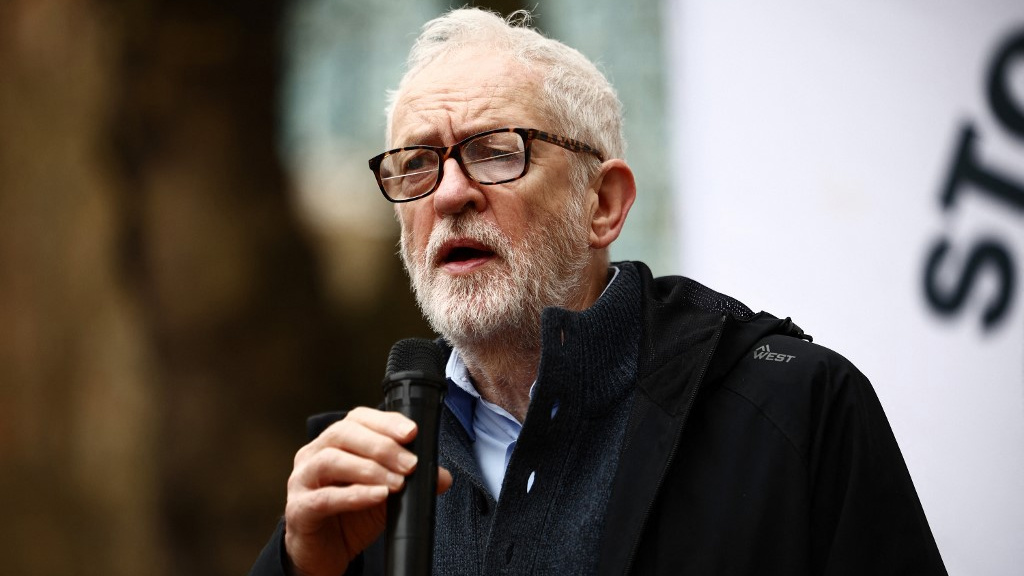
Rather than being intimidated by the entry ban, the targeted British MPs have responded with open defiance, vowing to double down on their advocacy for Palestinian rights. In a statement following the announcement, Corbyn, who has made multiple visits to Palestinian territories to document conditions on the ground, said he had directly witnessed the violence of occupation and the systemic apartheid that curtails Palestinian freedom. He called Israel’s pattern of barring UN investigators and international journalists a deliberate attempt to hide its actions from the world, stressing that critics would never abandon efforts to expose the truth. “They are the ones who suffer from Israel’s apartheid. It is their freedom which is egregiously curtailed, alongside thousands of Palestinian refugees who are denied the right of return,” Corbyn said.
Naz Shah, one of the banned Labour MPs, described the selection of banned lawmakers as “rather random and, frankly, bizarre,” but added she was proud to back the UK government’s new sanctions, which align with the country’s international legal obligations. She reaffirmed her longstanding commitment to upholding international law, peace, security, and equal rights for both Palestinians and Israelis. Richard Burgon, another banned Labour MP who has campaigned for stronger action against Israeli policies and presented evidence of alleged war crimes to the International Criminal Court, said the ban would not silence him. “The decision by the Israeli government to sanction me today will not intimidate me into silence. I will continue to do what is right, speak out in defence of international law and stand up for justice for the Palestinian people,” Burgon said.
Zarah Sultana, the independent MP who left the Labour Party last year in protest over Keir Starmer’s refusal to take stronger action against Israel’s military campaign in Gaza, called the ban from the “fascist government presiding over genocide, apartheid and an illegal occupation” a badge of honor. She echoed other lawmakers in saying the punitive measure would only strengthen her resolve to speak out. “If anything, this ban only strengthens my resolve to keep speaking out against Israel’s genocide and against the UK’s complicity,” Sultana said.
All of the UK Green Party’s sitting parliamentary representatives were included on the banned list, a reflection of the party’s uncompromising stance calling for full sanctions on Israel, recognizing allegations of genocide in Gaza, and supporting proscription of the Israeli military as a terrorist organization. A party spokesperson said the Israeli government’s threats would not force the Greens into silence, praising the party’s MPs for standing up for Palestinian rights and demanding an end to British complicity in illegal occupation and violence. The Green Party called on the British government to go further than its current limited measures, imposing a full arms embargo and wide-ranging sanctions against Israel. Green Party leader Zack Polanski added that the party’s MPs had consistently stood “on the right side of history” by opposing ethnic cleansing, occupation and genocide, a position he said all British lawmakers should adopt.