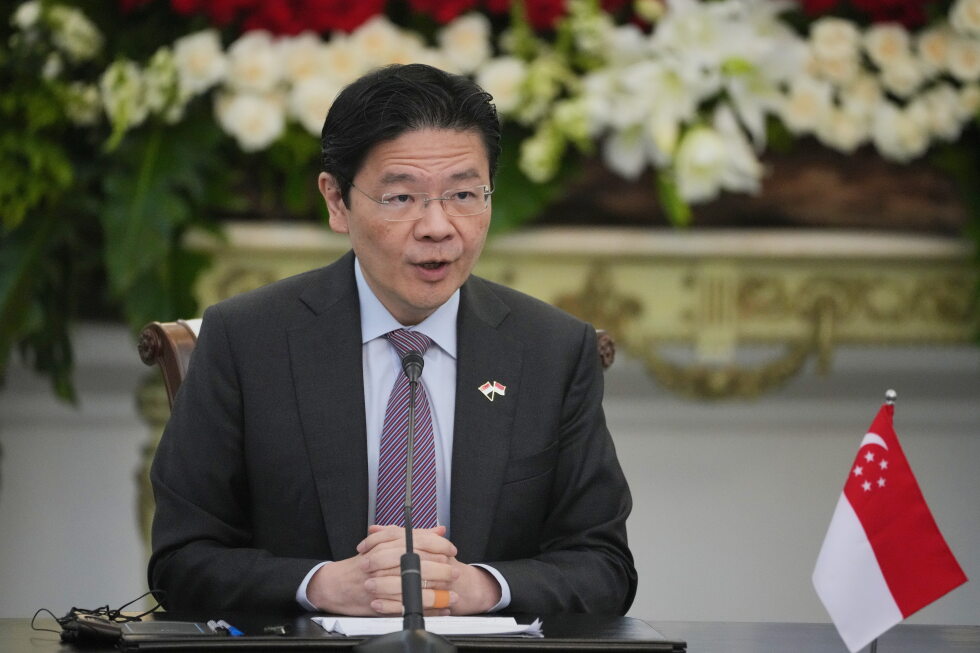
SINGAPORE — After 15 years of frozen salaries for top political officeholders, Singapore has approved a phased adjustment to ministerial pay, a controversial policy shift framed by the nation’s leadership as a critical step to retain and attract skilled talent for public service. Prime Minister Lawrence Wong outlined the revised salary framework during a parliamentary address on Tuesday, laying out the details of the most significant change to political remuneration since deep cuts were implemented more than a decade ago.
Under the new framework, the annual benchmark salary for an entry-level minister will climb from S$1.1 million ($868,330) to S$1.8 million ($1.42 million). For the prime minister, the benchmark pay will jump from S$2.2 million ($1.7 million) to S$3.6 million ($2.8 million). Allowances for non-cabinet members of Parliament will also see upward adjustments to align with the updated structure. Unlike previous salary transitions, the full new benchmark will not take effect immediately. Starting October 15, officeholders will receive a one-time incremental increase of up to 9%, with the exact rise tied to individual performance levels and the scope of their governing responsibilities. By the end of the current parliamentary term, most entry-level ministers are projected to earn approximately S$1.35 million ($1.06 million) annually, and future salary progression will be performance-based rather than an automatic step up to the full benchmark. While Wong did not confirm his own adjusted salary under the new policy, a 9% increase would bring his current pay to roughly S$2.4 million ($1.89 million) – the prime minister announced he will donate the entirety of his salary increment to charity over the next five years.
Ministerial pay has long been a politically sensitive topic in Singapore, where top government salaries already far outpace the median income of ordinary citizens, and the prime minister’s pay ranks among the highest for any national leader globally. For decades, the ruling government has defended its transparent pay model as a core pillar of maintaining a corruption-free, high-capacity public sector, arguing that competitive salaries are necessary to draw experienced professionals from the private sector and senior civil service who might otherwise opt for far higher private sector earnings.
Wong emphasized that Singapore’s approach to political remuneration is intentionally transparent, with no undisclosed perks or hidden income outside the published salary framework. “Good government did not come naturally to Singapore. It was built deliberately over many years. And there is nothing automatic about sustaining this,” he told lawmakers, framing the pay adjustment as an investment in preserving the country’s long-standing tradition of effective, clean governance.
Acknowledging public scrutiny of the policy change, Wong noted that the government recognizes the discomfort many Singaporeans feel over rising political pay, but argued that delaying the adjustment was no longer feasible. Over the past 15 years, ministerial salaries have steadily fallen behind comparable compensation packages for senior roles in both the private sector and the top ranks of the civil service, creating a growing gap that threatened the government’s ability to recruit top talent, he explained.
The new salary framework is tied to the median income of Singapore’s top 1,000 citizen earners, with a mandatory 40% discount built into the benchmark to reflect the public service nature of political office. Going forward, the full framework will undergo a formal review every five years to ensure it remains aligned with economic conditions and private sector earnings. This policy change, Wong argued, will give current and future prime ministers a far stronger hand to persuade capable Singaporeans to enter public service and build the strongest possible governing team for the country.
The current salary structure was first implemented after a 2011 independent review, and approved by Parliament in 2012, when public backlash over excessive political pay led policymakers to cut ministerial salaries by roughly 36%. While a 2017 review recommended small adjustments, the government chose to hold off on implementing changes. A scheduled 2023 review was also deferred before the current policy update was brought to Parliament this week.