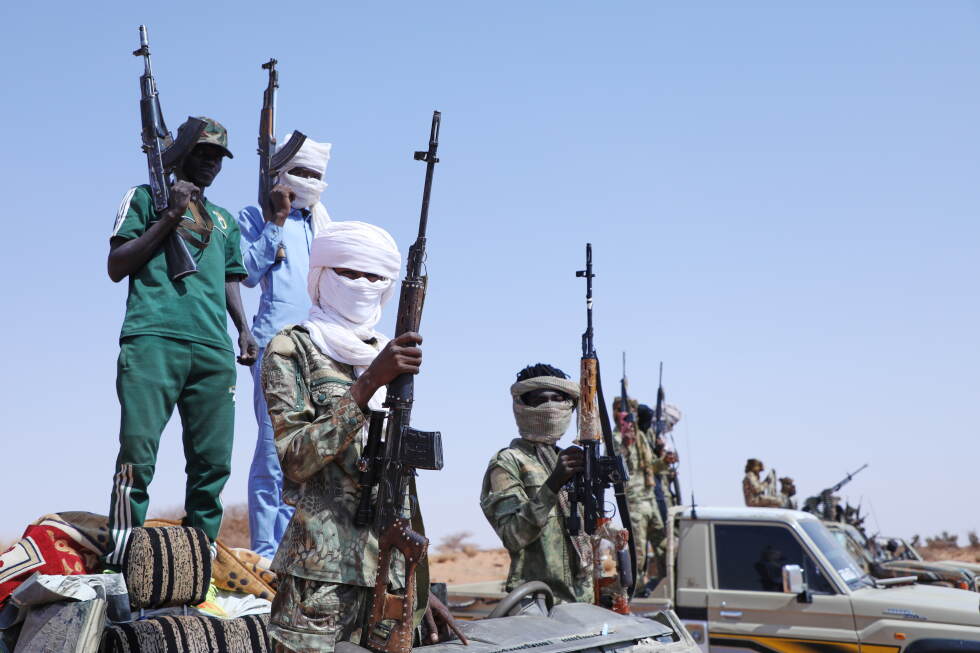
BRUSSELS – Nearly two years into the brutal civil war pitting Sudan’s regular army against the paramilitary Rapid Support Forces (RSF), a new United Nations investigation confirms that transnational foreign networks have dramatically escalated the violence, turning what began as a power struggle into a humanitarian catastrophe that has killed tens of thousands and pushed millions to the brink of starvation. The conflict, which erupted in April 2023, has already left at least 59,000 people dead according to the latest UN accounting, forced roughly 13 million to flee their homes, and pushed entire regions of the northeast African nation into catastrophic food insecurity approaching full-scale famine. In a public summary of the investigation released Thursday, UN High Commissioner for Human Rights Volker Türk outlined clear evidence that cross-border networks anchored in companies based in the United Arab Emirates, Colombia, and Chad have funneled critical resources to the RSF, including weapons, military training, and foreign contractor personnel. “The mission finds reasonable grounds to believe that a transnational network supplied the Rapid Support Forces with weapons, logistics, training and foreign personnel, including Colombian contractors involved in advanced weapons and drone systems,” the summary reads. The investigation specifically highlights that individuals and corporate entities connected to, operating from, or formally registered in the United Arab Emirates hold a central role in these networks, overseeing recruitment, financing, transportation, and deployment of foreign military contractors to provide direct military support that benefits the RSF. Abu Dhabi has repeatedly and publicly denied all accusations that it provides military backing to the paramilitary group, a position it has maintained even amid growing international scrutiny. While the report’s most concrete findings focus on support to the RSF, investigators also note that externally supplied drones have expanded the Sudanese army’s aerial strike capabilities, adding that additional research into external support for the military remains ongoing and preliminary. Beyond mapping external support, the UN probe documents widespread attacks on civilian targets that may qualify as war crimes committed by both warring parties. Investigators specifically tied foreign-trained fighters to two brutal massacres carried out in 2025 at the Zamzam internally displaced persons camp and the city of El Fasher. More than 100,000 residents have fled El Fasher since the violence erupted there, and surviving witnesses describe RSF fighters systematically gunning down unarmed civilians in their homes and on city streets, leaving corpses scattered across urban areas. Subsequent analysis of commercial satellite imagery has provided visual evidence suggesting RSF units have attempted to conceal the killings by disposing of remains in unmarked mass graves or through open burning. When it comes to cooperation with the UN investigation, the report notes that authorities in Chad, Colombia, and the United Arab Emirates engaged with investigators, but no substantive response has been received from governments in Ethiopia, Libya, South Sudan, and Somalia. Panama, whose offshore finance sector has long faced global accusations of large-scale industrial money laundering, requested additional time to provide a formal response. Notably, neither Sudan’s official military leadership nor the RSF have agreed to cooperate with the UN probe. The UN findings align with an earlier Associated Press investigation published in July that uncovered evidence Colombian mercenaries had been recruited to train child soldiers to fight for the RSF. Human rights organizations have further alleged that these Colombian fighters were recruited by a state-linked firm based in the UAE, a claim the UAE continues to reject alongside broader accusations of military support to either Sudanese warring party. In line with its findings, the investigative panel has called on the UN Security Council to expand and extend the existing arms embargo imposed on Sudan, stressing that all cross-border flows of weapons, financing, personnel, and advanced military technology that sustain the conflict must be cut off to create space for peace talks. The United States has already thrown its support behind new multilateral action, circulating a draft Security Council resolution in August that was reviewed by the Associated Press. The draft resolution condemns the steady influx of external military aid, weapons, and ammunition to both warring parties, noting that outside support prolongs the conflict and undermines international mediation efforts. It specifically calls out the operation of drone and unmanned aerial system programs launched from third-party countries to support the Sudanese war effort, and demands that all nations immediately end any direct or indirect support – whether logistical, financial, or military – that allows the conflict to continue.