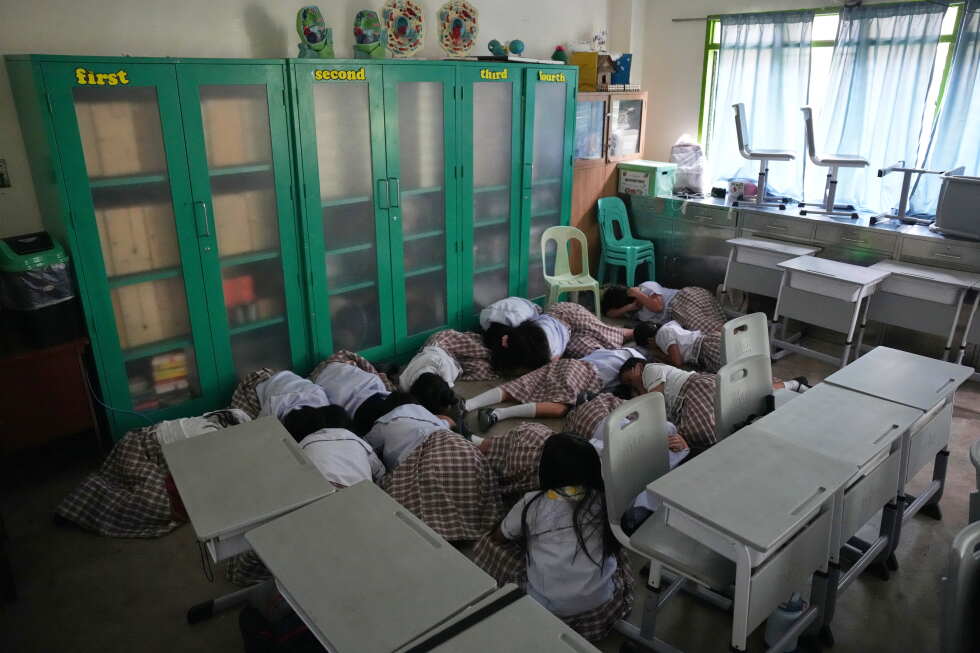
In the wake of a fresh school shooting incident in Thailand this week, policymakers and education authorities across Southeast Asia are ramping up discussions around expanding active shooter preparedness drills at educational institutions, a response to a growing regional trend of gun-related violence on campus.
On Thursday, just one day after the Thai shooting, students in San Rafael, Philippines, joined thousands of schools across the country in participating in the annual Nationwide Simultaneous School Safety Drill. The exercise, organized by the Philippine Department of Education alongside multiple national public safety agencies, is designed to test emergency response protocols and strengthen overall school security against a wide range of threats.
“It’s a new reality in the country,” stated Jonvic Remulla, Secretary of the Philippine Department of the Interior and Local Government, on the sidelines of the San Rafael drill. “We are preparing for all kinds of emergencies, from human-induced to weather-induced events. All of us should be ready.”
The renewed push for preparedness follows a close call on Wednesday in Thailand’s Kamphaeng Phet province, roughly 120 miles north of Bangkok. According to local Thai media reports, a 14-year-old student opened fire multiple times on his school campus before being subdued by staff and authorities. No bystanders or students were injured in the incident, but it has reignited urgent conversations about school safety across the region that has already seen multiple deadly student-led school attacks in recent months.
Just four months prior, in August 2024, both Thailand and the Philippines recorded fatal school shootings perpetrated by teen students. On August 7, a 14-year-old gunman carried out an attack at his high school and family home in Nonthaburi province, just outside Bangkok, that left eight people dead and more than 20 others wounded before the shooter died by suicide. Eleven days later, on August 18 in the southern Philippines, a 14-year-old student armed with two pistols killed a classmate on a high school campus before taking his own life. Two months before that, in June, two teenage students aged 14 and 15 opened fire at a high school in the central Philippines, leaving three students dead and at least 20 more injured. Both suspects were taken into custody following the attack.
Regional gun violence data underscores the severity of the threat facing both nations. Multiple independent firearms surveys rank Thailand first in Southeast Asia for per capita gun ownership, while the Philippines holds the unenviable top position for per capita gun-related deaths in non-conflict settings across the region.
The San Rafael drill brought together education officials, local government leaders, and representatives from disaster response and law enforcement agencies to simulate real-world emergency scenarios and evaluate response coordination. The core of the exercise was a 30-minute full-scale lockdown drill, followed by a structured debrief and evaluation with stakeholders from the Office of Civil Defense, Bureau of Fire Protection, Local Disaster Risk Reduction and Management Office, and Philippine National Police.
“Through this exercise, we want our schools to be number one in awareness — to be able to recognize these kinds of threats and respond through drills and exercises: what to do, where to go, and how responders would be able to perform their roles and do their part,” explained Malcolm Garma, Undersecretary of the Philippine Department of Education.
Thailand has already moved forward with similar preparedness initiatives following its August deadly attack. Just last month, schools across Thailand held active shooter response drills, with footage released by Thai public broadcaster Thai PBS showing first responders guiding students at Bangkok’s Sarawittaya School through life-saving protocols, including how to barricade classroom doors with stacked desks and chairs to block an active shooter from entering.
Regional security analysts note that the recent string of incidents is expected to push more Southeast Asian governments to mandate regular active shooter drills across all primary and secondary education institutions, as part of broader efforts to curb gun violence and protect student populations.