A months-long on-the-ground investigation by the BBC has uncovered a dramatic shift in tactics by people smuggling gangs operating along France’s northern Channel coast, driven by a successful joint UK-France policing crackdown that has cut the number of illegal small boat arrivals to the UK to a six-year low. With tighter patrols intercepting an estimated two-thirds of departure attempts before vessels can reach open water, criminal networks are abandoning the small, single-load boats they once relied on in favor of far larger “mega-dinghies” that carry scores of migrants at a time, raising catastrophic new risks to life at sea.
The new strategy was thrown into sharp global focus earlier this year, when an image of a 15-meter inflatable carrying 230 migrants en route to the UK sparked widespread political condemnation on both sides of the Channel. UK ministers faced accusations of losing control of border security, while French law enforcement was once again criticized for failing to intervene in departure operations. But the BBC’s on-the-ground reporting reveals the photo was not an isolated incident: it was a public marker of a calculated adaptation by smuggling networks strained by shrinking operational opportunities and a shortage of smaller vessels. Rival criminal groups that once operated independently are now collaborating to pack more migrants onto fewer, larger vessels, with multiple more mega-dinghies already confirmed to be in preparation.
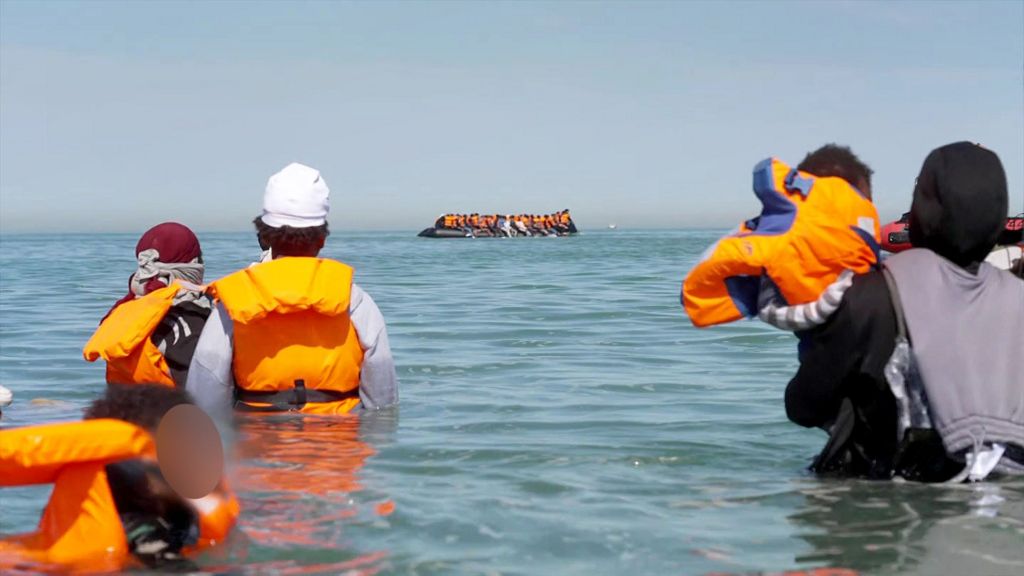
During a low-tide observation on Gravelines Beach, one of the most active departure points along the coast, BBC correspondents witnessed first-hand how the new “taxi boat” pick-up model works. Around 09:30, a dozen migrants emerged from the shelter of sand dunes, their bright orange life vests — purchased from a local local sports retailer — marking them out clearly. Contrary to assumptions of a rushed, chaotic departure, the group moved in an orderly, pre-coordinated fashion into the shallow calm waters. Unlike traditional departures where a boat launches directly from the beach, this vessel had sailed from as far away as Belgium to avoid detection, and would return to the coast multiple times to collect groups of migrants across different stretches of the beach.
Over three hours, the small inflatable made five separate pick-ups, eventually carrying 82 people before it set out into the Channel’s busiest shipping lane, where it was dwarfed by large passenger ferries. All on board successfully reached British waters, where they radioed for coast guard rescue, as is typical for small boat crossings. Left behind on the beach were dozens of failed migrants, including a limp toddler carried to French police for revived, amid the surreal backdrop of peak holiday season: local fishermen cast lines nearby, and dog walkers and beachgoers barely glanced at the dejected group waiting for another chance to cross. One local holidaymaker described the experience as living in “two parallel worlds,” saying “You feel guilty having a good time while these families are in such terrible situations.”
The intensified crackdown has reshaped every part of the smuggling ecosystem. Departures, once mostly conducted under cover of darkness, now take place in broad daylight, when gangs have more time to coordinate multiple pick-ups and avoid detection. Waiting times for a crossing opportunity that once took days now stretch into weeks or even months, requiring favorable weather conditions (winds under 5 knots and waves smaller than 0.8 meters) to avoid disaster. To stay undetected near departure points, many migrants now sleep rough in dunes or nearby woods rather than accessing food, clean water, and medical care at official camp settlements. Crossing prices have also surged: from around €1,300 per person just 12 months ago to as much as €2,000 today, with gangs now demanding full cash payment upfront to guarantee a spot.
The increased risk of catastrophe has left emergency responders on both sides of the Channel deeply alarmed. In early August alone, 170 migrants had to be rescued after their overloaded vessel caught fire mid-Channel. Tensions are also high on the ground: when the reporting team visited the largest migrant settlement near Dunkirk at Loon-Plage, they were confronted and attacked by smugglers who threw rocks at the crew, injuring the BBC cameraman above the eye, who required stitches after the team escaped to their vehicle.
Migrants waiting to cross spoke of repeated frustration and months of squalid living conditions. One young Egyptian man who had tried and failed to cross multiple times told the BBC that French police had intercepted his group and destroyed their boat, adding that he only wanted to reach the UK to work and secure legal status. A Sudanese woman and an Afghan migrant similarly reported having attempted the crossing dozens of times without success, after weeks of waiting. Riot police had cleared settlement tents in the area just days before the reporting team’s visit, and 400 migrants had been forced to abandon a planned departure the previous day after wildfires broke out in the Hardelot Forest where they were staging.
As UK Prime Minister Keir Starmer prepares to welcome French President Emmanuel Macron to Downing Street for the first time since taking office, London and Paris are set to announce a new joint initiative that will increase the number of police officers patrolling France’s northern coast to disrupt smuggling operations further. While UK officials have praised the current crackdown for cutting arrivals to a six-year low and credited improved cross-border coordination, thousands of migrants still successfully cross the Channel every month, and deep-rooted motivations for the journey remain unchanged. For smuggling networks, the demand for illegal crossings remains lucrative, guaranteeing that the gangs will continue to adapt their tactics to evade enforcement.