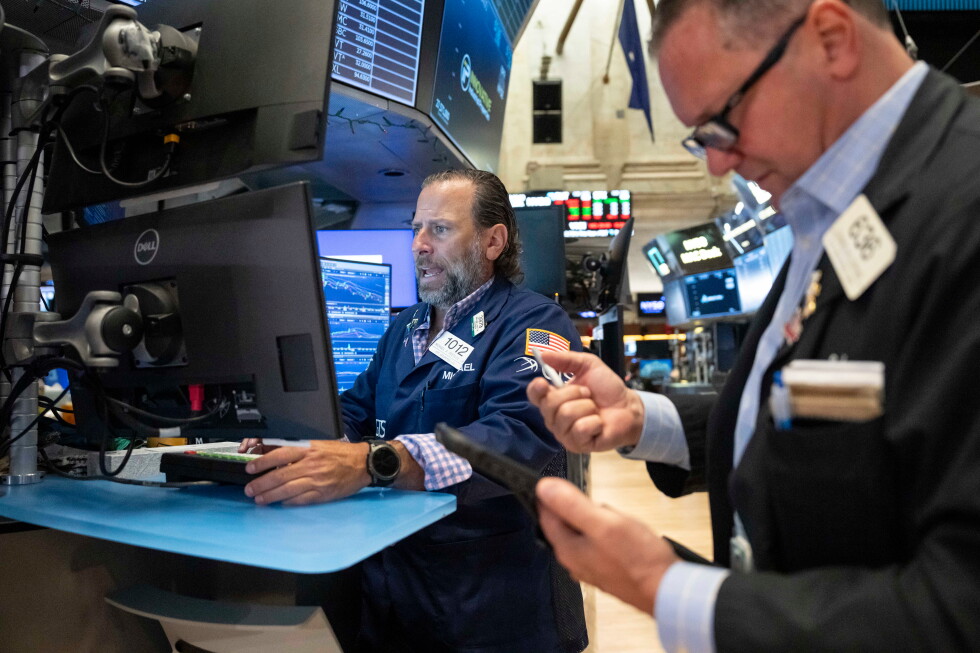
After a gloomy opening to the trading week, Wall Street staged a broad comeback on Wednesday, lifted by strong gains across major technology names and a period of relative stability for both oil prices and Treasury bond yields.
Big-cap tech and semiconductor stocks led the upward charge, with market heavyweight Nvidia jumping 3.3% — a move that carried outsize influence on broader indexes thanks to the chipmaker’s massive market capitalization. Other tech and communications names also notched solid gains: Meta added 2.2%, Netflix climbed 1.8%, and memory chip producer Micron Technology rose 1.5%. The standout performer of the session was Dell Technologies, which surged 13% to become the top gainer in the S&P 500 after reporting stronger-than-expected second-quarter profits fueled by booming demand for AI-capable computing hardware. The firm also upwardly revised its full fiscal year revenue forecast, sending shares higher. In a counterpoint, cybersecurity firm Palo Alto Networks beat second-quarter earnings expectations thanks to a robust market for AI-powered security solutions, but its stock still tumbled 10.9% in Wednesday trading. The financial sector also contributed to gains, with credit card issuers Capital One Financial and American Express climbing 2.5% and 1.6% respectively.
By the closing bell, the Dow Jones Industrial Average gained 0.6%, while both the S&P 500 and Nasdaq Composite posted 0.5% increases, putting the benchmark S&P 500 on track to break a three-day losing skid.
Geopolitical unrest linked to the ongoing six-month conflict between the U.S. and Iran continued to hang over global energy markets, but prices stabilized somewhat after early-week swings. Following U.S. strikes on Iranian targets over the weekend that broke a period of calm in major hostilities, and subsequent Iranian retaliation across Gulf sites, oil prices posted modest gains. International benchmark Brent crude settled 1% higher at $95.63 per barrel, while U.S. domestic crude climbed 0.9% to close at $91.01 per barrel. The conflict has disrupted shipping through the Strait of Hormuz, a chokepoint through which roughly 20% of the world’s daily oil supply transits, triggering a spike in global gasoline and shipping costs that has put additional upward pressure on already stubborn inflation. Energy stocks traded mixed on the session: Chevron edged 0.3% higher after the firm confirmed plans to expand its operational footprint in Venezuela.
Treasury bond yields, which climbed sharply through the start of the week to put pressure on equities, stayed nearly flat on Wednesday. The 10-year Treasury yield, a key benchmark that influences mortgage and other consumer lending rates, dipped slightly to 4.78%, down one basis point from Tuesday’s close. The 2-year Treasury yield, which moves closely in line with market expectations for Federal Reserve interest rate policy, held steady at 4.39%. Both yields have climbed significantly since the start of 2026, when the 10-year yield sat as low as 4.20% and the 2-year yield hit 3.50%, as investors price in expectations of persistent inflation and future rate hikes.
Global markets traded lower on the day, with European indexes closing in negative territory and Asian markets finishing lower in overnight trading.
The rebound comes after a rocky start to September, which follows a mostly positive August that saw every major U.S. stock index post monthly gains. Still, broad anxiety persists across Wall Street, as investors grapple with persistent high inflation, growing government debt loads, and the spillover risks of global conflict to both the U.S. and global economies. Inflation has already squeezed household and business budgets alike, and the previously resilient U.S. labor market has begun to show early signs of softening: payroll processor ADP reported a small dip in private-sector employment in August, though the reading comes on the heels of a Tuesday government report showing unexpected growth in U.S. job openings in July.
All eyes are now on the U.S. government’s comprehensive monthly employment report for August, scheduled for release Friday, followed by key inflation data next week. These two data releases will play a critical role in shaping the Federal Reserve’s next interest rate decision at its September policy meeting, according to industry analysts.
“Friday’s employment report, and perhaps even more importantly next week’s inflation data, will play a significant role in determining whether policymakers decide to raise rates in September,” Angelo Kourkafas, senior global strategist in investment strategy at Edward Jones, wrote in a research note.
The Federal Reserve is caught in a delicate balancing act: it has a dual mandate to support full employment and pull inflation back down to its 2% target, which currently remains stuck well above 3%. Raising the benchmark interest rate would help cool inflation by increasing borrowing costs and slowing overall economic activity, but the move risks further weakening a labor market that is already showing early signs of contraction. As of Wednesday, CME FedWatch data shows investors are pricing in a 64% chance of a rate hike at the central bank’s September meeting.