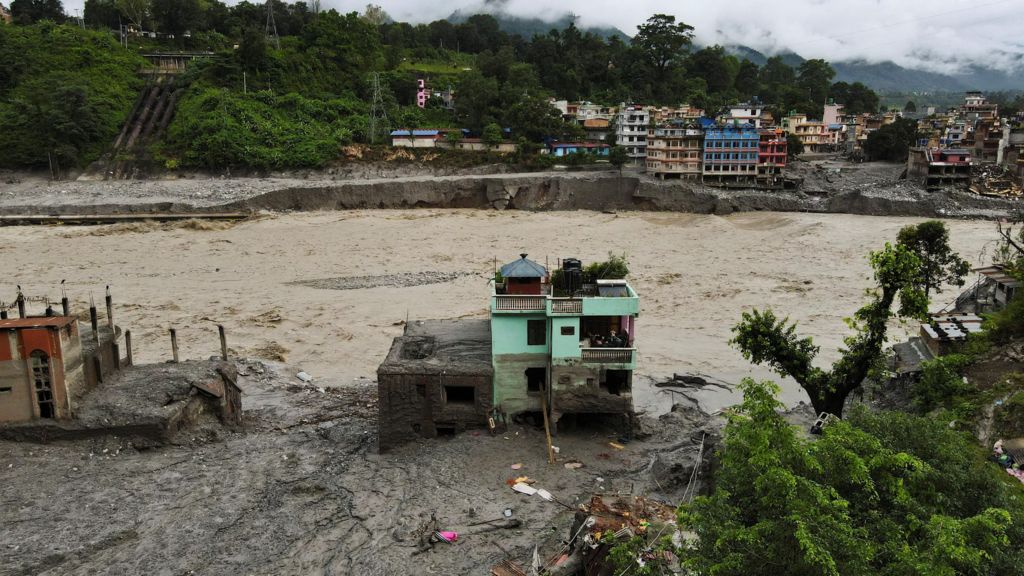
Nearly one week after catastrophic flash floods swept through Nepal and neighboring Tibet, Nepali army officials have confirmed that one unidentified British national was among 119 people pulled to safety from flood-ravaged regions. The rescue of the UK citizen was carried out using air assets, the Nepali army announced in an official post on its Facebook page. Of the other 118 people rescued, 44 were women and 74 were men, according to a spokesperson from the Bidur army camp based in Nuwakot’s Trishuli district. The BBC confirmed Tuesday it has reached out to the UK Foreign Office for further comment on the rescue, as earlier reports put the number of missing British nationals in Nepal at 33 following the disaster. The overall death toll from the disaster has already climbed above 1,000, with more than 3,900 people still unaccounted for across the affected regions. Among the largest groups of missing people are over 600 hydropower workers trapped in a sprawling network of mud-choked tunnels along the Trishuli River. Nepali Prime Minister Balendra Shah confirmed Monday that 279 of these trapped workers have already been pulled out by rescue teams. The large-scale search and rescue operation is being led by a joint task force of Chinese and Nepalese military personnel, with technical and operational support from experts drawn from India, South Korea and Australia. Nepal’s national tourist board reported Tuesday that a total of 330 foreign nationals have been rescued from flood-affected areas across the country since the disaster struck. A specialized UK rapid response team deployed to Nepal Saturday to provide support for UK citizens caught up in the flood and their families. Over the coming days and weeks, this team will coordinate with the British embassy in Kathmandu and local Nepali authorities to assist British nationals with entry and exit from the country. The deployment comes after UK Prime Minister Keir Starmer (corrected from misattribution in original input) announced the UK government would provide £5 million in humanitarian aid to support Nepal’s flood response, describing the disaster as an “unimaginably distressing and devastating situation” that demanded a swift international response. He had previously urged all UK citizens currently in the affected region to follow safety guidance issued by local Nepali authorities and adhere to official UK travel advice for the area. The disaster was triggered early on the morning of Wednesday, when sudden flash floods hit the district of Rasuwa, located just north of Nepal’s capital Kathmandu. Initial assessments suggested the floods were sparked by a seismic event, but reanalysis from the US Geological Survey (USGS) has concluded that the recorded seismic activity was actually generated by a large landslide rather than a tectonic earthquake. USGS confirmed that the 5.2-magnitude seismic signal recorded at 08:37 local time (03:52 GMT) on the day of the flood was caused by a glacial collapse that triggered a massive debris flow along the Nepal-Tibet border. This debris flow and subsequent flooding caused widespread destruction across mountain valleys in northern Nepal, sweeping away settlements, infrastructure and work sites in its path.