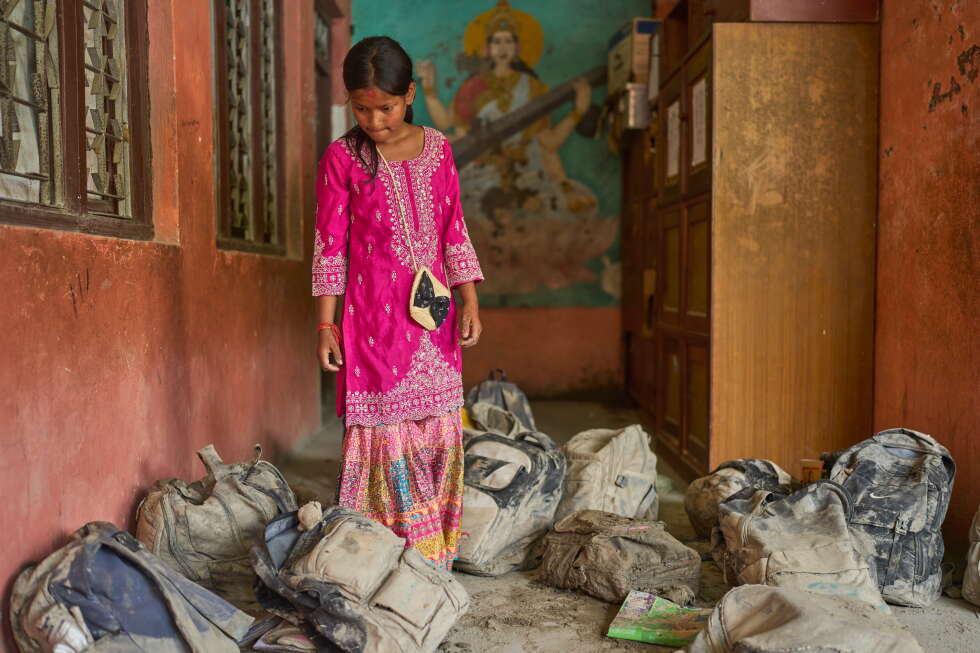
DHADING, Nepal — When catastrophic flash floods roared through central Nepal last Wednesday, the small mountain district of Dhading stood among the hardest-hit regions. What could have been a devastating tragedy for a local school, however, turned into a story of extraordinary luck and quick thinking, as nearly all of its students escaped the rising waters unharmed.
For the group of children who survived, a routine daily break proved to be the difference between life and death. The first group of pupils had already left their classroom for lunch when the floodwaters began approaching the school grounds. Other students, still seated in their classrooms, were ushered out immediately by alert teachers who spotted the oncoming disaster, ordering pupils to abandon their personal belongings and evacuate to higher ground immediately.
“The teachers told them, ‘There is a flood, leave your bags and lunch boxes behind,’” recalled Lakshmi Shrestha, mother of one student at the school. “That quick decision is the only reason our children are alive today.”
Four days after the flood struck, Shrestha joined dozens of other grieving but relieved parents and children as they returned to the destroyed school compound on Sunday, sifting through the mud and wreckage to recover what little could be saved. Family representatives confirmed that the vast majority of the school’s students survived the disaster, a small miracle amid widespread loss of life across the country.
Walking through the destroyed campus leaves no doubt of the flood’s power. Thick layers of muddy brown and gray sediment coat every surface: wooden classroom benches, concrete walls, and waterlogged notebooks alike. The open school courtyard is completely filled with silt and debris, and dark water lines streaked across interior walls show how rapidly the floodwaters rose, reaching several meters high in mere minutes. Small mud-caked backpacks, many still strung with colorful key chains that hint at their young owners, are piled across benches and floors, waiting to be claimed by their families.
Even for parents who left empty-handed, the survival of their children outweighs any material loss. Kopila Mizar, another mother whose child escaped unharmed, could not locate her son’s backpack during Sunday’s search, but she remained upbeat about the outcome. “My son is alive, that is my biggest happiness,” she said simply.
This small school is far from the only educational institution impacted by the disaster. According to global nonprofit Save the Children, at least 69 schools across Nepal’s flood-ravaged districts have been fully destroyed or severely damaged, disrupting access to education for nearly 19,000 children. The organization warned that this number is almost certain to rise in coming days, as rescue and recovery teams reach more remote cut-off communities that have been unreachable since the floods hit.
In the immediate aftermath of the disaster, the Nepali government ordered all schools and universities across affected regions to close for three days, pausing all scheduled university examinations as well. With national weather services continuing to issue flood warnings urging communities to evacuate to higher, safer ground, it remains unclear when normal classes will be able to resume across the hardest-hit areas.
As of Sunday, Nepal’s national disaster management agency confirmed that the national death toll from the floods and accompanying landslides has climbed to 788, with an additional 2,502 people still reported missing across the country. Across the border in southern Tibet, Chinese authorities have reported 16 deaths and 546 people missing. Among the missing are hundreds of citizens from more than a dozen countries, who were in the Himalayan region for work, trekking, or pilgrimage to a sacred mountain peak. Chinese state media confirmed Sunday that 261 foreigners are currently missing in Tibet, including more than 100 Nepali citizens and dozens of people from other nations around the world.