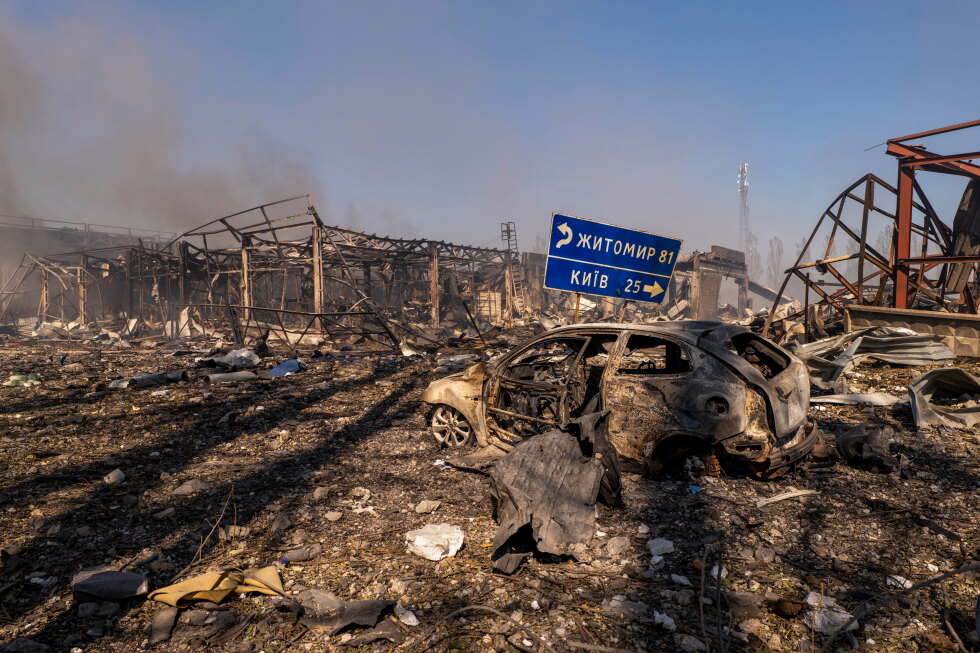
As the full-scale Russian invasion of Ukraine enters its third year, a devastating escalation of hostilities has sent shockwaves across the country, leaving dozens dead and triggering fresh fears of a catastrophic winter energy crisis. Ukrainian President Volodymyr Zelenskyy announced via social media on Sunday that the death toll from a Friday night Russian strike on a warehouse in the village of Myla, located just west of Kyiv, has climbed to 38, with four additional people still unaccounted for. This attack marks the deadliest single Russian assault on Ukrainian territory so far in 2024.
Ukrainian officials confirmed the targeted structure was an ammunition storage facility. The impact of the strike triggered massive, uncontrolled explosions that sparked widespread fires, which spread rapidly to consume dozens of residential homes and adjacent civilian buildings near the storage site. In his update, Zelenskyy noted that 20 people were wounded in the attack, among them two young children. As of Sunday, emergency response teams remained on the ground, working to fully extinguish remaining hotspots, recover victims, and clear the area of unexploded ordnance to make the site safe for recovery efforts.
The deadly strike near Kyiv came amid a sharp escalation of cross-border hostilities between the two nations. On Sunday, Russia’s Ministry of Defense issued a direct threat, announcing it is preparing to carry out “massive strikes” against Ukraine’s critical energy infrastructure. The Russian ministry framed the planned attacks as a direct retaliation for recent Ukrainian drone operations targeting Russian civilian and energy sites, including facilities belonging to Wildberries, Russia’s largest e-commerce platform often called “Russia’s Amazon,” and key oil and gas infrastructure across the country.
Ukrainian officials have long justified these cross-border strikes, arguing that Russia’s energy sector directly funds and fuels Moscow’s full-scale invasion, while Wildberries has supplied dual-use goods that support Russian military operations. Recent months have seen a steady wave of Ukrainian drone attacks on Russian oil refineries and energy facilities, a campaign that has created an unusual fuel shortage across Russia, one of the world’s largest oil and gas exporters—an unprecedented crisis for the country’s energy market.
This is not the first time Russia has targeted Ukraine’s energy grid ahead of the cold winter months. During the two previous winters of the full-scale war, Russian forces launched systematic, large-scale attacks on Ukraine’s power generation and transmission infrastructure, leaving millions of Ukrainians without access to heat and electricity during subzero freezing temperatures. Ukrainian national security and energy officials have repeatedly warned the public and international partners that the approaching 2024-2025 winter could be the most difficult for the country’s energy system since the 2022 full-scale invasion, as Russian forces prepare to resume widespread attacks on critical infrastructure.
In a separate development over the weekend, another Russian drone strike targeted Kyiv in the late hours of Saturday, leaving at least three people injured. Air raid alerts remained active across the capital for the entirety of Saturday. Ukraine’s state emergency services reported that a multi-story residential building in Kyiv’s Obolonskyi district caught fire between the second and fifth floors after the strike. Response teams also extinguished fires in three other districts of the capital, with non-residential administrative buildings damaged in two separate strike locations across the city.