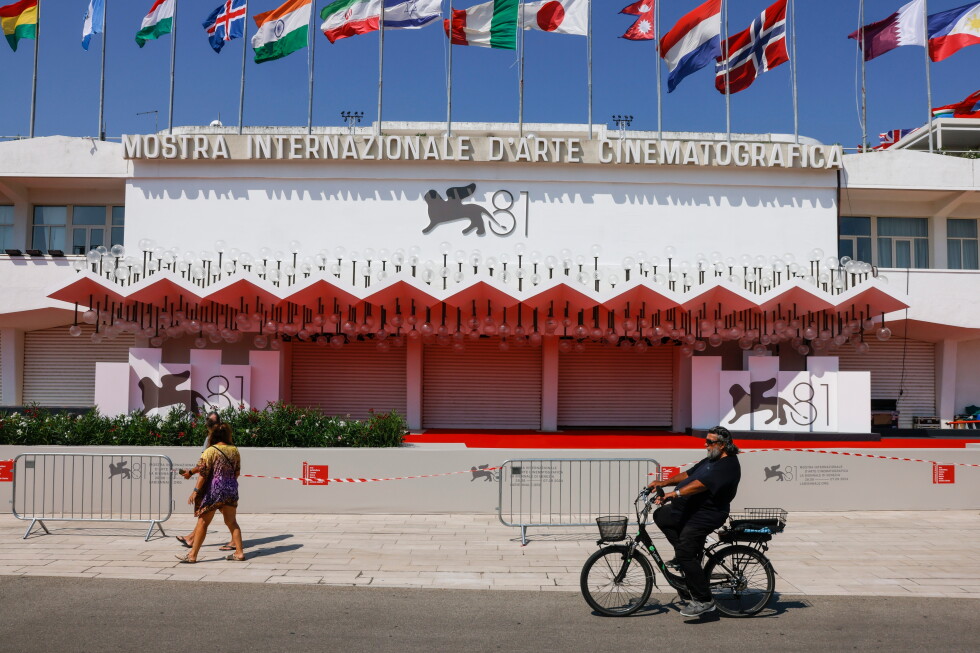
The lazy, slow days of August usually put Hollywood’s glitzy annual calendar on pause, but the 83rd Venice Film Festival is poised to launch the busy fall festival circuit with its signature blend of red carpet glamour, boundary-pushing cinema, and industry drama when it opens Wednesday on the historic Lido waterfront.
A-list stars from across the globe are set to walk the iconic festival’s red carpets this year, with names including Noel Gallagher, Liam Gallagher, Robert Pattinson, Rooney Mara, George Clooney and Penélope Cruz confirmed to attend. Clooney and veteran actress Ellen Burstyn will also take center stage to accept lifetime achievement Golden Lions, capping decades of acclaimed work in film. For decades, the Venice Film Festival has served as a launching pad for awards season contenders, and industry observers already expect several of this year’s entries to earn Oscar nods in the coming months.
But unlike past editions, much of the global conversation surrounding this year’s lineup centers not on A-list contenders or future blockbusters, but on a high-profile subject who will almost certainly not be in attendance: billionaire entrepreneur Elon Musk. The core of this attention stems from Oscar-winning documentarian Alex Gibney’s nearly four-hour investigative film, which has been four years in the making. Gibney initially hesitated to take on the project, but a close friend persuaded him that a deep dive into Musk’s life and career would offer a revealing portrait of power in the 21st century — a project that gained even more cultural relevance ahead of its release amid Musk’s high-profile involvement in the 2024 U.S. presidential election and his controversial leadership of social platform X (formerly Twitter), tied to his DOGE cryptocurrency initiative.
When the documentary was first announced, Musk took to social media to dismiss it as a biased “hit piece.” Gibney quickly pushed back, asking publicly, “How would you know?” In comments to The Associated Press, Gibney shared that he began the project as an admirer of Musk’s work — and even a Tesla owner — and extended multiple invitations for Musk to participate in the film on camera.
“Ultimately, he didn’t want to talk to me,” Gibney said. “But then you start digging into the facts and you follow them where they lead. And where they led, for me, was to a place that upended the myth, I would say, of Elon Musk as a kind of modern Leonardo da Vinci … I think that the news in this film is that Musk isn’t an inventor. He’s a confidence man.”
Gibney and his team conducted interviews with hundreds of people with direct knowledge of Musk’s career at Tesla and SpaceX, many of whom spoke only off the record. The director compared Musk to fallen disgraced corporate leaders such as Enron’s executives and Theranos founder Elizabeth Holmes. Gibney added that he was most struck by how many sources — even self-described Musk supporters — refused to speak on the record without first seeking Musk’s permission to comment.
“I thought, wow, for such a big and powerful person, that seems awfully weak,” Gibney noted. While the film tackles a “dark and dangerous topic,” Gibney described it as a compelling, engaging “fun ride” for audiences.
Musk’s documentary is not the only timely, politically charged work headlining this year’s nonfiction lineup. Julia Loktev’s *My Undesirable Friends: Part II — Exile*, a nearly six-hour follow-up to her 2020s documentary, continues her sprawling portrait of independent Russian journalists who fled their home country after Vladimir Putin’s full-scale invasion of Ukraine.
“You see this group of young, very young journalists who’ve just fled their country, on a few hours’ notice. They had the choice of, you know, stop reporting the truth about the war, which didn’t seem like a choice at all, or go to prison, or leave the country so they can keep telling the truth,” Loktev explained. “It was a question of how long do you keep following? Because this takes place over four years. And over that time, exile becomes, of course, indefinite.” Despite its extended run time, Loktev says the documentary holds audience attention: “I hear it goes by easy.”
The ongoing Israeli-Palestinian conflict in Gaza will also take a prominent spot in the lineup, with the new documentary *NAZA* added as a late entry to the main competition. The film comes from two of the creators behind the Oscar-winning documentary *No Other Land*. Unlike the 2024 edition of the festival, no large-scale public protests have been organized, but advocacy group Venice4Palestine has called on festival leadership to “suspend all agreements with entities and institutions linked to the Israeli government” and fly the Palestinian flag across festival grounds throughout the event.
Beyond documentary, the festival’s narrative lineup includes a number of awards contenders vying for early Oscar momentum. The Venice Film Festival has a long track record of launching best picture nominees, and this year’s slate includes several high-profile projects from award-winning filmmakers. Martin McDonagh, whose last two features premiered at Venice before earning multiple Oscar nominations, returns with *Wild Horse Nine*, a 1970s-set CIA comedy starring John Malkovich and Sam Rockwell. Oscar-winning *The Father* director Florian Zeller brings his new psychological thriller *Bunker*, which stars Penélope Cruz and Javier Bardem. Danny Boyle examines a key turning point in tabloid journalism history with *Ink*, while Lance Oppenheim’s *Primetime* has drawn significant curiosity for Robert Pattinson’s lead performance as *To Catch a Predator* host Chris Hansen and its deep dive into early 2000s reality TV culture.
International cinema also features heavily in this year’s main competition. Japanese master Hirokazu Kore-eda debuts *Look Back*, a coming-of-age story following two small-town teenage girls chasing their dream of becoming professional manga artists. Korean auteur Lee Chang-dong explores class, labor and romantic desire through the intersecting lives of two married couples in *Possible Love*.
Notably, the 2025 festival comes at a moment when major Hollywood studios have increasingly pulled back on relying on international film festivals to build buzz for awards contenders. The 2025 Cannes Film Festival had no major studio blockbusters in its lineup, yet Hollywood went on to post one of the highest-grossing summer seasons in history. Last year’s best picture winner *One Battle After Another* skipped the entire festival circuit entirely. While Venice booked more Hollywood titles than Cannes this year, the overall buzz around awards contenders is far more muted than in years past, after multiple high-profile entries saw their Oscar prospects fizzle prematurely in recent seasons.
Beneath the glamour and awards buzz, the 2025 edition also spotlights a long-unfulfilled promise the festival made to advance gender equity behind the camera. Just one of the 21 films in this year’s main competition is directed by a woman: Danish-Egyptian filmmaker May El-Toukhy. This mirrors the 2018 lineup, which also had only one female director in competition. That 2018 lack of representation prompted the festival to sign a public pledge promising that at least 50 percent of main competition films would be directed by women by 2020 — a goal it has yet to meet seven years later.
The lack of representation stings even more given that actress-director Maggie Gyllenhaal, whose 2021 feature *The Lost Daughter* won the festival’s best screenplay award, is this year’s main competition jury president. One of her fellow jurors is Tunisian director Kaouther Ben Hania, whose film *The Voice of Hind Rajab* won the Silver Lion in 2024, a year when six competition films were directed by women. In the history of the festival, only seven women have ever won the top prize, the Golden Lion.
Outside the main competition, representation is far better. The independent Venice Days sidebar, which opens this year with Hungarian director Lili Horvát’s English-language debut *My Notes on Mars*, has more than half of its 2025 lineup directed by women, including high-profile short films from established auteurs including Mona Fastvold and Claire Denis. Horvát called it “good to be in a progressive section.”