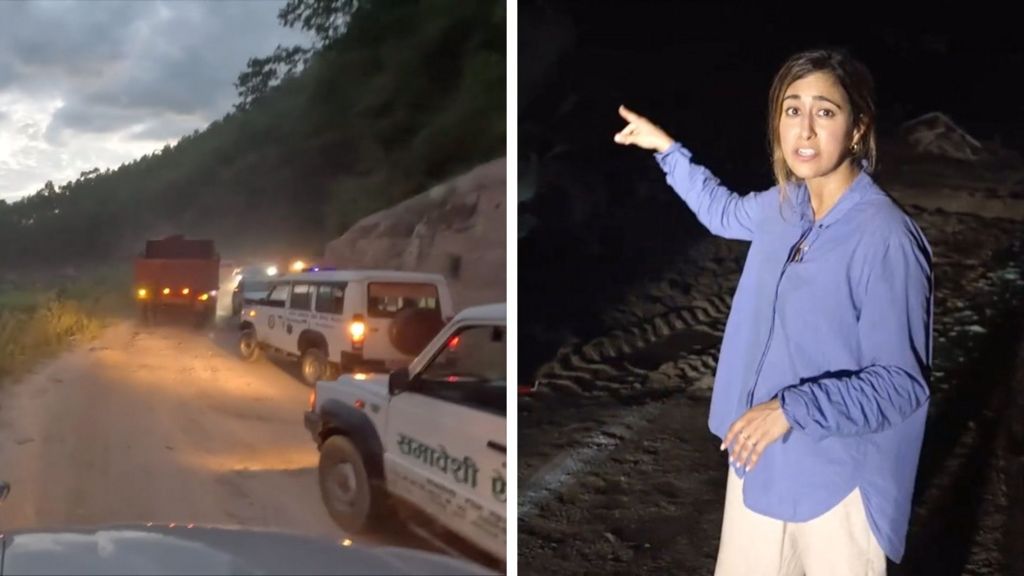
A first-hand reporting journey through Nepal’s flood-ravaged terrain has laid bare the full scale of the disaster unfolding across the country, as the BBC’s South Asia correspondent Azadeh Moshiri documents the grim aftermath while traveling from the capital Kathmandu to the hard-hit town of Trishuli.
What should have been a routine overland trip between the two population centers has been transformed into a sobering passage through a landscape altered by catastrophic flooding. Moshiri’s route is repeatedly interrupted by sections of road washed out or blocked by landslides and debris triggered by the swollen waterways that have overrun their banks. Every mile of the journey reveals new signs of destruction: damaged infrastructure, submerged settlements along the Trishuli River, and scattered personal belongings washed downstream by the rushing floodwaters.
Most striking of all is the steady stream of emergency vehicles moving along the cleared sections of the highway: ambulances rushing to evacuate trapped survivors and hearses carrying the remains of those who have lost their lives to the disaster. The continuous procession underscores the heavy human cost of the floods, which have displaced thousands and left communities scrambling to mount rescue and recovery operations.
Local disaster response teams have been working around the clock to clear blocked routes and reach cut-off communities, but the scale of the infrastructure damage has slowed progress, leaving many remote areas still waiting for aid. This on-the-ground reporting from the disaster zone offers a raw, unfiltered look at the immediate aftermath of one of the most significant flood events to hit Nepal in recent years.