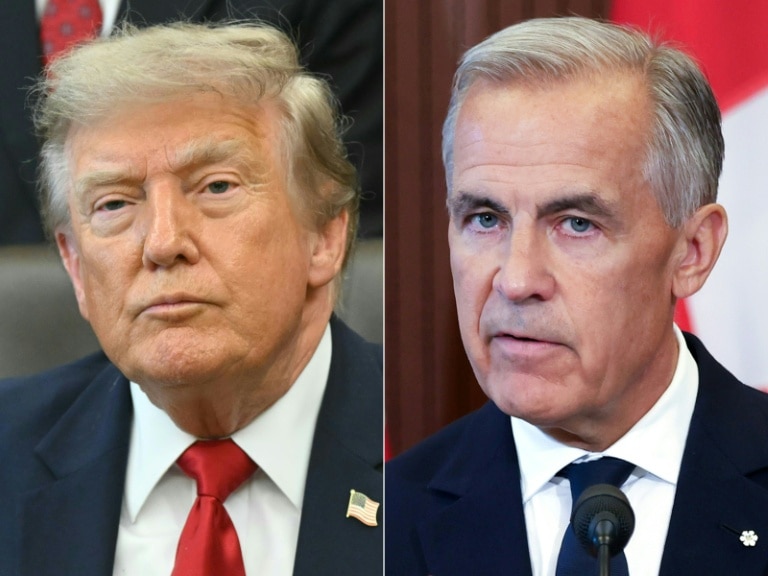
A rapidly escalating transboundary trade conflict between the United States and Canada entered a dangerous new phase Monday, as former president and current US leader Donald Trump announced plans to double existing tariffs on Canadian automobiles and automotive parts starting in 2027.
In a public post to his Truth Social platform, Trump confirmed that starting January 1, 2027, all imported passenger cars, trucks of all sizes, automotive components, and Canadian steel entering the US market will face a 50% import tariff. Currently, the US imposes a 25% duty on Canadian-made vehicles that do not meet US content requirements under existing trade rules, while most Canadian steel already faces a 50% tariff under prior US trade measures.
The announcement comes just days after negotiations between Washington and Ottawa collapsed completely, failing to avert a new round of 50% US tariffs on $20 billion worth of Canadian goods that went into effect Saturday. These new levies cover approximately 5.5% of all Canadian goods entering the US, ranging from industrial inputs like cement to consumer goods including hockey sticks.
Canadian Prime Minister Mark Carney rejected what he described as an unacceptable “bad deal” from US negotiators, walked away from talks, and immediately announced reciprocal retaliatory tariffs targeting key US export sectors. Carney’s retaliatory measures, set to take effect September 8, will hit US steel, dairy products, agricultural machinery, pulp and paper, and consumer electronics.
The US has long held the position as Canada’s largest single trading partner, with 70% of all Canadian exports destined for the US market. As of 2025, US Census Bureau data ranks Canada as the second-largest goods trading partner for the US, just behind Mexico. Existing Trump administration tariffs have already placed significant pressure on core Canadian industrial sectors including auto manufacturing and steel production.
In his post Monday, Trump doubled down on his longstanding criticism of Canadian trade policy, arguing that “Canada has been ripping off the United States of America for years.” He added, “we don’t need Canada, they need us.” The Trump administration initially justified the new round of tariffs by alleging Canada engages in discriminatory trade practices against US alcohol, automotive, and dairy products. Last week, Trump delayed the implementation of the new tariffs by three days to allow for last-minute negotiations between top trade officials from both nations.
Top Canadian negotiator Dominic LeBlanc and his delegation held marathon talks with US Trade Representative Jamieson Greer and his team in Washington across Thursday and Friday, extending negotiations late into Friday night, but the two sides could not bridge core differences. According to comments Greer gave to The New York Times Saturday, the US had tabled a compromise offer ahead of the collapse: Washington offered to eliminate a 10% tariff on Canadian softwood lumber, cut the existing 25% auto tariff, and reduce the 50% steel tariff to 25% for most Canadian steel exports. The offer was rejected by Canadian leadership.
Public opinion polling from the Angus Reid Institute released Sunday shows broad domestic support for Carney’s decision in Canada: three-quarters of Canadian respondents back the government’s choice to walk away from the talks. At the same time, the poll found that two in five Canadians report anxiety over potential job losses linked to the trade dispute.
As of Monday, neither side had announced plans to schedule a new round of negotiations, and Carney confirmed late Friday that he has suspended further trade talks with Washington. The ongoing tariff conflict is not the only point of tension between the two neighbors: the US is also pushing for revisions to the US-Mexico-Canada Agreement (USMCA), the trilateral trade deal that governs regional trade, and Trump has so far refused to renew the agreement in its current form. Additional friction has been caused by repeated provocative comments from Trump suggesting Canada should become the 51st US state, comments that have stirred widespread anti-US sentiment among Canadian voters.
US automakers have not yet issued a public response to Trump’s latest tariff threat, leaving unclear how the proposed 2027 duty increase would impact North American integrated auto supply chains that rely heavily on cross-border movement of parts and vehicles.