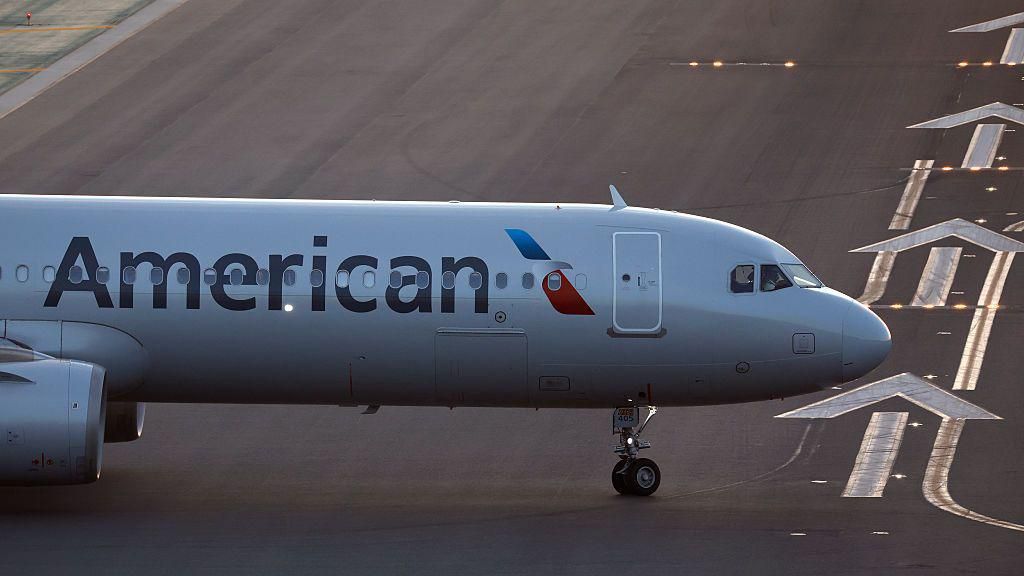
A routine domestic flight on American Airlines ended with a mid-air emergency Friday after a passenger’s laptop caught fire mid-flight, leaving several people with burn injuries before the aircraft landed safely at Dallas Fort Worth International Airport. The incident has reignited longstanding concerns over the fire risks posed by lithium-ion batteries, a hazard aviation regulators around the world have been warning the public about for years.
According to air traffic control audio obtained by CBS News, the BBC’s U.S. reporting partner, the pilot of Flight 2398 – which was en route from Atlanta, Georgia, to Dallas – alerted controllers shortly after the fire broke out. “Cabin fire in the back of the airplane,” the pilot said, adding “the flight attendants are trying to put it out now.” The pilot went on to confirm that approximately four to five passengers had sustained burns from the burning device, noting that the laptop fire had been contained near the middle of the aircraft, an Airbus A321.
After the jet made a safe landing, airport officials confirmed to CBS News that one injured passenger received on-site medical treatment and was released following the incident. In an official statement released after the landing, American Airlines confirmed the emergency, noting the plane landed without further incident “after reports of smoke from a customer’s device during landing. We thank our crew for their professionalism and swift response to quickly contain the device.” The BBC has confirmed it has reached out to both Dallas Fort Worth International Airport and American Airlines to request additional details about the incident and response.
The emergency comes as U.S. aviation regulators have repeatedly highlighted the severe fire hazard presented by lithium-based batteries, which power most consumer electronics including laptops, smartphones and portable power banks. The U.S. Federal Aviation Administration (FAA) warns that lithium batteries can overheat and ignite for a wide range of reasons: damage to the battery casing, exposure to high external temperatures, contact with water, overcharging, or improper packing in checked or carry-on luggage.
So far in 2026 alone, the FAA has verified 58 separate air incidents involving lithium batteries that resulted in smoke, fire, or dangerous extreme heat overheating. Over the past two decades, official FAA data shows that the highest number of lithium-related incidents have been linked to loose battery packs, with 84 recorded incidents tied to personal laptop batteries. To reduce this risk, the FAA mandates that all spare lithium batteries must be carried only in passenger carry-on baggage, where crew can respond quickly if a fire breaks out, rather than being stowed in the aircraft’s unmonitored cargo hold.
This American Airlines incident is far from an isolated case. Back in May, an EasyJet flight traveling from Egypt to the United Kingdom was forced to divert unexpectedly to Rome after a power bank started overheating while being charged inside a passenger’s checked luggage in the aircraft hold. The flight was rescheduled to depart the following day after the emergency was resolved. UK aviation regulators have also echoed U.S. warnings, with the Civil Aviation Authority noting that portable power banks are responsible for a growing number of serious in-flight safety incidents across the globe. The CAA has urged greater public awareness of the risks, emphasizing that portable chargers carry a “serious risk” of unexpected overheating and in-flight fires.