More than four months have passed since a Los Angeles-based Iranian family of three lawful permanent residents was taken into Immigration and Customs Enforcement (ICE) custody, detained not for any crime they committed, but over a relative’s political role during a 1979 diplomatic crisis decades before two of them were even born.
In an open letter published in *The Nation*, Maryam Tahmasebi, an Iranian scholar and one of the three detainees, described the family’s treatment as a clear case of “bloodline punishment.” Tahmasebi, her husband Eissa Hashemi — also an academic — and their 16-year-old son, who has lived most of his life in Southern California, all hold clean criminal records. Their green cards were revoked following a targeted online campaigning against the family, and they have remained behind bars since early April.
The basis of the government’s action traces back to the 1979 Iran hostage crisis, when 53 American diplomats and citizens were held captive by militant student groups in Tehran. Hashemi is the son of Masoumeh Ebtekar, a former Iranian politician who served as a translator for the hostage takers that year — years before Hashemi was born. Tahmasebi emphasized in her letter that the U.S. government chose to punish her husband exclusively for his maternal family connection, not any action of his own.
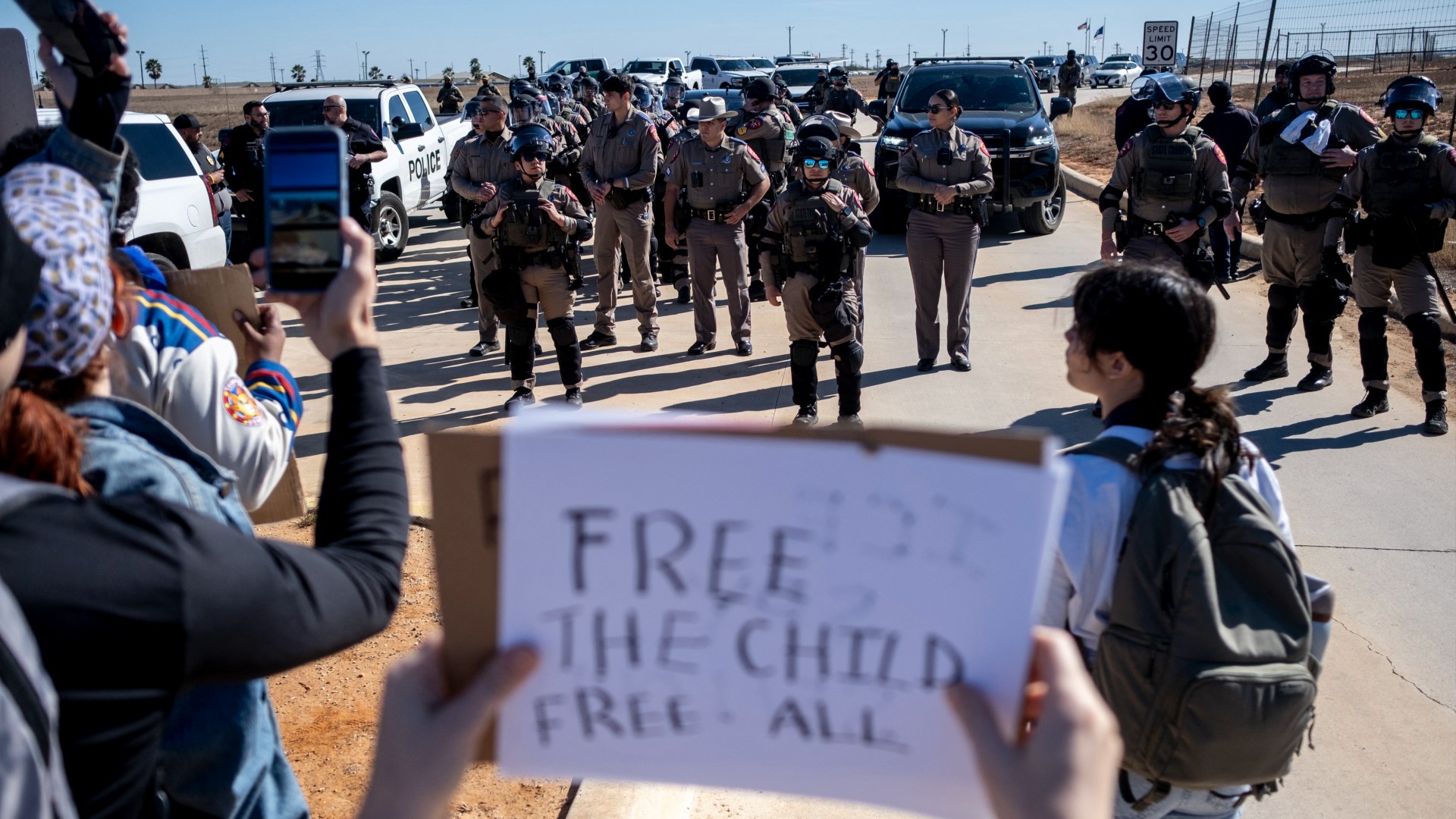
Hashemi was first arrested on April 9 and transferred to the South Texas Detention Center in Pearsall, where he remains in custody. The following day, Tahmasebi and their teenage son were detained while en route to the boy’s school. The pair are now held at the Dilley Immigration Processing Center, a for-profit ICE facility in South Texas designed primarily to detain women and children. For years, lawmakers and immigrant rights activists have pushed to shut down this detention center, citing extensive documentation of systemic abuse, neglect, and psychologically traumatizing conditions for detainees, especially minor held in custody.
When Tahmasebi requested a transfer to be held in the same facility as her husband, she was told family separation is an official U.S. government policy that would not be waived, per her account. In a striking turn, even the family’s request for voluntary departure — a standard legal process that allows people facing deportation to leave the U.S. voluntarily without a permanent deportation order on their record — was rejected by federal authorities.
Tala Alfoqaha, the family’s lead legal counsel, told Middle East Eye that the government’s refusal to approve voluntary departure confirms the detention is purely punitive, with no legitimate immigration or national security purpose. “This is a case that stands for the idea that you can do every single thing right and still end up in ICE detention,” Alfoqaha said. “They’re not being detained on the basis of what they’ve done, but who they are as Iranians with parents who’ve lived and worked.”
Alfoqaha drew a parallel to one of the darkest chapters of U.S. history, noting the case echoes the mass internment of Japanese American citizens during World War II, when thousands were imprisoned solely based on their ethnic ancestry, not any unlawful action. In a statement to NBC Los Angeles, the U.S. Department of Homeland Security defended its action, claiming the three family members’ presence in the country “posed a clear threat to our national security and foreign policy.”
In her letter written from detention, Tahmasebi warned that the case sets a dangerous precedent for all immigrant communities in the U.S. “If this could happen to us, a law-abiding family of two professors and a young boy, it can happen to anyone,” she wrote.
As of December 2024, federal data shows at least 577 Iranian nationals are currently held in ICE detention facilities across the country, a trend many immigrant rights advocates frame as part of broader political retaliation against Iranians amid ongoing U.S. geopolitical tensions with the Iranian government.