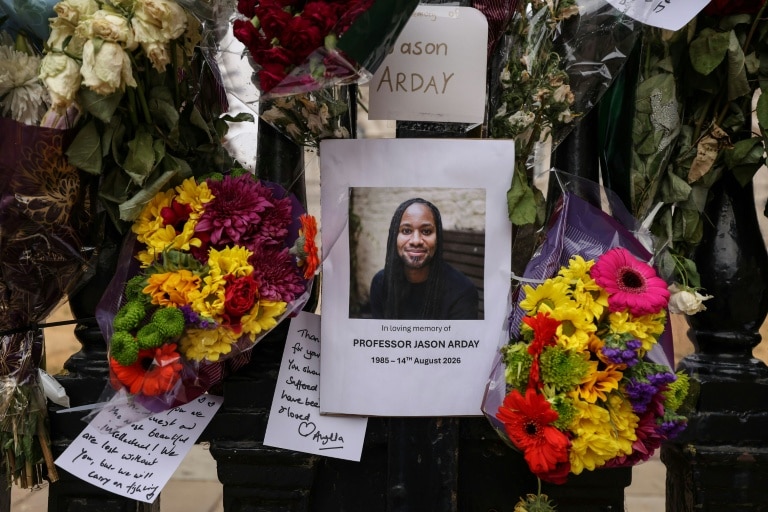
In a development that has rocked academic circles across the Atlantic, Belgium’s Ghent University has suspended an American postdoctoral researcher who led high-profile plagiarism accusations against Jason Arday, the former University of Cambridge black professor who was found dead last week just days after resigning amid the growing controversy.
The academic in question, Nathan Cofnas — a self-identified “race realist” who was dismissed from a position at Cambridge two years ago — announced his suspension via social media platform X, writing, “I was just suspended by Ghent University. They will almost certainly fire me.”
In an official statement released Thursday, Ghent University confirmed it had opened a preliminary disciplinary investigation into the postdoc tied to the unfolding scandal, opting to suspend the researcher as a precautionary measure, though it did not explicitly name Cofnas in the announcement. The institution’s leadership has already stressed that while it upholds core commitments to academic freedom and open debate even around controversial views, that freedom is not absolute: it must be paired with personal responsibility, and can be limited to safeguard the dignity and rights of others.
The tragedy at the center of this disciplinary action is the death of 41-year-old Arday, who made history in 2023 when he became Cambridge’s youngest-ever black professor. Arday, who was diagnosed with autism and other developmental conditions in childhood, had been facing a cascade of claims that he plagiarized segments of his doctoral thesis and inflated key personal and professional achievements. He had forcefully denied all accusations, but ultimately stepped down from his post on August 5, writing in his resignation letter that he had “reached the limits of what any person should reasonably be expected to endure.” One week later, he was found dead.
Plagiarism concerns around Arday first emerged years ago, but the claims never gained traction at that time: one reporter who pursued the story abandoned further investigation after Arday threatened legal action. That changed last month, when Cofnas publicly came forward to allege he had uncovered dozens of instances of plagiarism in Arday’s academic work. The claim rapidly snowballed into a national scandal in the UK, earning blanket media coverage on both sides of the Atlantic.
The row quickly became politicized, with British right-wing media and commentators leveraging the accusations to argue that Arday had secured his prestigious position through unfair advantage gained by university diversity, equality and inclusion (DEI) policies. Following Arday’s death, Ghent University moved quickly to address public concern over Cofnas’ involvement, releasing an initial statement Wednesday saying it was “shocked” by the professor’s passing and took all public statements from its researcher “very seriously.”
The institution’s leadership reaffirmed its values in that initial statement, noting, “Ghent University stands for respect for human dignity and opposes discrimination, hatred and racism. We attach great importance to academic freedom and to open academic debate, even when views are controversial. However, that freedom is not unlimited. It goes hand in hand with responsibility and may be restricted in order to protect the rights of others.”
Now, the university says it is in the process of assessing whether there is sufficient evidence to move forward with full formal disciplinary proceedings against Cofnas, a step that could ultimately lead to his termination from the institution.