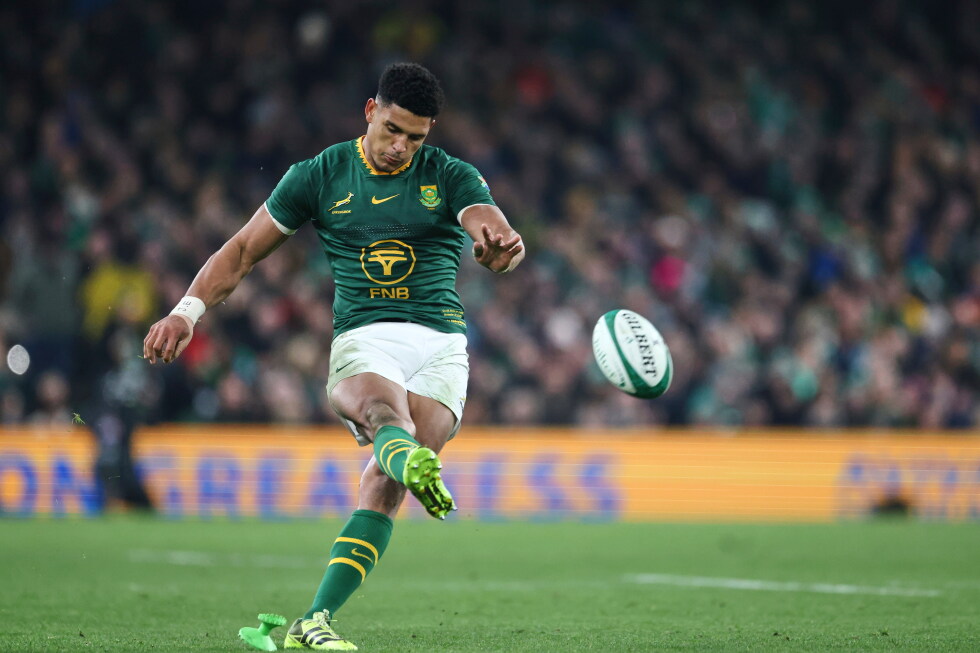
As South Africa and New Zealand prepare to kick off their highly anticipated test series this Saturday, rugby analysts and fans alike are already predicting that the outcome of the competition will likely come down to the performance of each side’s goalkickers. Fortunately for both nations, their current rosters boast a lineup of exceptionally accurate sharp shooters ready to deliver under pressure: the Springboks field Handre Pollard, Sacha Feinberg-Mngomezulu and Mannie Libbok, while the All Blacks count Ruben Love, Damian McKenzie and Beauden Barrett among their kicking options, all of whom have nailed game-changing points in high-stakes matches in the past.
This bitter trans-Tasman rugby rivalry stretches back more than a century, and a look through the history of their test series dating to 1921 reveals that the most decisive goalkicking performances have often come from unexpected sources, rather than the pre-series favorites. Below are some of the most iconic goalkicking displays that shaped the outcome of historic clashes between the two sides.
### 1921: Gerhard Morkel
One of the only members of the Springboks touring squad with test experience dating back to before World War I, Morkel had already cemented his reputation as a standout fullback on the 1912–13 tour of Europe. By the time of the first ever South Africa-New Zealand test series, the 32-year-old was slower than his peak, but remained a constant attacking threat.
After New Zealand claimed a 13–5 victory in the opening test at Carisbrook, South Africa entered the second test at Eden Park needing a win to keep the series alive. With the scores tied at 5–5 in the 68th minute, Morkel stepped up: after catching a clearance kick and advancing a handful of yards, he slotted a iconic drop goal – worth four points at the time – to put the Springboks ahead. South Africa held on to win 9–5, and that drop goal ended up being the final decisive points of the whole series. The third test in Wellington, nicknamed “The Rugby Championship of the World,” was played in torrential rain on a muddy pitch and ended in a scoreless 0–0 draw. Morkel was widely praised for keeping the Springboks in the game with a series of perfectly executed line kicks, helping the side secure a drawn series.
### 1949: Okey Geffin
Geffin’s legendary kicking craft was honed in unusual circumstances: while held as a prisoner of war by German forces during World War II, he learned goalkicking technique from 1924 Springbok Bill Payn, practicing barefoot in the prison camp. The tighthead prop made his test debut in the 1949 series against the All Blacks.
In the opening test in Cape Town, starting kicker Jack van der Schyff missed three consecutive attempts at goal, so Geffin was given the kicking duties. He nailed a world record five penalties to overturn an 11–0 deficit and secure a 15–11 win for South Africa. After the Springboks won the second test at Ellis Park, Geffin slotted three more penalties to seal a 9–3 third test win in Durban and clinch the series. The 1949 tour ended in a 4–0 whitewash for New Zealand, who lacked a kicker of Geffin’s quality. Geffin contributed 32 of South Africa’s 47 total points across the series, earning him the permanent nickname “The Boot,” and one of his original kicking boots is now housed in the New Zealand Rugby Museum.
### 1956: Don Clarke
Also nicknamed “The Boot,” Clarke was originally written off as a cumbersome, injury-prone player. But the burly fullback, famous for his incredible long-distance kicking power with his right boot, recovered from injury just in time to face the touring 1956 Springboks.
With the series tied at one win apiece, New Zealand rugby fans and officials called for team changes, and Clarke made his test debut in the third match in Christchurch. He slotted a penalty just three minutes into the game, sending an immediate warning to the Springboks. He finished the match with three converted kicks to help the All Blacks secure a 17–10 win, with the *Evening Post* writing that “Clarke made as remarkably successful a debut as any full-back in history can ever have done.” In the series-deciding final test at Eden Park, he nailed two more penalties from more than 40 meters out to help New Zealand claim its first ever test series win over the Springboks. Clarke would go on to play in South Africa’s 75th jubilee matches in 1964, and permanently relocated to South Africa in 1977.
### 1970: Ian McCallum
The 1970 series came down to the fourth and final test at Ellis Park, with South Africa holding a narrow 2–1 series lead. The Springboks had the advantage of wind in the first half, and McCallum proved to be an unstoppable place-kicker all match. South Africa took a commanding 14–3 lead into halftime, capping the half with a 65-meter penalty from McCallum – a kick the player himself never expected to make. Springbok captain Dawie de Villiers had only called for the penalty attempt to give his fatigued forward pack extra time to rest.
McCallum’s 14 total points underpinned a 20–17 final win, handing New Zealand its first test series loss on any tour in 10 years. All Blacks legend Colin Meads praised McCallum after the match, saying “The man who beat us was the fullback Ian McCallum. I take my hat off to him. I can understand now how the Springboks felt about Don Clarke in 1956.”
### 1981: Allan Hewson
The slightly built Hewson faced constant criticism throughout his All Blacks tenure for his inconsistent defensive performance. He was even booed by fans in his home test debut, but retained his starting fullback spot three months later when the controversial 1981 series against the visiting Springboks reached its climax in the iconic “flour bomb test” at Eden Park.
The stadium was ringed with barbed wire and riot police to contain widespread anti-apartheid protests, and one protestor even dropped flour bombs onto the pitch from a small Cessna aircraft. Hewson’s defensive weaknesses allowed the Springboks to rally back with three tries from Ray Mordt, tying the scores at 22–22 by the end of 80 minutes of play, with a drawn series looking all but certain. But referee Clive Norling repeatedly penalized the Springboks in stoppage time, setting up a decisive penalty attempt in the 89th minute. Hewson nailed the kick to win the match and the series for the All Blacks, saying after the match “It just had to go over.”
### 1996: Jon Preston
The All Blacks held a 1–0 series lead heading into the second test in Pretoria, with a chance to claim the first ever series win over South Africa on home soil and avoid a third deciding test at Ellis Park. The side held a comfortable 24–11 lead for much of the match, but the Springboks rallied to cut the deficit to 24–23. The All Blacks earned a penalty from 40 meters out, but starting goalkicker Simon Culhane had just left the pitch with an injury. Replacement Jon Preston, who had not yet touched the ball in the entire match, insisted on taking the kick, and slotted it through the posts.
A late penalty from Springbok Joel Stransky cut the All Blacks lead back to one point in the 73rd minute, but two minutes later the All Blacks earned another penalty in their own half. Preston once again delivered, extending the lead. A late drop goal from Zinzan Brooke sealed the historic win for the All Blacks. Reflecting on the match later, Preston said “Thinking back, they were the biggest kicks of my career.” The magnitude of the achievement hit the team when they reached the changing room tunnel after the match, where legendary goalkicker Don Clarke waited for them in tears.