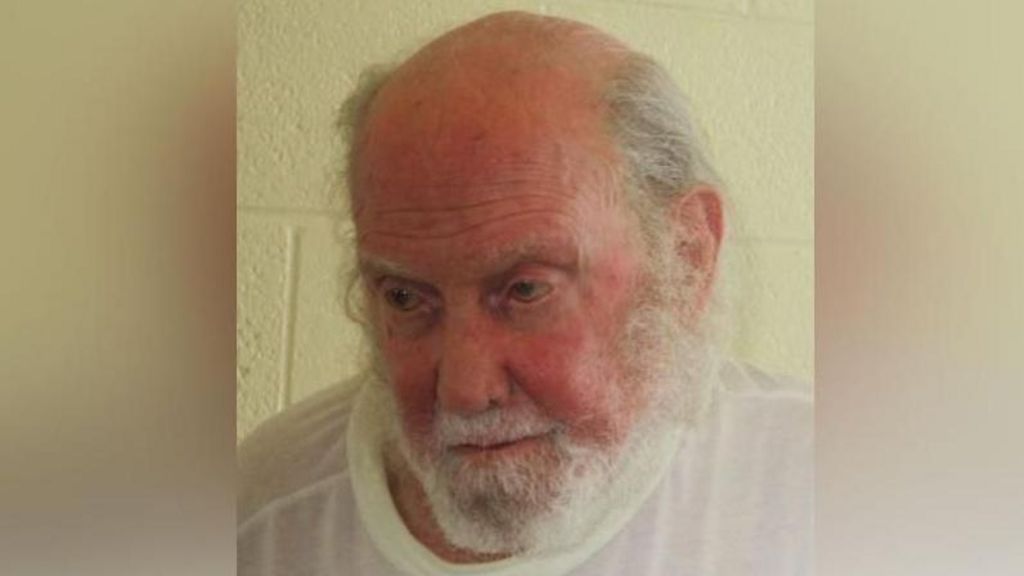
For nearly 76 years behind bars, Francis Clifford Smith faced death eight times, each time walking away from a scheduled execution to hold the title of the United States’ longest-serving incarcerated person before passing away at 101 years old. Throughout his decades in custody, those close to him say he never once wavered from claiming he was wrongfully convicted of a 1949 murder.
Smith’s saga began in 1949, when the 25-year-old former petty offender was accused of killing Grover Hart, a night watchman at a Connecticut yacht club. He was arrested alongside a second suspect, who accepted a plea deal in exchange for testifying against Smith. A jury found Smith guilty of first-degree murder in 1950, and he was sentenced to death. Over the decades that followed, however, credible doubts emerged about his conviction: multiple key witnesses later withdrew their original statements, another incarcerated person confessed to the murder in custody, and even the lead interrogation officer Major Leo Carroll publicly told the Board of Pardons he did not believe Smith was present at the killing at all.
During his decades at Osborn Correctional Institution, Smith became a well-known figure among staff and fellow inmates for his quiet habit of sneaking bread out of the cafeteria to feed wild birds around the prison grounds. “He would stuff as much bread as he could fit in his clothing,” Andrius Banevicius, public information officer for the Connecticut Department of Correction, recalled. “Everyone kind of turned a blind eye to it because they knew he was just feeding the birds.” The small, gentle routine earned Smith the nickname “The Birdman of Osborn.”
Beyond his continuous sentence, Smith experienced three brief breaks from incarceration: he escaped in 1967 and was recaptured after 12 days; he was granted a one-day Christmas furlough in 1974 and returned voluntarily the next morning; and he won parole in 1975, spending 10 months in free society before a petty larceny and weapons charge sent him back to prison for a parole violation. For decades after that, Smith repeatedly declined offers to pursue new parole opportunities, only accepting supervised release to a specialized justice system care home for elderly inmates in 2020.
Smith’s death in his sleep at the 60 West care facility in June, from natural causes related to old age, has thrown a sharp spotlight on a growing national and international crisis: the rapid graying of prison populations. Long-term incarceration is well-documented to cause accelerated aging, with many people who spend decades behind bars developing age-related health conditions 20 to 30 years earlier than their non-incarcerated peers. “We frequently say that a person coming from a long period of incarceration can be 60 but have the health status of a 90-year-old,” David Skoczulek, spokesman for 60 West, explained. Smith, who developed age-related cognitive decline in his final years, received specialized end-of-life care through MissionCare Health, one of the few programs in the U.S. focused on geriatric care for formerly incarcerated people.
Data underscores the scale of the aging inmate crisis. A 2025 study found that the population of incarcerated people aged 55 and older in the U.S. grew by nearly 400% between 1991 and 2021. The U.S. Census Bureau projects that by 2030, at least one in three incarcerated people across the country will be over the age of 50. This crisis is not unique to the U.S.: Dr. Stephanie Prost, a researcher focused on older adults in carceral settings at the University of Louisville, notes that similar trends are unfolding in Australia and England, though the U.S. faces a far larger scale of the issue due to its high mass incarceration rate.
Prost and other criminal justice researchers are advocating for targeted “smart decarceration” policies to address the crisis, including expanding compassionate release, medical parole, and elderly parole initiatives. These policies prioritize releasing aging inmates who have complex, costly medical needs that are impossible to adequately address in traditional, rigid prison environments, where elderly inmates often struggle with common age-related conditions such as mobility impairment, incontinence, and hearing loss. Even when parole is granted, however, experts point out that few care facilities are willing to accept convicted elderly inmates, leaving very few options for people like Smith outside of traditional prison walls.
After his death, Smith was cremated per his wishes. Though he had little contact with remaining family in his final days, Skoczulek confirmed that staff at 60 West ensured his end-of-life care was dignified and aligned with his requests, closing a 76-year chapter that began with a disputed conviction and ended as a stark case study of America’s unfolding aging prison crisis.