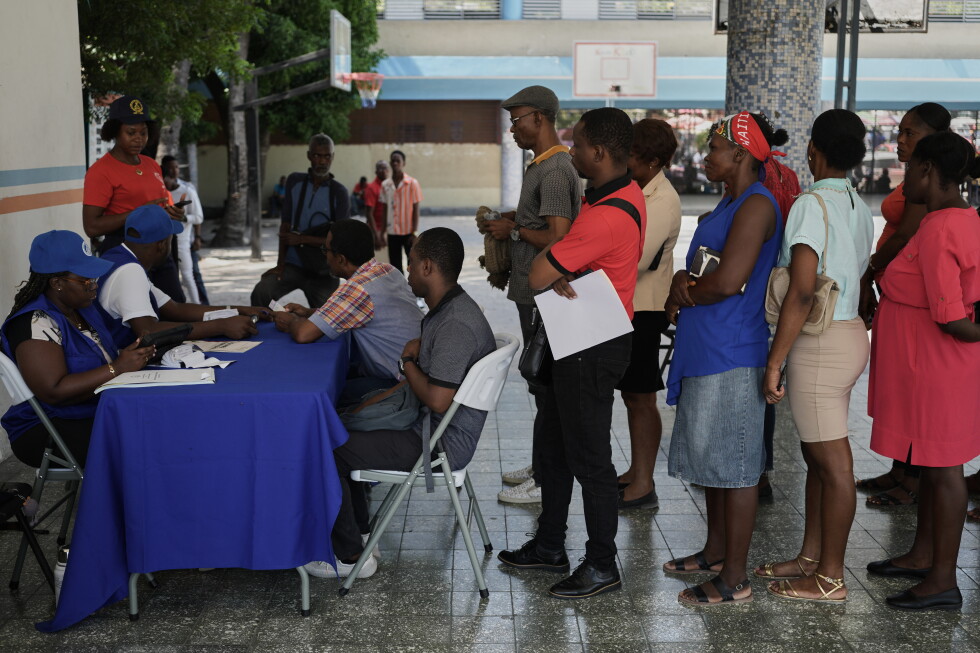
PORT-AU-PRINCE, HAITI – In a critical push to advance democratic processes in the crisis-battered Caribbean nation, Japan and the Organization of American States (OAS) formalized an agreement Tuesday that delivers a $3 million grant to Haiti, earmarked for voter registration efforts ahead of the country’s first general election in over 10 years.
The OAS outlined in an official statement that the funding will support two core immediate needs: updating Haiti’s outdated national voter rolls and procuring 350,000 blank national identification cards, a foundational requirement for eligible citizens to cast ballots. This intervention comes as Haiti grapples with a catastrophic wave of gang-related violence that has already displaced a record 1.5 million people across the country. Most of these displaced residents fled their homes suddenly amid armed attacks in the capital Port-au-Prince and outlying regions, leaving behind official documents including their identifying paperwork in the chaos.
Beyond updating voter rolls and printing ID materials, the grant will also address longstanding bottlenecks in Haiti’s civil documentation system. It will cut the growing backlog of Haitian residents waiting to receive official identification, expand access to registration services in underserved rural communities, and upgrade critical infrastructure—including power and internet connectivity—at government registration offices across the country’s decentralized regions.
Haiti’s transitional government launched official voter registration operations last month in Port-au-Prince, where an estimated 70 percent of the capital’s territory is currently under the control of armed gang factions. The first round of the long-awaited general election is currently scheduled for December 13, but regional policy and security experts have repeatedly warned that persistent, widespread gang violence could force yet another delay to the vote.
Haiti has operated without a sitting head of state since July 2021, when then-President Jovenel Moïse was assassinated at his private residence. Moïse, who took office in 2017 after winning the country’s last general election held in November 2016, has left a prolonged power vacuum that has compounded the country’s ongoing political, security and humanitarian collapse.