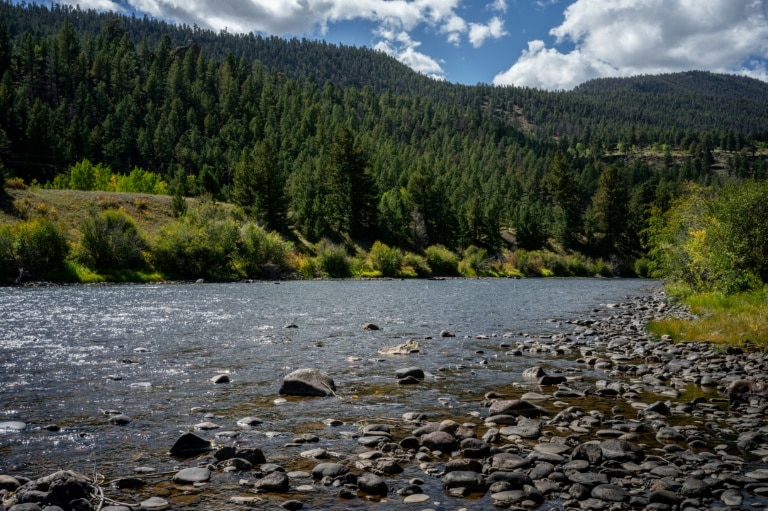
On a Tuesday announcement, the administration of former U.S. President Donald Trump tabled a landmark regulatory change that would undo two decades of protections for some of the nation’s last untouched wild landscapes, clearing the way for road construction and commercial logging across 44 million acres of undisturbed national forest.
The proposed rule would formally revoke the 2001 Roadless Area Conservation Rule, a signature environmental policy implemented in the final days of the Bill Clinton administration that banned almost all industrial development across vast swathes of public forests and grasslands categorized as “inventoried roadless areas.”
U.S. Agriculture Secretary Brooke Rollins justified the rollback in an official statement, framing the existing protections as outdated barriers to critical forest management that the U.S. Forest Service needs to reduce wildfire risk. “Across the country, we’ve watched preventable conditions — overgrown stands, insect outbreaks and disease — turn healthy landscapes into tinderboxes,” Rollins said. “For too long, outdated restrictions have kept tens of millions of forested acres off-limits to the very treatments that improve forest health and reduce wildfire risk to our communities.”
Early drafts of the regulation outline that the change will shift authority over decisions on road construction, reconstruction and timber harvesting in protected roadless areas to local state officials, aligned with site-level forest management planning. More than 95% of all inventoried roadless areas are located across 10 Western U.S. states: Alaska, Arizona, California, Montana, Nevada, New Mexico, Oregon, Utah, Washington, and Wyoming. The proposed rule does not extend to Colorado and Idaho’s national forests, due to pre-existing state-specific roadless conservation regulations.
The proposal has drawn immediate fierce pushback from environmental conservation organizations, who have already signaled they intend to mount legal challenges to block the change. Randi Spivak, public lands policy director at the Center for Biological Diversity (CBD), a leading nonprofit environmental group, called the move the largest rollback of public land protections in U.S. history, noting it runs counter to widespread public opinion.
Conservation groups warn that opening these roadless areas to development will cause irreversible damage to critical endangered species habitats. The CBD notes that Northern Rockies roadless areas act as essential lifelines for vulnerable populations of grizzly bears and Canada lynx. The proposal would also threaten ecologically critical salmon spawning streams and old-growth centuries-old Sitka spruce in Alaska’s Tongass National Forest, the nation’s largest national forest, which was explicitly named in the draft regulation. The targeted rollback for the Tongass follows an executive order Trump issued on the first day of his second term focused on “Unleashing Alaska’s Extraordinary Resource Potential.”
Public opinion polling shows the administration’s proposal is deeply out of step with voter preferences. A recent survey conducted by Susquehanna Polling and Research found that 77% of likely U.S. voters rank conserving roadless national forests for current and future generations as a top priority, while only 11% support opening additional protected land to timber harvesting and mining.
Critics also reject the Trump administration’s core argument that rolling back protections is necessary to reduce wildfire risk. Prior to the 2001 Roadless Rule, more than 370,000 miles of roads had already been built through U.S. national forests, leaving the federal government with a multi-billion dollar backlog in road maintenance. The CBD points to peer-reviewed research to refute the administration’s claim: a 2020s nationwide study published in the journal *Fire Ecology* found that wildfire ignitions are nearly four times more likely in lands within 50 meters of roads compared to untouched roadless areas, and that the majority of wildfires are human-caused, most often near existing developed areas.
Critics further note that the Trump administration has consistently rejected policies to address climate change, the primary driver of increasingly frequent and severe wildfires across the American West, which has created hotter, drier conditions that amplify wildfire risk.