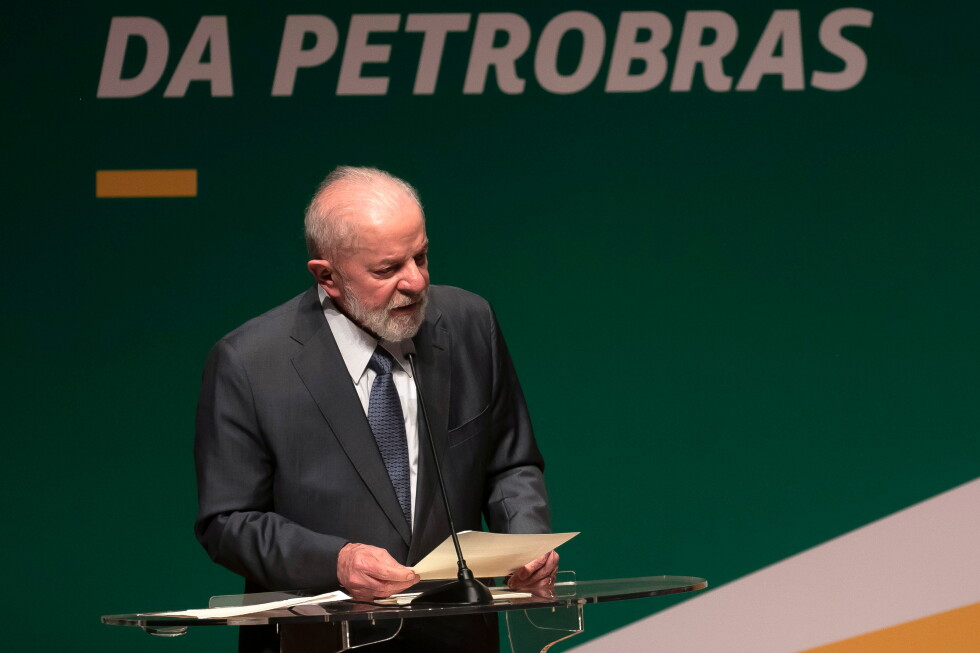
RIO DE JANEIRO — Standing on the soil of Amapa state, northern Brazil, Brazilian President Luiz Inácio Lula da Silva made a bold case for expanded offshore oil exploration along the country’s fragile Equatorial Margin on Monday, framing a recently confirmed hydrocarbon find near the mouth of the Amazon River as a transformative opportunity for the nation’s development, just weeks before he stands for re-election in a tightly contested presidential race.
The discovery, announced by majority state-owned energy giant Petrobras last Friday, came after months of exploratory drilling that wrapped up earlier this year. The find is located roughly 180 kilometers off Amapa’s coastline, within the Equatorial Margin — a vast, under-explored offshore basin that geologists estimate could hold as much as 10 billion barrels of recoverable oil and natural gas, with a projected market value of roughly $720 billion.
Lula’s remarks came shortly after he toured Petrobras’ offshore drilling rig that carried out the exploration work. In his address to local officials and supporters in Oiapoque, Amapa’s northernmost municipality, Lula pushed back against critics who frame the project as a contradiction to Brazil’s global commitments to fossil fuel phase-out. The president emphasized that his support for new drilling does not weaken Brazil’s position as a global leader in renewable energy innovation.
“When I call this a passport to the country’s future, I am not backing away from my commitment to a day when we no longer depend on fossil fuels,” Lula said. “Brazil will remain the global leader in biofuel innovation and a major player in the renewable energy sector for decades to come.”
Under Lula’s current administration, Brazil has positioned itself as a key negotiator for global climate action, most prominently during the United Nations Climate Change Conference (COP30) that the country hosted in 2024. The government has repeatedly backed international agreements to phase out coal, oil and gas production to limit global temperature rise. At the same time, Lula’s administration has moved aggressively to open new offshore areas for drilling, approving hundreds of millions in new exploration investments to boost government revenue and domestic energy production.
Petrobras CEO Magda Chambriard accompanied Lula during Monday’s event, confirming that the recent hydrocarbon discovery validates years of geological research into the Equatorial Margin’s potential. “All of our preliminary studies pointed to substantial reserve potential in this basin, and this discovery confirms those findings,” Chambriard said. “We will continue exploration work to fully map the extent of the resources here.” She added that the company still needs years of additional testing to confirm the total volume of commercially viable oil in the area.
Energy analysts note that full commercial production remains far off. Shigueo Watanabe Jr., an energy expert with Brazilian climate nonprofit ClimaInfo, explained that extensive feasibility and environmental testing would be required before extraction can begin, a process that could take as long as 10 years to complete.
The exploration project has faced fierce pushback from environmental advocacy groups and Indigenous communities, who argue that drilling in the sensitive Amazon mouth region poses unacceptable ecological and climate risks. Groups have already filed lawsuits against the Brazilian federal government and Petrobras, arguing the licensing process failed to meet legal requirements to consult with traditional Indigenous communities that depend on the region’s marine ecosystems. They also warn that the government’s environmental impact assessment underestimated the risk of catastrophic oil spills, and failed to properly account for the climate harm of developing new fossil fuel reserves. Petrobras has repeatedly defended its safety record, noting the company has never experienced a major spill in its decades of offshore drilling operations in Brazil.
Political analysts say Lula’s high-profile announcement of the discovery is closely tied to his 2026 re-election campaign, which officially kicked off on Sunday in Sao Paulo — the city where Lula first rose to political prominence as a metalworkers’ union leader during Brazil’s 1964-1985 military dictatorship. The leftist incumbent is locked in a tight race against Sen. Flávio Bolsonaro, son of former far-right President Jair Bolsonaro, with national opinion polls showing the race is essentially tied heading into the October election.
During Monday’s event, Lula — wearing a standard orange oil worker uniform — held up a small glass vial of crude oil from the new find, calling the sample “blessed” and saying he would keep it as a memento. He noted that developing the Equatorial Margin reserves would also bring long-overdue economic development to Amapa, a poor northern state that currently relies heavily on exports of agricultural commodities like acai berries and freshwater tucunare fish. Behind him, a large photo showed Lula holding up his oil-stained hands after his tour of the drilling rig — a deliberate echo of a iconic photo from 2008, when Lula announced the discovery of massive pre-salt oil reserves off Brazil’s southeastern coast, during his second term in office when he enjoyed record-high approval ratings.
Today, Lula is a deeply polarizing figure in Brazilian politics, with polls showing roughly half of Brazilians approve of his presidency, while an equal share disapprove. He has faced particularly low approval in northern Brazil, including Amazonian states like Amapa, where his environmental policies have drawn criticism from both development advocates and conservation groups.
Breno Rodrigues de Messias Leite, a political science professor at the Federal University of Amazonas, said Lula’s high-profile trip to Amapa is a calculated move to win over northern voters ahead of the election. “For the Amazon region, the possibility of accessing some of the world’s largest untapped oil reserves completely changes the political equation,” Leite explained. “Lula wants to win re-election, and he needs voters in northern states, especially Amapa, to support him.”