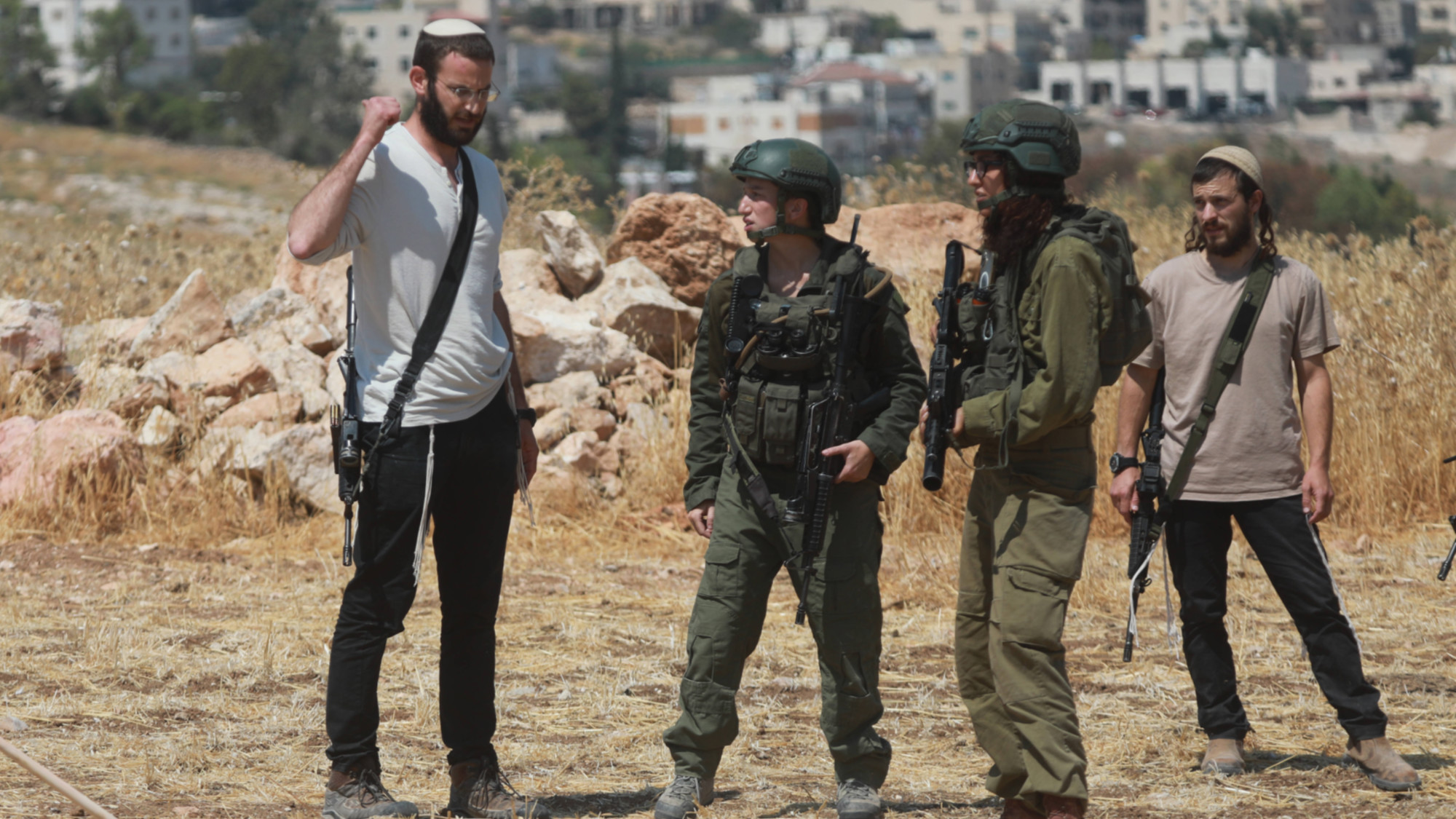
On a Saturday in the occupied West Bank, a violent attack by Israeli settlers upended the life of a 26-year-old Palestinian nurse, leaving him partially paralyzed and deepening longstanding fears among local communities that face escalating settler encroachment and violence.
Muhammad Mutoor, a nurse at Dura Governmental Hospital who had recently finished building a home in Sa’ir, the northeast Hebron town where the attack unfolded, had rushed to the al-Adisa neighborhood after word of ongoing settler violence spread. Like all healthcare workers, his first instinct was to aid any injured people in the area. But when he arrived, a settler opened fire, striking him in the back. The bullet severed his spinal cord, leaving Mutoor paralyzed from the waist down. A second Palestinian man was also shot and wounded in the shoulder during the same incident.
Khalil Mutoor, Muhammad’s uncle, shared details of the attack with Middle East Eye, confirming that settlers had flooded the area, firing live ammunition indiscriminately at local residents to terrorize them. “They aimed to kill, and they didn’t care about anything,” Khalil said. “They were firing live ammunition randomly and had climbed onto the hill adjacent to the houses, aiming their weapons at the residents. One of their bullets struck Muhammad in the back. They intended to kill him.”
What followed the shooting was a deadly delay that worsened Mutoor’s outcome: settlers had blocked all access routes to the neighborhood after establishing a new unauthorized outpost on seized Palestinian land, designed to force local residents to abandon their homes. Ambulances could not reach the wounded nurse immediately, forcing residents to transport him themselves to the nearby town of Bani Na’im, where he was eventually transferred to a hospital for care.
“Like any Palestinian patient or injured person, Muhammad faced difficulty reaching the hospital. When he arrived, it was discovered that the bullet had severed his spinal cord,” Khalil added. “He knew immediately after being shot that he was paralysed, given his work as a nurse.”
Mutoor is set to be transferred to Jerusalem’s Al-Makassed Hospital for further specialist evaluation, but clinicians have already offered little hope that he will ever regain movement in his lower limbs. What was once a promising future filled with long-held plans has been destroyed: Mutoor had just built his new home and was preparing to marry and settle down in the area. Those life plans are now in tatters, and his long-term future remains deeply uncertain.
“Now he only hopes for treatment and to adapt to his new reality. He knows perfectly well that his injury is serious and will affect him for the rest of his life,” Khalil said.
This devastating attack is not an isolated incident. It comes amid a dramatic escalation in state-protected settler violence targeting Palestinian communities across the occupied West Bank, with the Hebron region emerging as one of the primary hotspots for aggression.
The al-Adisa neighborhood, where Mutoor was shot, is home to roughly 1,800 Palestinian residents and sits on the frontline of ongoing Israeli settlement expansion. The area lies east of Route 60, a settler bypass road that has already seized large portions of land belonging to Sa’ir, Hebron and adjacent Palestinian towns. To the west of al-Adisa sit two established Israeli settlements, Kiryat Arba and Kharsina. For decades, Palestinian residents of the area have faced systematic restrictions on construction and development, alongside repeated attacks on their agricultural land and olive groves, a core source of livelihood for many local families.
What began as efforts to block Palestinian expansion has evolved into the gradual seizure of Palestinian-held land. As far back as 2012, Israeli settlers protected by the Israeli military planted trees on roughly 500 dunams (50 hectares) of land belonging to al-Adisa and the nearby al-Buq’a area. That land has since been the site of repeated attacks on Palestinian property and trees, as settlers push to expand their control.
Yousef Tarwa, a local activist from Sa’ir, told Middle East Eye that settlers have established eight new unauthorized outposts on town land since May 2025, spreading across the region and seizing thousands of dunams of Palestinian property. The ongoing encroachment has made daily life nearly unmanageable for local residents.
Tarwa explained that al-Adisa is repeatedly targeted by settlers who use intimidation and violence to force residents to leave, even though many local homes date back to the 1940s. “A month ago, they entered the area and carried out extensive bulldozing operations on Palestinian lands under the protection of the Israeli army. They burned an entire hill, erected caravans, assaulted the residents and then began blocking the roads,” Tarwa said.
With the main access road blocked by settlers, residents have been forced to travel along rough, unpaved back trails to reach their homes, turning short trips that once took minutes into hours of dangerous, grueling travel. Critically, Tarwa confirmed that on the day Mutoor was shot, Israeli military personnel were present alongside the attacking settlers and made no effort to intervene to stop the violence. “It has become clear to us that the settler, the soldier and the Israeli policeman are all the same,” he added.
The attack on Mutoor was just one of multiple violent incidents targeting Palestinians in the region that day. Just hours after the shooting in al-Adisa, Palestinian media reported a second settler attack in Hebron’s al-Ja’bari neighborhood that left 10 Palestinians wounded, two of them hit by live ammunition. Israeli forces subsequently arrested one of the wounded Palestinian men.
Official data from the United Nations Office for the Coordination of Humanitarian Affairs (OCHA) underscores the scale of the escalating crisis. As of July 20, 2026, OCHA has documented more than 1,330 settler attacks across 250 Palestinian communities since the start of the year that have resulted in either casualties or property damage – an average of more than six attacks per day. So far in 2026, at least 18 Palestinians have been killed and 880 more wounded in settler attacks. These figures mark a sharp increase from 2025, when Ocha recorded just 830 Palestinian wounded by settlers across the entire 12-month period. OCHA’s data also shows that more than 2,300 Palestinians have been displaced from their homes in 2026 as a direct result of settler violence and related access restrictions that make remaining in their communities impossible.
Currently, roughly 700,000 Israeli settlers live in occupied East Jerusalem and the West Bank across approximately 300 formal settlements and unauthorized outposts. The International Court of Justice has repeatedly affirmed that all Israeli settlements in occupied Palestinian territory are illegal under international law.