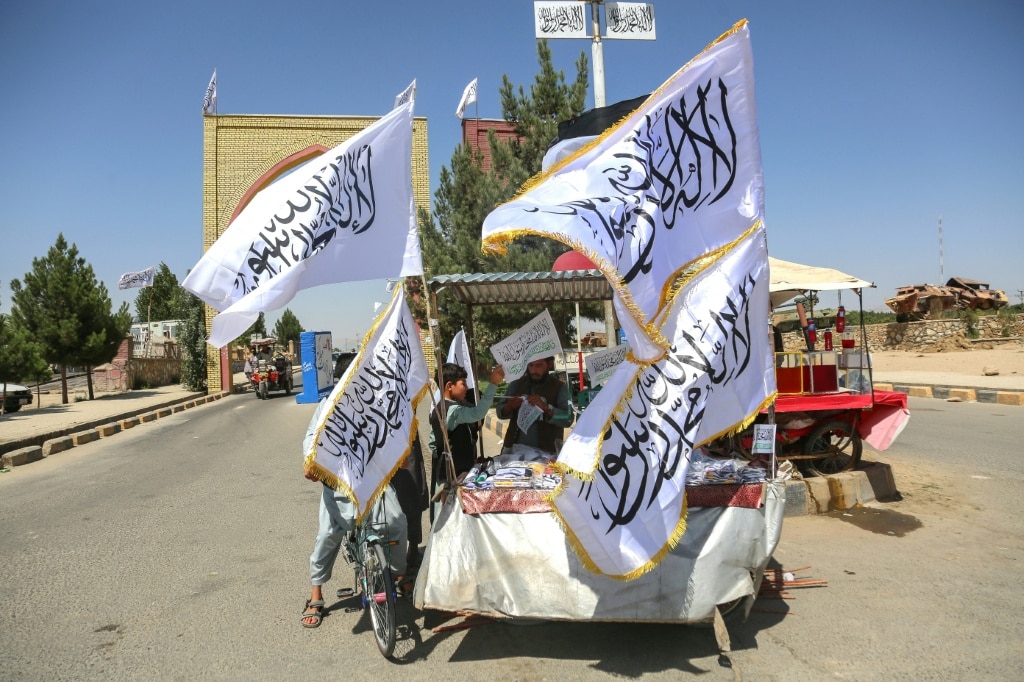
As the Taliban government of Afghanistan prepares to mark the fifth anniversary of its seizure of power this Saturday, the country is split sharply between the ruling regime’s triumphant rhetoric and the grim reality of widespread human rights restriction, economic instability, and deep public hardship. In the capital Kabul, authorities have spent weeks decking city streets with the bright white flag of the Islamic Emirate of Afghanistan, alongside large new murals that frame the takeover as a historic moment of national self-determination, reading: “Independence is a sign of dignity, pride and identity”.
The anniversary celebration lineup includes a high-profile cricket match and a series of other sporting events, from which girls and women are completely banned from attending, matching broader gender-based restrictions imposed across the country. Thousands of supporters are expected to gather at key sites across Kabul on the exact date that Taliban insurgents entered the capital in 2021, capping a rapid blitz offensive that toppled the Western-backed government days after the completion of the chaotic withdrawal of US-led international military forces.
Ahead of the anniversary, the Taliban has put on public display military vehicles abandoned by retreating foreign troops, including a dust-covered Humvee emblazoned with footprints and decorated with string fairy lights, a deliberate showcase of the regime’s claimed victory over foreign occupation. For some Afghans, particularly younger residents who have known only Taliban rule, the regime has delivered on core promises of stability after decades of conflict. Twenty-year-old university student Pirooz Mirzaie, who spoke to AFP among street vendors selling anniversary flags, said the government had improved national security, launched new infrastructure projects, and opened “plenty of opportunities for entrepreneurs”. Still, Mirzaie acknowledged a critical unmet challenge: “The biggest challenge for young people is that there aren’t many jobs.”
Taliban chief spokesman Zabihullah Mujahid has pushed back against criticism of the country’s economic trajectory, saying earlier this month that authorities are laying the “foundations of the economy” and asking the public for patience. Economic data presents a mixed picture: the World Bank has projected real GDP growth of 4.8 percent for 2025, but per capita GDP has declined sharply in recent years, driven in large part by the arrival of more than six million Afghan refugees returning from neighboring Iran and Pakistan over the past three years.
Beyond economic struggles, critics and international observers warn that five years of Taliban rule have brought a relentless rollback of civil liberties, with restrictions that touch nearly every sphere of daily life. Though the Taliban has secured diplomatic engagement with governments across Europe and other regions, only Russia has formally recognized the regime. Relations with key neighbor Pakistan have collapsed into open armed conflict this year, worsening an already severe humanitarian crisis that was triggered by deep cuts to international aid following the 2021 takeover.
Many major world powers have refused to normalize relations with the Taliban until the regime reverses its restrictions on human rights, a move the United Nations says is urgently needed to address “very real harm” being inflicted on the Afghan population. Fiona Frazer, human rights director for the UN Assistance Mission in Afghanistan (UNAMA), told AFP that Afghans have endured the “consolidation of suffocating restrictions that intrude on almost every aspect of their daily lives, and their human rights.”
Women and girls have borne the brunt of these restrictions: they are banned from most formal employment, barred from entering public recreational spaces including parks, and prohibited from accessing secondary and higher education for girls older than 12. Speaking to AFP on condition of anonymity over fears for her safety, a 23-year-old Afghan woman described the constant oppression of life under Taliban rule: “I felt a profound sense of suffocation. The five years have been so gruelling that I feel like a 500-year-old woman, one who cannot die.”