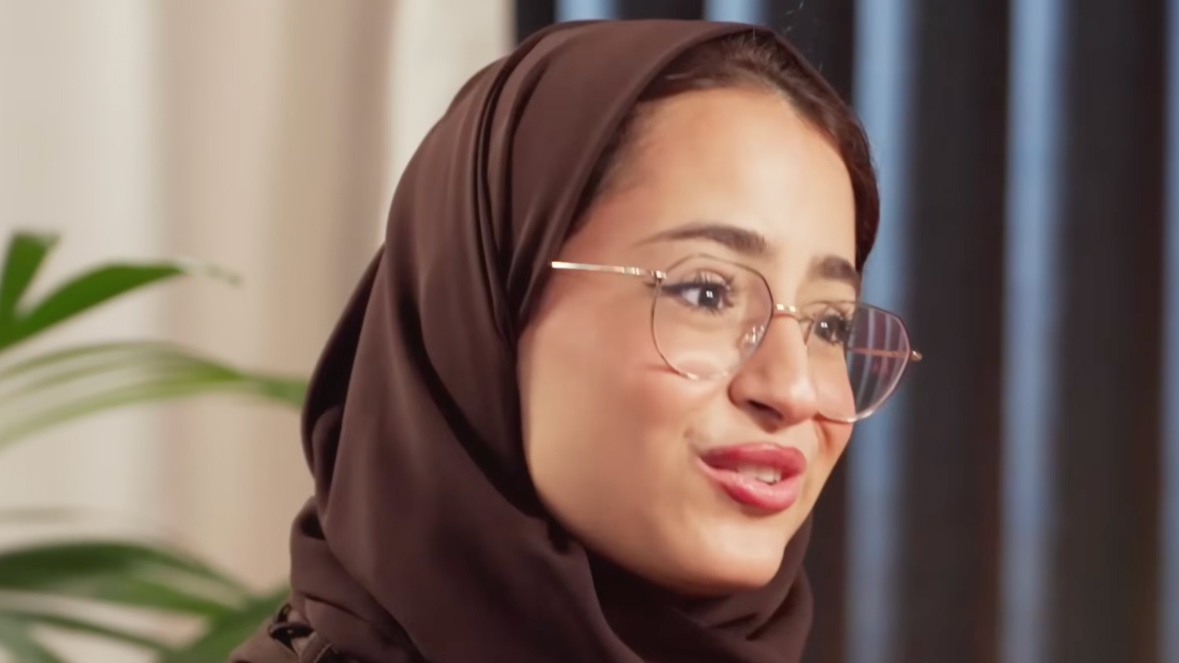
In a bizarre and widely criticized development in global geopolitical discourse, a cohort of young Emirati social media influencers has sparked intense backlash after circulating viral videos claiming the Muslim Brotherhood is secretly plotting to impose an Islamist caliphate across Britain and the Western world through subversive public outreach. The conversation ignited earlier this week when a clip from Rauda Altenaiji, a self-described “thinker of deep truths” on platform X, spread rapidly across social media.
The edited video cuts together footage of Altenaiji and fellow Emirati influencer Ahmed Sharif Al Ameri during an interview with British commentator Jonathan Sacerdoti — who recently argued at an Oxford Union debate alongside far-right figure Tommy Robinson that the West should be inherently suspicious of Islam — with out-of-context clips of American streamer Sneako, U.S. Representative Ilhan Omar, actor Ben Affleck, and journalist Mehdi Hasan. In the video, Altenaiji claims the Muslim Brotherhood is carrying out a quiet “invasion” of the West, using seemingly benign tactics like public relations campaigns and inclusivity initiatives to mask its ultimate goal of establishing caliphate rule.
Al Ameri adds that the movement leverages accusations of Islamophobia to silence critics, cutting to clips of the three public figures using the term to reinforce the claim. The video immediately drew widespread mockery and condemnation from analysts, journalists, and social media users alike, with many pointing to the absurdity of linking mainstream public figures like Affleck to the Muslim Brotherhood. Pakistani journalist Moeed Pirzada was among the first to question the narrative, asking publicly: “Are all Muslim organizations and campaigns across the UK and Europe are Muslim Brotherhood? Are you saying there is no ‘Muslim stereotyping’ in many parts of the West?”
Andreas Krieg, associate professor in the Defence Studies Department at King’s College London, summed up widespread criticism by framing the campaign as a poorly executed information operation. “Throwing fellow Muslims under the bus for a few clicks and cheers from Europe’s Islamophobic Far Right… some in the UAE are happy to further tarnish their reputation in the Muslim world, in an ill-conceived and terribly executed information op,” Krieg wrote.
Both Altenaiji and Al Ameri have claimed they operate independently of any official Emirati backing, but observers have noted clear patterns linking the influencers to established right-wing networks in Britain and official Emirati foreign policy priorities. Journalist Zaid Jilani joked that “the UAE is usually better at propaganda than this,” while even Sneako, who was unexpectedly included in the video, expressed confusion over the claim he was part of a Brotherhood plot. “This is proof of how new I am to Islam; they’re now accusing me of being part of the Muslim Brotherhood. I’m not even sure what that — like what is that?” he said during a livestream.
Additional viral content from other Emirati influencers has further fueled scrutiny. A separate widely shared clip of Al Ameri shows him declaring he is “more liberal than young Americans” and arguing that more radical extremism originates in the West today than in Arab countries, in an interview with an influencer focused on interfaith harmony in Israel. Another high-profile video from Emirati influencer Omar Al Blooshi delivered an ominous warning directly to British audiences, stating that Muslim Brotherhood-affiliated groups have operated in British public life for decades.
A consistent throughline across all these influencers is their open, strong support for Israel, a position aligned with the UAE’s official diplomatic stance. Al Blooshi recently wrote on X that “Anti-Zionism has become a convenient mask for antisemitism old prejudice repackaged in the language of politics,” while Altenaiji and Al Ameri expressed pro-Israel views during their interview with Sacerdoti. Multiple influencers have also been directly linked to the Henry Jackson Society (HJS), a right-wing British think tank that runs the anti-Muslim Brotherhood campaign “Ban the Brotherhood,” which has featured Altenaiji and fellow Emirati influencer Abdulqader Almenhali in official content.
The HJS itself has a well-documented controversial history: its director Alan Mendoza also leads the Jewish National Fund UK, which has donated £1 million to what has been described as “Israel’s largest militia” and counts Israeli Prime Minister Benjamin Netanyahu — who faces an international arrest warrant for alleged war crimes from the International Criminal Court — as an honorary patron. Mendoza also serves as a senior advisor to Nigel Farage, leader of the right-wing Reform UK party. One of the HJS’s original founders, Matthew Jamison, has since publicly denounced the organization as a “monstrous animal” and a “deeply anti-Muslim racist organisation.”
The emergence of this influencer campaign aligns with a broader trend of growing alliances between the UAE and right-wing political figures in Britain. Independent outlet Middle East Eye has previously documented the increasingly warm ties between Reform UK — a party that advocates for mass deportations of immigrants — and Abu Dhabi. Last year, far-right activist Tommy Robinson traveled to Dubai, where he claimed in a recorded video that he was visiting at the invitation of Emirati officials to discuss terrorist organizations in the UK, though no evidence was ever provided to support that claim.
To understand the UAE’s longstanding focus on the Muslim Brotherhood, it is necessary to look at the group’s regional role. Founded in Cairo in 1928, the Muslim Brotherhood is one of the world’s oldest and most prominent movements advocating for political Islam. In Arab states where free elections are held, parties affiliated with the Brotherhood often win majorities or emerge as the largest opposition bloc. Analysts widely agree that it is the Brotherhood’s staunch opposition to autocratic rule, rather than its religious orientation, that has made it a key target of the Emirati government.
Abu Dhabi has long pushed for the Muslim Brotherhood to be officially banned in the UK, a lobbying effort that has so far been unsuccessful. In 2023, it was revealed that the UAE paid a Geneva-based private intelligence firm, Alp Services, to smear Britain’s largest Muslim charity, Islamic Relief Worldwide, by falsely linking it to the Brotherhood. To date, no independent inquiries or reviews have found evidence that the Muslim Brotherhood operates as a unified organization or wields significant disproportionate influence in British public life. Still, the vague, unprovable nature of the alleged threat has made it a useful tool for British right-wing figures to push sweeping anti-Islam narratives.
Unlike the reception the UAE may have expected, the influencers’ claims have been met not with widespread alarm, but with broad skepticism, mockery, and derision from observers across the political spectrum.