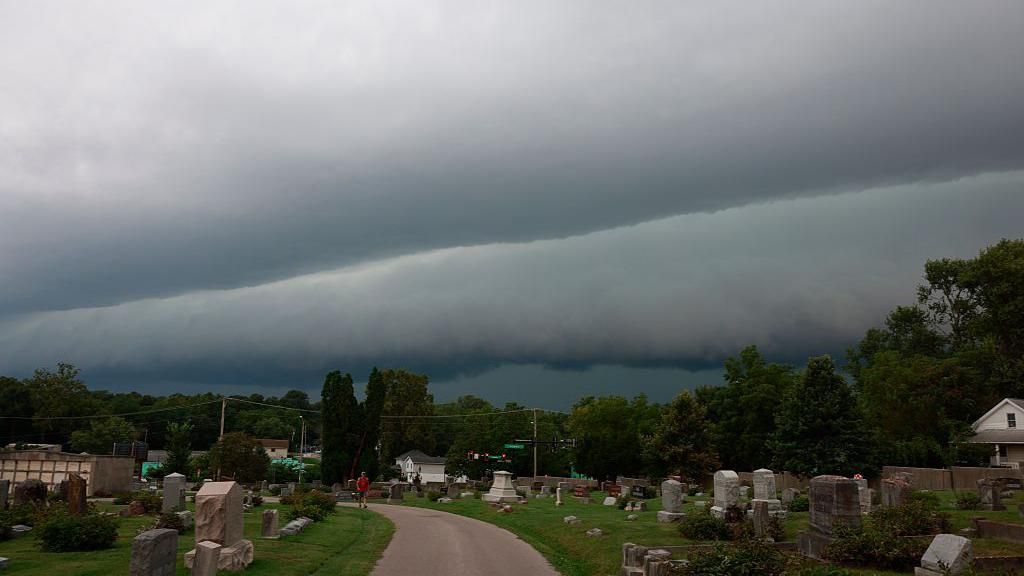
A dangerous outbreak of severe thunderstorms and flash flooding has swept across the U.S. Midwest this week, leaving at least three people dead, wounding dozens, and cutting power to more than 600,000 homes and businesses across three states. The extreme weather has also damaged hundreds of structures, downed countless trees, and disrupted air travel across the region, with emergency crews still working to respond to widespread emergencies.
One of the most striking incidents came Tuesday, when a lightning bolt hit a state correctional facility in Ohio as 16 inmates were moving between buildings on foot following their evening meal. The Ohio Department of Rehabilitation and Correction confirmed all 16 prisoners suffered injuries from the strike, with one patient airlifted to a tertiary care center for urgent treatment. As of Wednesday morning, nine of the injured inmates have been cleared to return to the facility, while seven remain in local hospitals – including the airlifted patient, who is listed in serious condition. No correctional staff were harmed in the incident, and officials have not yet released details on the specific nature of the most seriously injured inmate’s wounds.
The prison strike is just one part of a broader regional weather disaster that has unfolded since Monday. The National Weather Service (NWS) confirmed Tuesday that three separate tornadoes touched down in southern suburbs of Chicago, Illinois, amid the broader storm system. Widespread visual footage shared on social media and local news outlets shows collapsed home roofs, uprooted trees, and submerged roadways across Indiana, Ohio, and Illinois.
Three fatalities have been confirmed across the region so far. In Indiana, a 4-year-old boy was killed when a large tree fell onto his family’s mobile home as storms pushed through. A second Indiana resident, an adult woman, died following a home explosion that occurred during a period of wind gusts exceeding 100 miles per hour, according to CBS News, the BBC’s U.S. partner. Police Captain Rob Maynard noted that first response teams were delayed from reaching the scene by blocked, flood-damaged roads, and while investigators believe the extreme weather was a contributing factor in the woman’s death, a final cause has not yet been determined. Maynard added that the storms have also triggered multiple gas leaks across the state, most caused by falling trees shifting or breaking underground pipeline infrastructure. In Ohio, a third person died in a flooding incident when emergency crews could not reach the victim in time, Governor Mike DeWine confirmed.
In a public address Tuesday, DeWine urged all residents in affected areas to stay alert and prioritize safety amid the ongoing hazard. “This is a very dangerous weather situation,” DeWine said, advising residents to monitor official weather updates and rely on common sense to avoid risky situations.
As of Wednesday, power outage trackers report more than 295,000 customers remain without electricity in Indiana, alongside more than 185,000 in Ohio and 145,000 in Illinois. Many downed power lines and blocked access routes have slowed repair crews’ efforts to restore service.
The NWS has extended flash flood warnings across most of Ohio and Indiana, and continued to urge residents to prepare for additional severe weather. “Now is the time to plan for severe weather and flooding!” the agency said in a public advisory, warning that wind gusts remain strong enough to knock down trees, large branches, and power infrastructure.
Air travel across the region has also faced major disruptions. The Federal Aviation Administration implemented mandatory ground stops at two of the nation’s busiest airports – Chicago O’Hare International and Chicago Midway International – that continued into Wednesday afternoon, leaving thousands of passengers facing delayed or canceled flights.