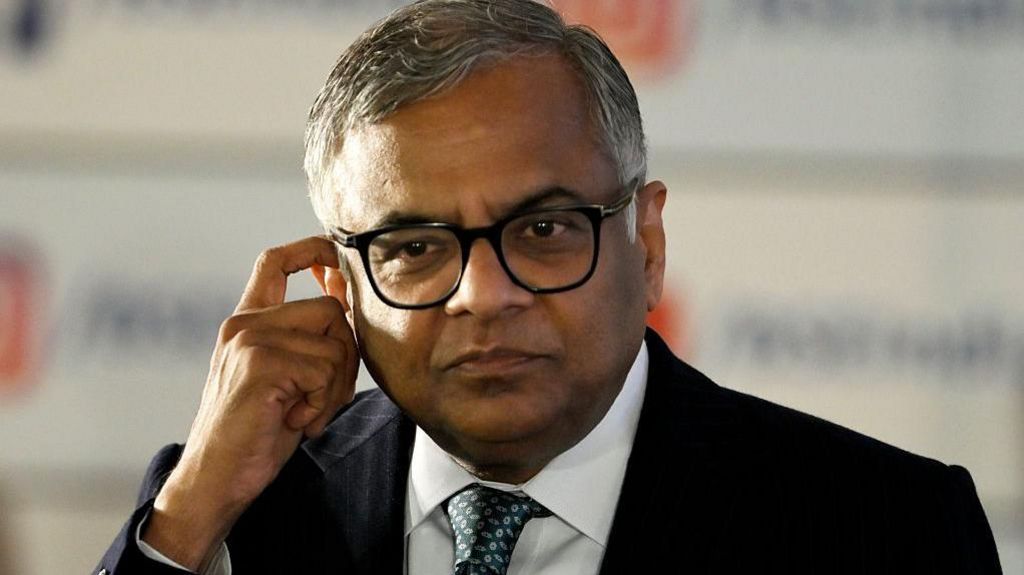
One of India’s most iconic industrial conglomerates, Tata Group, is facing unprecedented uncertainty after its chairman N Chandrasekaran announced he will step down when his current term concludes in February, ending months of speculation over behind-the-scenes boardroom tensions.
The 63-year-old industry leader, who has spent nearly four decades with Tata Group, revealed that his decision to exit stems from an ongoing deadlock on the Tata Sons board over a proposed five-year extension of his leadership. The proposal, which was first raised months ago, has failed to earn the unanimous approval required to move forward. Chandrasekaran noted that when the extension was initially tabled in February, at least one board member withheld support. When no consensus had emerged half a year later, he opted to step down rather than leave a leadership vacuum.
“Tata Sons is a very large institution and there are many strategic projects that are under critical stages of execution,” Chandrasekaran said in his official statement. “It is not only necessary to have a leader in place to lead the Group beyond Feb 2027, but also clarity on leadership is important for employees, investors, partners and other stakeholders.”
The news of Chandrasekaran’s impending exit sent share prices of all publicly traded Tata Group subsidiaries plummeting, as investors reacted to the sudden wave of uncertainty over the future of the $300 billion salt-to-steel conglomerate, whose holdings range from the national carrier Air India to global automaker Jaguar Land Rover and steel giant Tata Steel.
Chandrasekaran’s announcement, coming just days before Tata Sons’ annual general meeting, brings long-simmering internal tensions into the public eye. A bitter boardroom power struggle has played out between trustees for months, centered on a range of contentious issues including future board nominations, large-scale funding approvals, and the long-debated question of whether to take Tata Sons, the group’s parent holding company, public.
Tata Group’s unique corporate structure sets it apart from most global conglomerates: Tata Trusts, the group’s charitable arm, holds a 66% controlling stake in Tata Sons. This structure gives Tata significant tax and regulatory benefits, and allows the group to direct a large share of its profits toward wide-ranging philanthropic initiatives across India. However, governance experts have long warned that the overlapping of non-profit charitable objectives and large-scale commercial operations creates inherent structural frictions that can lead to governance gridlock. Currently, Tata Trusts holds three seats on the Tata Sons board, giving it outsized influence over group leadership decisions. The conglomerate has not issued any formal public comment confirming the internal discord reported in local media.
This is not the first time Tata Group has been rocked by public leadership upheaval. Chandrasekaran was appointed chairman in 2017, replacing Cyrus Mistry, whose abrupt removal from the post triggered a years-long bitter legal battle that dominated headlines across India’s corporate sector. Before taking the top job, Chandrasekaran built his four-decade Tata career at Tata Consultancy Services, the group’s world-leading IT services arm, where he rose to the roles of chief executive officer and managing director. A 2017 press release announcing his appointment described him as a “Tata lifer,” highlighting his deep institutional ties to the group.
The leadership chaos comes at a particularly challenging time for Tata Group, which is already navigating significant business headwinds across multiple divisions. Most notably, the group is still in the early stages of turning around Air India, the loss-making national carrier it purchased from the Indian government in a 2022 privatization deal.
Independent market analyst Ambareesh Baliga noted that the negative market reaction to Chandrasekaran’s departure was inevitable given his decades of experience and standing in the industry. However, he added that the group still has a six-month window to identify and confirm a successor, and most industry observers expect the new leader will be promoted from within Tata’s existing executive ranks.
As stakeholders across the globe wait for clarity on the next chapter of one of Asia’s largest industrial empires, the leadership deadlock has cast a spotlight on the long-term governance challenges embedded in Tata Group’s one-of-a-kind corporate structure.