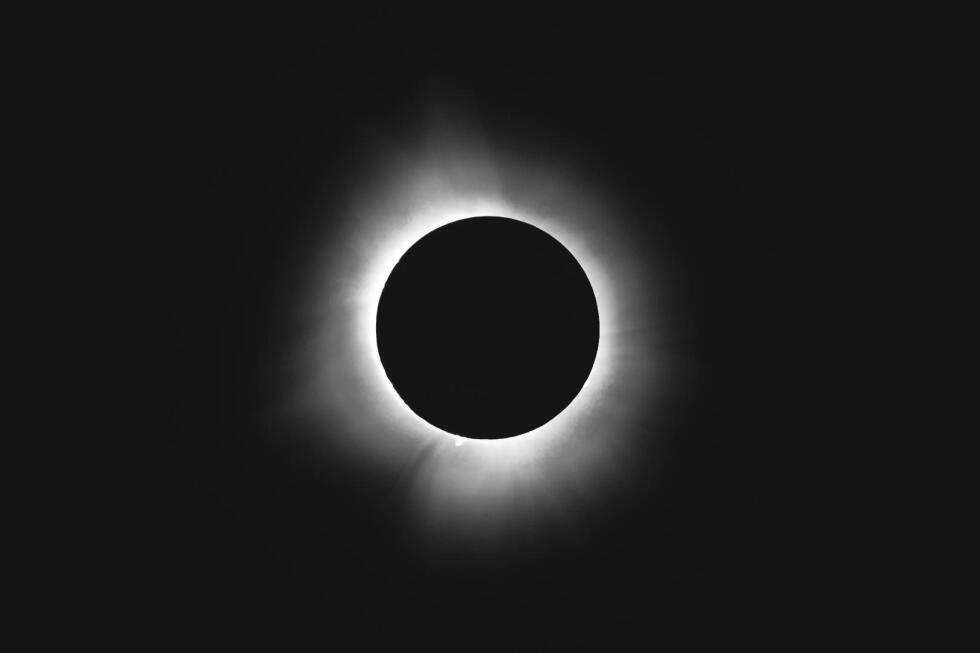
A once-in-a-century celestial event is bringing unprecedented excitement — and significant public safety challenges — to parts of Western Europe this week, as Spain prepares to welcome hundreds of thousands of eclipse chasers while grappling with an ongoing extreme heat and wildfire crisis.
The rare total solar eclipse, the first to cross mainland Spain in more than 100 years, will cast a shadow of darkness across a wide stretch of northern and central Spain on Wednesday, with these regions set to offer some of the best viewing positions for the spectacle across mainland Europe. When the sun, moon, and Earth fully align around sunset, portions of the Iberian Peninsula, along with small parts of Greenland and Iceland, will be plunged into temporary darkness, with the period of complete totality — when the moon fully obscures the sun — lasting less than two and a half minutes across most viewing spots. The maximum duration of totality will occur off the west coast of Iceland, before the eclipse finishes its trajectory over the Mediterranean Sea.
Spanish officials estimate the event will draw at least 500,000 additional visitors to the country’s rural, sparsely populated interior, a region widely known as “Empty Spain.” This influx comes against a grim backdrop: just weeks ago, the most destructive wildfire in modern Spanish history burned through 500 square kilometers of central Spain, forcing tens of thousands of residents to evacuate. Multiple smaller blazes still burn across other parts of the country, and a late-July wildfire in Ávila, west of Madrid, has already underscored how quickly a single spark can escalate into a disaster amid current conditions.
To balance public enthusiasm for the eclipse with wildfire prevention, Spanish authorities have rolled out an extensive public safety and preparedness campaign. The country’s Interior Ministry confirmed that 350 designated official viewing sites have been established across high-visibility regions, while 123 other popular potential viewing spots have had access restricted or limited entirely due to elevated fire risk or barriers that would slow emergency evacuation if a blaze broke out. More than 33,500 law enforcement officers will be deployed across viewing zones and access points to enforce safety rules and manage crowds.
Speaking on the need for strict preventive action, Interior Minister Fernando Grande-Marlaska noted: “High temperatures, the accumulated dryness of vegetation, and the intense pressure on natural areas due to projected travel necessitate extreme preventive measures.” Spain’s national weather agency AEMET has forecast temperatures climbing above 35 degrees Celsius (95 Fahrenheit) across a swathe running from the northwest to the southeast of the country, covering most of the prime eclipse viewing areas, leaving vegetation tinder-dry and highly flammable. Officials have issued urgent warnings to visitors: no open flames, no littering, and no parking vehicles on areas covered by dry vegetation, as even a small spark from a car exhaust can ignite a major wildfire.
Amid the safety preparations, excitement over the rare event has sparked a nationwide rush for essential viewing equipment. Specialized eclipse glasses, fitted with unique filters that block harmful solar radiation to prevent permanent eye damage, are flying off shelves across the country. Telmo Fernández Castro, director of the Madrid Planetarium, emphasized that proper eye protection is non-negotiable even when only a small portion of the sun remains visible, stating “To look at the sun, you must always use proper protection, and the most suitable protection is eclipse glasses.” For months, retailers including supermarkets, department stores, museums, and planetariums have sold or distributed the glasses, and most pharmacies have already sold out of their stock ahead of Wednesday’s event. By Tuesday evening, eager shoppers who had missed out were queuing for blocks outside a downtown Madrid photo shop that announced it still had supplies, with one happy customer emerging to tell waiting crowds the store still had “boxes and boxes of them.”
The eclipse frenzy is not limited to Spain. In Iceland, which is hosting its first total solar eclipse since 1954 and the first visible from its capital Reykjavík since 1433, tourism and accommodation prices have hit unprecedented levels. Average room rates in Reykjavík for Wednesday night now exceed $1,000, roughly double typical 2025 peak season prices, according to data from Lighthouse Intelligence. Authorities expect up to 20,000 extra international visitors to descend on the country of just under 400,000 people, adding to crowds during an already busy summer travel period. For hoteliers along the path of totality, demand has been extraordinary: the 70-room Hotel Keflavík in Reykjanesbaer municipality, which offers viewing of roughly one minute 45 seconds of totality (weather permitting), was fully booked more than a year in advance. Hotel owner and manager Steinþór Jónsson said the eclipse surge is the biggest event the property has seen since it opened in 1986, the year of the historic Reagan-Gorbachev Reykjavík summit. “When I opened the hotel, we had Reagan and Gorbachev meeting. It was very hectic here. Besides Reagan and Gorbachev, the eclipse is the biggest,” Jónsson said with a smile. In Spain’s prime viewing zones including the northern cities of A Coruña, Bilbao, and Santiago de Compostela, hotel demand has also soared ahead of the event.