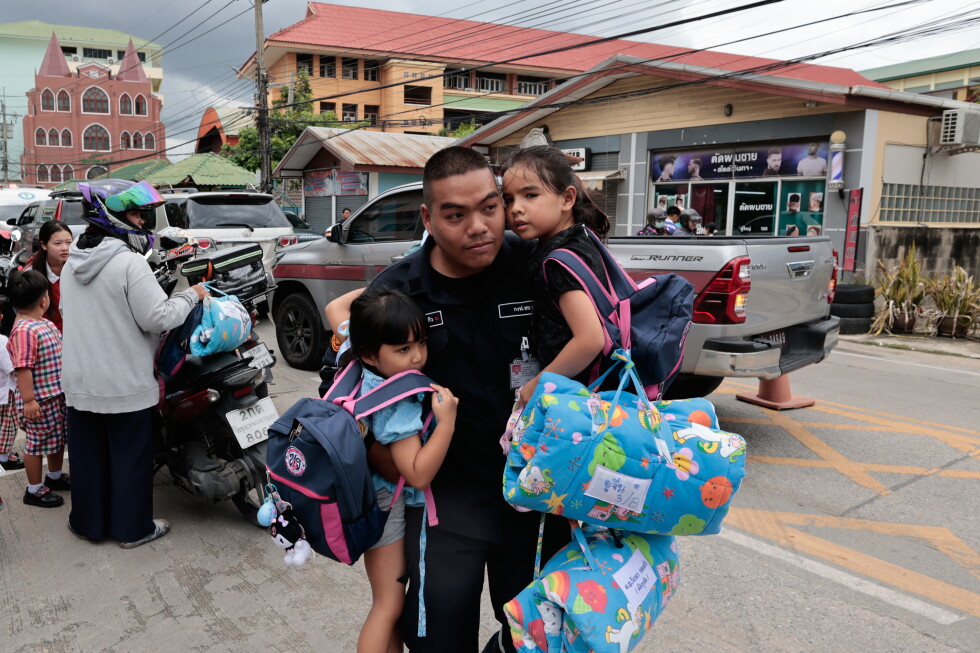
BANGKOK – In response to two fatal mass shootings that occurred within five days just outside the Thai capital, the Thai administration has announced sweeping new measures to tighten firearm regulations and crack down on the country’s sprawling illegal gun market, addressing longstanding public pressure to curb rising gun violence.
Thailand already holds the unenviable title of having one of the highest civilian gun ownership rates in Asia, a stat that has persisted even with formally restrictive national gun laws on the books. The back-to-back attacks, both staged in Nonthaburi province – a densely populated suburban area located just northwest of Bangkok – have amplified widespread demands from the public and policy critics for stronger enforcement and more rigorous oversight of legal and illegal gun access.
The first incident, which unfolded last Friday, saw a teenage student open fire at his high school campus and a private residential property, leaving at least eight people dead and more than 20 others wounded. Authorities confirmed the shooter died by suicide after the attack. Just three days later, a second deadly shooting shook the province at a local government administrative building. One person was killed in that attack, another suffered injuries, and a former Thai lawmaker was taken into custody as the primary suspect.
Government spokesperson Lalida Persvivatana confirmed in an official statement Wednesday that the administration is pursuing three core priorities: updating and strengthening existing gun regulations, cracking down on unlicensed illegal firearms trafficking and possession, and launching public awareness campaigns to clarify legal responsibilities and restrictions for licensed gun owners. “Our ultimate goal is to find ways to remove guns from people’s daily lives as much as possible and make Thai society safer,” Persvivatana stated.
The policy push comes directly from top leadership: On Tuesday, Prime Minister Anutin Charnvirakul issued an order for an urgent national review of all existing gun regulations. The review includes a temporary suspension on approvals for new gun purchase permits, alongside a comprehensive audit of all currently active gun licenses to weed out invalid or improperly issued permits. Anutin also instructed the Ministry of Interior to draft targeted amendments to Thailand’s national Gun Control Act within a 60-day deadline. Proposed changes are expected to improve centralized civilian gun ownership data collection, tighten licensing and sales rules for the legal gun trade, and ramp up criminal penalties for individuals caught violating firearm laws.
Current penalties for illegal gun possession in Thailand range from 1 to 10 years of prison time and fines of up to 20,000 Thai baht, equal to roughly $600. While the country’s formal licensing laws are already strict on paper, critics have long argued that systemic weaknesses in enforcement have allowed unregulated gun circulation to grow unchecked.
Data from the 2017 Small Arms Survey collated by GunPolicy.org estimates that Thai civilians own approximately 15 firearms per 100 residents, a rate that far outpaces neighboring Southeast Asian nations. For comparison, neighboring Malaysia reports less than one gun per 100 residents, and Thailand’s gun ownership rate across Asia is only surpassed by Pakistan. 2023 statistics from World Population Review put Thailand’s national gun homicide rate at 3.49 deaths per 100,000 people. While that rate is far lower than the levels seen in high-violence regions of Latin America and the Caribbean, it remains among the highest in Asia, with only the Philippines recording a higher rate in Southeast Asia.
Although large-scale mass shootings remain relatively uncommon events in Thailand, the country has recorded a steady rise in high-profile, deadly gun attacks in recent years, prompting growing public demand for systemic regulatory reform.