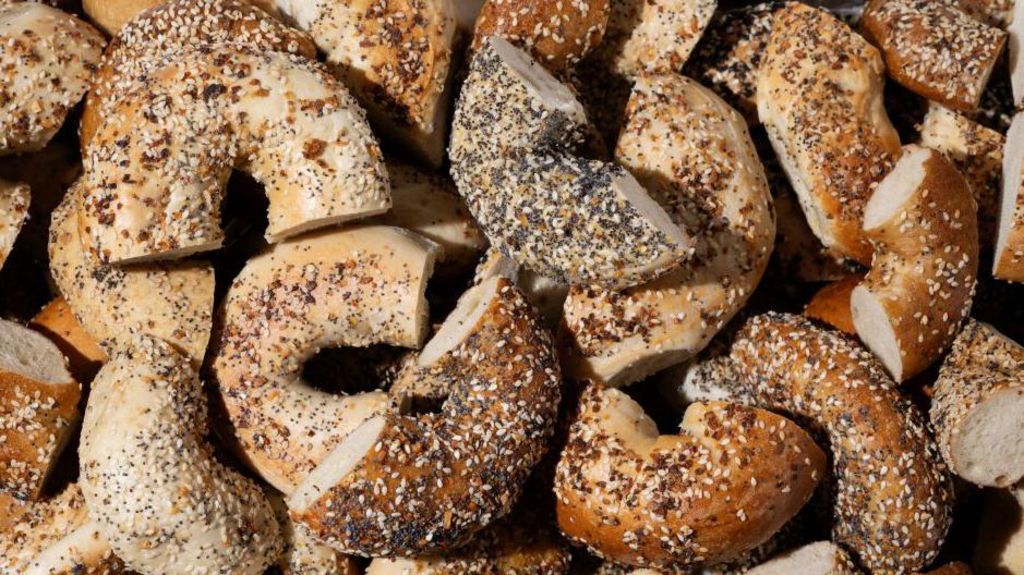
A beloved seasoned blend from U.S. grocery giant Trader Joe’s has become the center of a cross-Asian regulatory action, after authorities in Singapore and South Korea ordered the removal of the product from all online retail platforms due to its inclusion of poppy seeds, an ingredient that falls under strict narcotic control rules in both nations.
Launched back in 2017, Trader Joe’s Everything But the Bagel seasoning has developed a global cult following among home cooks and food enthusiasts, prized for its savory, versatile flavor profile. Alongside its core ingredient poppy seeds, the blend also includes sesame seeds, flaky sea salt, minced garlic, and minced onion. While poppy seeds themselves do not naturally produce opiates, agricultural experts note they can easily become cross-contaminated with opiate compounds from the poppy plant’s latex sap during the harvesting process.
This contamination risk has led both Singapore and South Korea to classify poppy seeds as a controlled prohibited substance. On Wednesday, Singapore’s Central Narcotics Bureau (CNB) confirmed that more than 20 separate online listings of the popular seasoning have already been taken down from local e-commerce sites. CNA reported that the agency has issued a clear public advisory urging anyone who currently owns a bottle of the product to dispose of it immediately, emphasizing the city-state’s uncompromising zero-tolerance stance on controlled drugs.
“The possession, consumption, importation, exportation, manufacturing and trafficking of any controlled drug, even in trace amounts, is an offence under the Misuse of Drugs Act,” a CNB spokesperson stated in a press briefing.
The regulatory action follows a similar move by South Korean authorities just one week prior, when Seoul officials announced that official testing on the seasoning had detected trace amounts of morphine and codeine, two naturally occurring opiate compounds derived from poppy plant sap. Investigators in South Korea found that most of the product listed for resale online had been brought into the country by travelers as personal souvenirs from trips abroad, before being resold by third-party sellers. The Korea Herald reports that while some of these sellers had no idea the product contained a prohibited controlled substance, others intentionally listed it for sale despite knowing the regulatory status.
“Even if a product is legally sold overseas, it may be classified as a narcotic substance or a prohibited import in Korea, so particular caution is required,” a South Korean police official told local media, reminding travelers to check local import regulations before bringing food products back from international trips.
The incident highlights how differing national food and drug regulatory frameworks can create unexpected compliance issues for popular international food products, even when those products are completely legal in their country of origin.