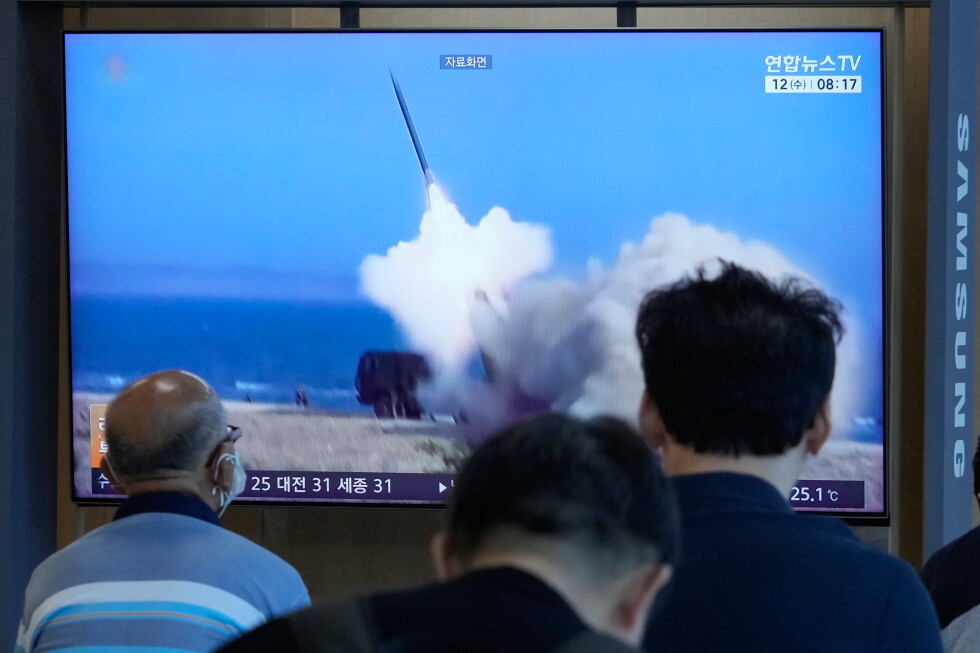
Tensions have spiked on the Korean Peninsula after North Korea carried out its second ballistic missile launch in less than a week, in a move widely interpreted as a direct protest against the upcoming joint military exercises between South Korea and the United States. Pyongyang has long framed such drills as a preparation for an invasion of its territory.
According to South Korea’s Joint Chiefs of Staff, the missile was launched from the eastern coastal city of Wonsan at approximately 6 a.m. local time on Wednesday, and traveled more than 700 kilometers (435 miles) before impacting. Japan’s Defense Ministry also confirmed the detection of the launch, noting that the weapon landed in waters outside Japan’s exclusive economic zone, in the sea between the Korean Peninsula and the Japanese archipelago.
This string of rapid-fire tests aligns with a years-long pattern of North Korean weapons development, a campaign that has continued Pyongyang’s refusal to re-enter denuclearization talks with Washington and Seoul. Regional security analysts have long observed that North Korea consistently leverages joint military exercises conducted by its rivals as a justification to advance its own weapons testing program.
The latest launch comes just two days after Seoul and Washington formally announced that their annual large-scale military drills, dubbed Ulchi Freedom Shield, would begin on August 17. The exercises are designed to strengthen allied readiness to counter North Korean aggression, a mission that both South Korea and the U.S. stress is purely defensive in nature. This has not softened Pyongyang’s opposition, however: North Korean leader Kim Jong Un labeled 2023’s Ulchi Freedom Shield exercises clear evidence of an intention to “ignite a war” against his country, promising that North Korea would respond with “proactive and overwhelming” countermeasures to any perceived provocation. This year’s tests mark a continuation of that long-standing retaliatory pattern.
This latest test follows an initial short-range ballistic missile launch detected by South Korea, the U.S. and Japan on August 6, which was the first North Korean ballistic missile test activity since late June. North Korea has not yet issued an official confirmation of either launch, a common practice where the regime typically confirms weapons tests the following day.
In response to the launch, South Korea’s military has announced it maintains full readiness to repel any further provocation from Pyongyang, in close coordination with the United States. South Korea’s National Security Council formally labeled the launches “acts of provocation” and called for an immediate halt to Pyongyang’s test activities. In Japan, Defense Minister Shinjiro Koizumi told reporters that Tokyo delivered a formal strong protest to North Korea via its diplomatic mission in Beijing, emphasizing that “It’s a serious problem that affects the safety of the Japanese people.”
North Korea’s weapons tests are explicitly banned under multiple United Nations Security Council resolutions, but Pyongyang has dramatically expanded its testing of ballistic and other advanced weapons since high-stakes denuclearization diplomacy between Kim Jong Un and former U.S. President Donald Trump collapsed in 2019. Regional experts widely assess that Kim is pursuing the expansion of his nuclear and missile arsenals to gain greater leverage to force the U.S. to concede to demands such as the lifting of harsh international economic sanctions that have crippled North Korea’s economy.
In recent years, Kim has also significantly expanded North Korea’s diplomatic and military alignment with Moscow, with open reporting indicating Pyongyang has supplied troops and ammunition to support Russia’s full-scale invasion of Ukraine. He has also moved to strengthen long-standing ties with China, North Korea’s primary economic partner and traditional diplomatic ally, a shift that culminated in Chinese President Xi Jinping’s June visit to Pyongyang, the first such visit by a Chinese head of state in seven years.