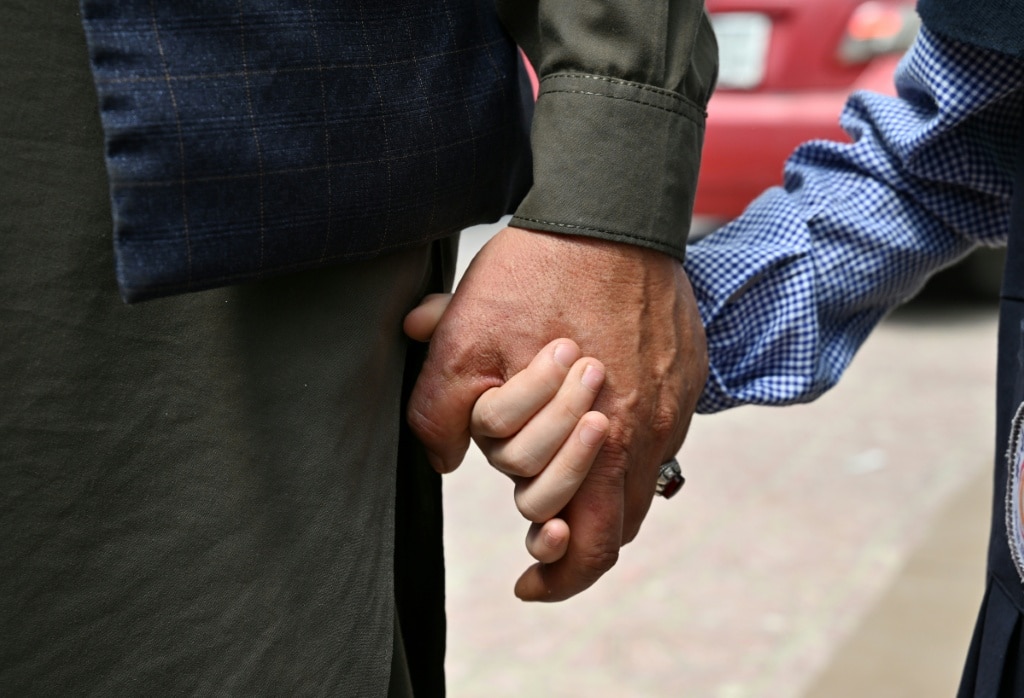
More than four years after the Taliban retook control of Afghanistan, a nationwide ban barring girls and young women from secondary and higher education has inflicted quiet, crippling torment on countless Afghan fathers, who watch their daughters’ academic dreams crumble with no path forward. In interviews with Agence France-Presse across the country, dozens of fathers — even deeply religious men who have backed the Taliban’s governance on other issues — choked back tears describing the anguish of seeing their bright, ambitious daughters locked out of classrooms, their futures narrowed by a policy that stands alone in the world.
The Taliban justifies the ban, which has kept secondary schools closed to girls since March 2022, with universities barred to women later that same year, through its specific interpretation of Islamic law. But many devout Afghan fathers reject that framing. “You will never find in the Quran that education is only for men,” one committed religious father told AFP. Another, who openly praised the Taliban for restoring national security and cutting systemic corruption, said he simply could not “find any proper justification for this” sweeping restriction.
All of the fathers interviewed, whose identities are kept confidential for their safety, described persistent emotional turmoil stemming from the ban. Many lose sleep nightly, grappling with how to support daughters who are openly frustrated by the sudden end to their education. Data from a 2023 United Nations survey underscores how widespread this opposition is: nine out of 10 Afghan men questioned said girls’ access to secondary education is a critical priority, and nearly two-thirds view supporting a daughter’s education as a pious, religious duty. Some men who have openly protested the ban have already been imprisoned, and the Taliban government has not responded to AFP’s requests for comment on the policy, which officials have repeatedly called temporary despite its four-year duration. UN estimates indicate at least one million girls have already been directly harmed by the secondary education restrictions.
For many fathers, the dread of their daughters’ final day of primary school looms larger every day. Ahmad, a 40-year-old engineer from northern Afghanistan whose own wife — a former secondary school mathematics professor — can no longer work under the Taliban’s rules, said he never imagined he would watch his four daughters face a lifetime of effective illiteracy. Stopping education after sixth grade, he explained, leaves girls completely unprepared to navigate the demands of 21st-century life. With his eldest daughter approaching the end of primary school, clandestine underground classes cost more than half his monthly salary, leaving emigration as the only seeming option. Once on track to resettle his family in the United States after working for an international organization, his path was blocked by former President Donald Trump’s immigration restrictions, and European nations that regularly denounce the Taliban’s gender policies have also refused the family visas. Leaving illegally carries too much risk, Ahmad said, and his daughters constantly ask when they will depart, unaware that their parents’ hope is fading fast.
Across Kabul province, Mohammad, a 42-year-old doctor in a small town, spent four years searching for a workaround to the ban after his two daughters, aged 12 and 14, reached the end of primary school. He once dreamed of sending them to top international universities, arguing that “for the development of Afghanistan we need women, not only for the home.” He first considered sending them across the border to Pakistan for schooling, but the border was sealed following intensified cross-border hostilities, closing that path. He now pays $153 a month — a steep sum for most Afghan families — for his daughters to attend a private religious school that secretly teaches general academic courses alongside religious studies. The school issues no official graduation certificates, and Mohammad lives in constant fear that Taliban inspectors will discover the secret classes and detain his daughters. Still, he tells his girls, “While I’m alive, I will find a solution for your education.”
In southern Kandahar province, the Taliban’s historic stronghold, restrictions are even harsher: some girls are pulled out of primary school early if they are considered physically mature. N, a father who moved his family to Kabul for work, has a 12-year-old daughter with a passionate interest in astronomy who recently made a solar system collage and peppered him with questions about gravity. When he told her she would learn these topics in school, she replied, “How can I learn… if I cannot go beyond grade six.” N now pays for underground classes and online computer and design courses to keep his daughter learning, but declining international aid has squeezed household incomes across Afghanistan, and he says opportunities for secret education are shrinking by the day. He hides his stress from his daughter, who does not know how precarious her continued learning has become.
For M, a devout logistics manager from a working-class background who supports the Taliban’s work on security and anti-corruption, the pain of the ban has become unbearable. His 13-year-old daughter was forced to leave school earlier this year, and on a recent family holiday, while everyone else celebrated, she locked herself in her room crying. Beyond the education ban, girls are barred from public parks and recreation, leaving her with almost no opportunities for social activity. M takes her out to a restaurant once a week just to get her out of the house, but when she falls into deep despair, he admitted, “I go to another room and… I hide to cry.” He spent years saving to move the family to Iran so his daughter could study there, but the ongoing war in that country ended those plans. He enrolled her in a Quranic school to give her some social contact, but she recently stopped attending, telling him, “Even if I continue, there will be no future for me.”
In Kabul, Nasir, 47, and his wife — a former teacher — have turned their home into a makeshift school for their daughters, using salvaged secondhand high school textbooks to keep their learning on track. They enforce a strict daily routine, waking the girls at the same time they would get up for formal school and sticking to a regular class schedule. But Nasir confides that his younger daughter, who saw her education cut short at 15, struggles with depression and often lacks the motivation to continue learning alone at home. The academic trophies his daughters won in primary school sit on the family’s home bookshelf next to their textbooks, a quiet reminder of what has been lost. Recently, the girls started attending secret outdoor classes in the neighborhood, after tutoring younger children in their apartment building for extra practice. “We have sleepless nights” worrying about their safety and their futures, Nasir said. “This regime does not want educated people. When will we go back to a normal life?”