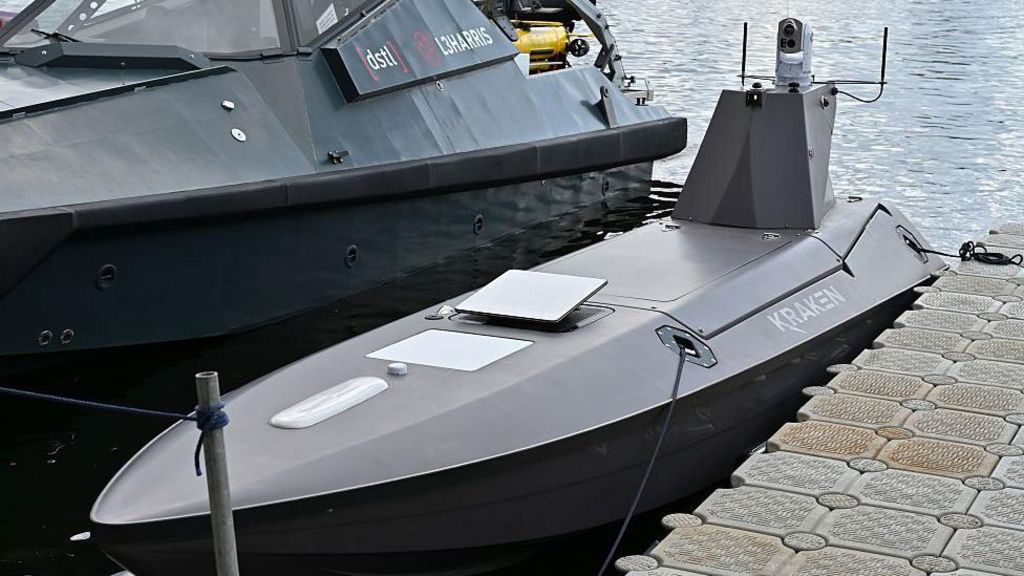
A recent discovery of Chinese-manufactured parts in the United Kingdom Royal Navy’s newly acquired K3 Scout surveillance drones has sparked security scrutiny, though government investigators have found no proof of unauthorized data or system compromise, the UK Ministry of Defence (MoD) has confirmed.
The issue came to light during a standard cyber vulnerability review of the 20 newly delivered unmanned sea vessels, purchased to expand the Royal Navy’s remote surveillance and operational capabilities. During the assessment, teams detected that on-board cameras built into the drones were transmitting periodic “squark” or heartbeat signals to an internet protocol address registered in China. These routine communications, designed to confirm a system is active and functioning correctly, can also embed location data, raising immediate concerns about potential espionage risks.
Following a full, comprehensive investigation, an MoD spokesperson stated that no evidence showed MoD-held data or internal military systems had been accessed, corrupted, or improperly sent to external parties. “Our proactive assurance and testing frameworks are built to spot and resolve potential weaknesses early,” the spokesperson added, noting that routine security audits remain ongoing across all of the UK’s military equipment and digital infrastructure.
For the MoD, the find is an uncomfortable embarrassment: like nearly all NATO member states, the UK has formal restrictions barring the integration of Chinese-built components into sensitive military hardware, a policy rooted in longstanding concerns about potential state-backed spying and data theft.
The K3 Scout sea drones are designed to operate remotely for a wide array of military missions. According to their primary manufacturer, Canada-based maritime technology firm Kraken, the systems support everything from maritime domain awareness and force protection to logistics support and precision targeting for strike operations. Kraken confirmed that it had received formal security assurances for the components used in the drones supplied to the Royal Navy, but a third-party supplier of the on-board camera system ultimately incorporated the Chinese-made part that triggered the alert.
Kraken has also stated it has no evidence that any sensitive operational information has been improperly shared via the component, echoing the MoD’s conclusions. The issue was first broken by UK newspaper The Telegraph, and the identified security gap has already been remediated, according to official accounts.
Beyond the immediate security scare, the incident serves as a stark reminder of the overwhelming global dependence on Chinese manufacturing and supply chains. Even the defense sector, which has implemented strict rules and targeted measures to cut out Chinese-sourced parts to mitigate espionage risks, continues to face major challenges when sourcing alternative components that are both free of Chinese involvement and cost-competitive for large-scale military procurement.